The Vance Doctrine: How the Vice President Became the Iran Deal's Salesman-in-Chief
Within hours of the agreement's announcement, the Vice President was the one fielding the hard questions on enrichment, reconstruction timelines, and the silence from Jerusalem. That is a choice, not an accident.
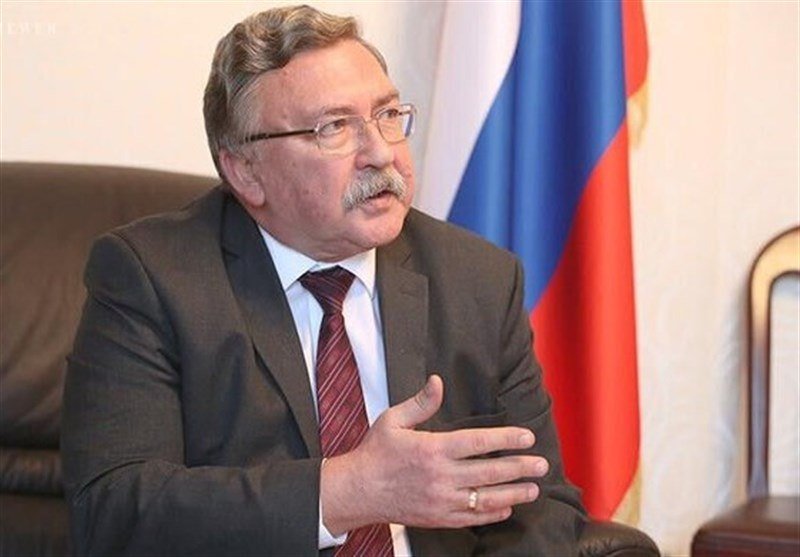
At 15:53 UTC on 18 June 2026, a Telegram channel closely tracking White House messaging carried a single line from the President: he is "pleased" with the agreement reached with Iran. Three minutes earlier, his Vice President was on a livestreamed press gaggle doing the harder work — fielding, deflecting, and occasionally relitigating, in real time, the questions the deal's critics had spent the previous 24 hours sharpening into talking points. The choreography was unmistakable. The signature belongs to the man in the Oval Office. The argument belongs to the man standing behind him.
This is the Vance Doctrine, and it deserves a name. In the first major foreign-policy sale of the second Trump term, the Vice President has been deputised to perform the diplomatic equivalent of a used-car pitch on a live broadcast: this car has features; here is the warranty; please ignore the dent on the driver's side. Whether one reads that as shrewd politics or as a tell about how fragile the underlying deal actually is, depends on how much weight one gives to the fact that the principal negotiator is not the one defending it.
The pitch, as Vance made it
Three exchanges from the 15:50 UTC gaggle, carried verbatim by the open-source channel osintlive, sketch the boundaries of the case the administration is now trying to land with the public. Asked whether he feared the President would make him the "fall guy" if the talks went sideways, JD Vance said no: "I think the President has been clear that he is pleased with the agreement." The deflection was to the principal. Asked what would stop Iran from rebuilding and restarting its nuclear programme in a few years' time, Vance offered the most concrete answer the administration has given to date: cost. "They would have to get a lot of money in order to rebuild the programme," he said, framing the deal less as a verifiable arms-control instrument than as an economic delay. And asked why Prime Minister Netanyahu has not attacked the agreement, Vance offered the most politically loaded answer of the three: Netanyahu "hasn't criticized the Iran agreement because he knows its details," then dismissed the right-flank opposition from Itamar Ben Gvir and Bezalel Smotrich as the views of figures the deal's defenders need not take seriously.
Each of those is a contested claim. The first is a deflection disguised as a confidence vote. The second concedes, without quite saying so, that the agreement does not foreclose a future Iranian bomb — it merely prices one out. The third is the most consequential: it reads the silence from Jerusalem as endorsement, which is not what silence from that particular Prime Minister's office has historically meant.
What the numbers actually show
The Vice President did produce one empirical anchor in the same appearance: "Last night, 12.5 million barrels of oil went through the Strait of Hormuz. That's a high since the beginning of the conflict." The figure matters because it is the only non-rhetorical test the administration has offered for whether the deal is functioning. The Strait is the chokepoint through which roughly a fifth of seaborne oil moves; if 12.5 million barrels crossed in a single 24-hour window, that is both a market signal (insurance premiums fall, freight rates ease) and a political signal (the Iranian side is tolerating the throughput, which means the de-escalation is bilateral, not unilateral). The number does not, however, tell us anything about the agreement's compliance regime, its verification architecture, or its enforcement teeth. The oil is moving. That is a fact. What the oil proves about the nuclear file is a separate question.
Vance's other empirical claim — that "Iran hasn't shot at ships in two nights" — is, in context, a peace-of-God argument. The implicit baseline is: a year ago, projectiles were being lobbed at commercial traffic in the Gulf on a near-nightly basis. Two quiet nights is, by that yardstick, a return to something like normal. By any other yardstick — the ten-year average of maritime incidents, the legal definition of freedom of navigation, the technical record of harassment incidents short of firing — it is a thin reed to lean on.
The silence from the right flank, and what it means
The most interesting move in Vance's appearance was not what he said about Iran. It was what he said about the Israeli far right. The framing — that Ben Gvir and Smotrich are peripheral, that their opposition does not reflect the Israeli government's view, that Netanyahu has effectively been briefed into consent — is a reading of coalition politics in Jerusalem that the Jerusalem press corps will need to evaluate. The official Israeli position remains, on the public record, more cautious than Vance's characterisation implies. The Vice President is, in effect, asserting a fact about Israeli internal politics from a podium in Washington. Either he is right, in which case the deal has the quiet acquiescence of a government that is choosing, for its own reasons, to keep its objections private; or he is wrong, in which case the administration is selling the deal on a misrepresentation of its most important regional counterparty's posture.
The right-flank Israeli objection is, on the merits, the same objection the deal's critics in Washington have been sharpening: that an economic-delay regime, even one priced into the billions, is what an Iranian regime rebuilding its programme sees as a pause, not an end. Vance is essentially arguing that a sufficiently expensive pause is functionally equivalent to an end, because the resources required to reconstitute a serious enrichment-and-weaponisation capability are genuinely prohibitive for a sanctions-crippled economy. The structural counter-argument — that an Iranian state with the diplomatic normalisation this deal implicitly purchases will itself be a far better-resourced state in five years' time than the one entering the agreement — is the part the Vice President is not, at this point, in the business of answering.
Stakes, and what the doctrine costs
The pattern here matters beyond the Iran file. A Vice President deployed as the public-facing defender of a signature foreign-policy deal, while the President confines himself to one-line endorsements, is a division of labour. It spares the principal from the unscripted questions; it gives the deal a younger, more combative advocate; and it produces, almost as a by-product, the impression that the most senior elected Republican other than the President is personally invested in the agreement's survival. The risk is symmetrical. If the deal holds, Vance is the architect of its public case. If it fails, the same exposure that made him the salesman makes him the most visible target for the recriminations. The President has, on Vance's own telling, already telegraphied the terms: blame allocation, if it comes, will not be a problem. Whether that is reassurance or a warning depends on which way the file goes.
The deal's supporters in the region and in the global oil market have, for now, the one thing they most needed: movement. 12.5 million barrels. Two quiet nights. A Vice President willing to take the questions. None of that is, on its own, the architecture of a durable non-proliferation regime. It is, however, the architecture of a working diplomatic pause, and a great many actors — governments, refiners, shipowners, importers — would settle for a pause that holds.
The desk notes that the open-source channel reporting Vance's remarks does not specify the journalist conducting the gaggle or the venue; the White House has not yet posted a transcript. The 12.5 million barrel figure is reported by the Vice President and has not been independently confirmed by the EIA or by Kpler. Readers should treat both as administration-attributed claims pending independent verification.
Wire provenance
This editorial synthesis draws on the following public wire/social posts:
- https://t.me/englishabuali
- https://t.me/osintlive
- https://t.me/osintlive
Follow the event.
These dated source records provide context. They do not retrospectively verify this archive article.
Separate what the nuclear watchdog reported from what it could not determine after the June 2025 strikes.