Vance's Iran gambit: a deal the hawks didn't want — and may not survive
The vice president has talked up Iranian concessions in public. The question is whether his own administration's sceptics will let the negotiation run long enough to fail or succeed on its own terms.
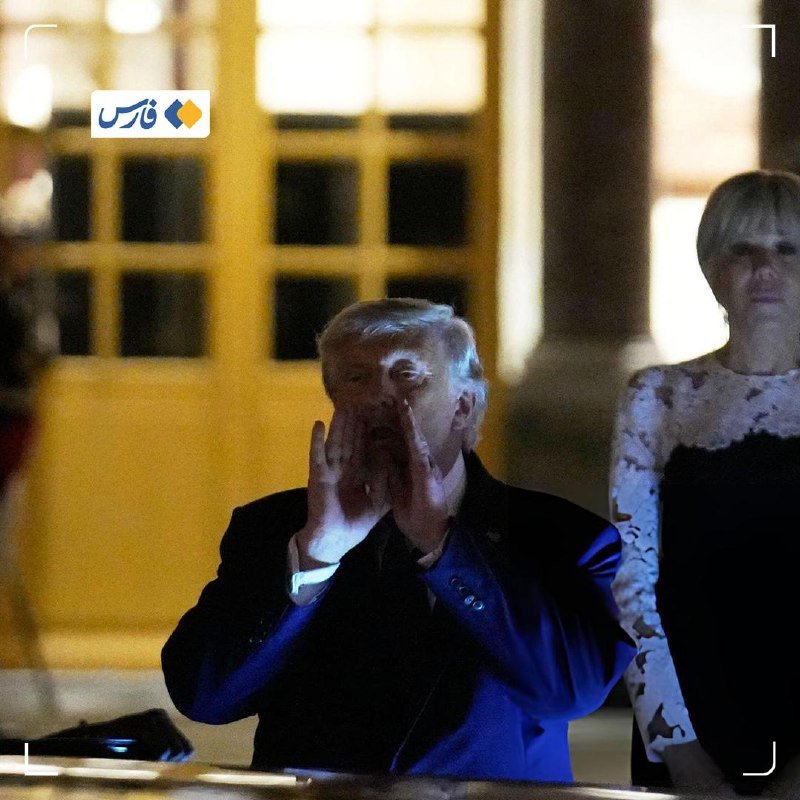
On the afternoon of 18 June 2026, two channels that monitor Washington's Iran debate — ClashReport and DDGeopolitics — circulated a brief clip of US Vice President JD Vance making an argument that has become unfashionable inside his own administration. Iranians, Vance said, "are offering things that would have been the stuff of dreams even six months ago." His counsel: "let us play this negotiation out. Let us see if the Iranian actions actually match the Iranian words."
The phrasing is pointed. It treats an emerging deal as something to be tested, not celebrated and not buried. That posture is rarer than it sounds in a Washington where the default setting on Iran has, for two decades, been a choice between maximalism and managed antagonism. Vance's critics on the right are already calling the framing naive. His critics on the centre-left are calling it cynical. Both readings deserve a hearing.
What Vance actually said
The two circulated excerpts are short but load-bearing. In the first, Vance entertains the thought that figures inside Israeli society "would like to turn Iran into Libya, basically a failed state with 90 million people" — and concedes the suspicion is "probably" true (ClashReport, 18 June 2026, 16:32 UTC; DDGeopolitics, 18 June 2026, 17:07 UTC). In the second, he urges patience: Iranian offers are unusually generous, and the test is whether behaviour follows (ClashReport, 18 June 2026, 16:32 UTC). The Libya line is a tell. It signals that Vance reads the maximalist wing of the Israel-policy debate accurately and is choosing, in public, not to flatter it.
The case the hawks will make
The counter-argument is straightforward and serious. Iran has, in the past twenty years, used negotiations as cover for centrifuge cascades, sanctions relief as bridge financing, and prisoner swaps as confidence-building that bought time. A deal that "would have been the stuff of dreams six months ago" can also be a deal that reflects Iranian tactical flexibility rather than strategic retreat. The hawks' structural point: a regional order that absorbed the 2015 nuclear accord once is not obviously strengthened by absorbing a second one, especially if the verification regime is lighter than the one Tehran walked away from. The Israeli anxiety Vance himself names — 90 million people in a failed state next door to a nuclear threshold — is the same anxiety that has anchored bipartisan US support for a harder line. Vance's confidence that Iranian actions will match Iranian words is, on this reading, the kind of confidence that the last three administrations were eventually obliged to retract.
The case for letting the negotiation run
The case against the hawks is also straightforward. The alternative to negotiation is not a clean military solution; it is a slow drift toward a strike that purchases a few years of delay at the price of a regional war, an energy shock, and the consolidation of exactly the Iranian state behaviour Washington claims to oppose. Vance's "let us play this out" framing has a structural virtue: it is the only posture that produces evidence. A deal that fails on its own terms gives the United States and its allies a cleaner mandate for the next step than a deal that was never seriously attempted. The hawks' objection — that Tehran will cheat — is empirically plausible and historically recurrent, but it is also a description of the prior decade's policy, the policy that produced the present moment.
The Libya line as the real story
The most under-reported element of Vance's remarks is the Libya comparison. By floating it as something Israeli actors might want, he is implicitly refusing to endorse it. That is a meaningful signal. A vice president who believed in the Libya option would not describe it as a temptation to be resisted. The subtext is that the US side of the negotiation now treats the maximalist outcome — regime collapse, state fragmentation, a hundred thousand square kilometres of ungoverned space adjacent to the Gulf — as a cost to be priced, not a benefit to be achieved. That is a substantive shift in US rhetoric, even if it has not yet produced a substantive shift in US posture.
Stakes, in plain terms
If the deal collapses, the hawks will argue that Vance's forbearance was the lost window. If the deal holds, the deal-sceptics will spend a decade arguing it should never have been signed. The honest reading is that the evidence is not yet in. Iranian offers, as relayed through the channels tracking the talks, are unusually broad; whether the underlying behaviour matches the text is precisely the question Vance says the next months should answer. The risk on both sides is the same: deciding in advance what the answer will be.
What remains genuinely uncertain
The excerpts circulated on 18 June do not specify which Iranian "offer" Vance is characterising, nor do they name the Israeli interlocutors whose views he is interpreting. The channels carrying the clips are aggregation feeds, not primary sources. The full text of Vance's remarks — and the diplomatic exchanges they are responding to — have not, in the material available to this publication, been independently confirmed. Readers should treat the framing as accurate to the channel reportage and the substance as a still-developing negotiation rather than a settled agreement.
This publication treats the Vance remarks as a meaningful but partial data point in a live negotiation. Where the channels carry the framing, Monexus carries the framing; where the channels do not specify, Monexus does not invent.
Wire provenance
This editorial synthesis draws on the following public wire/social posts:
- https://t.me/DDGeopolitics
- https://t.me/ClashReport
- https://t.me/ClashReport
Follow the event.
These dated source records provide context. They do not retrospectively verify this archive article.
Separate what the nuclear watchdog reported from what it could not determine after the June 2025 strikes.