Warsh's First Week at the Fed: A Hawk Reset, Not a Dovish Pivot
Kevin Warsh opens his tenure as Fed chair with rates on hold and a public promise to repair five years of inflation misses. Markets read it as a hawkish reset — and bond managers like Jeffrey Gundlach are saying the easy-money crowd should recalibrate.
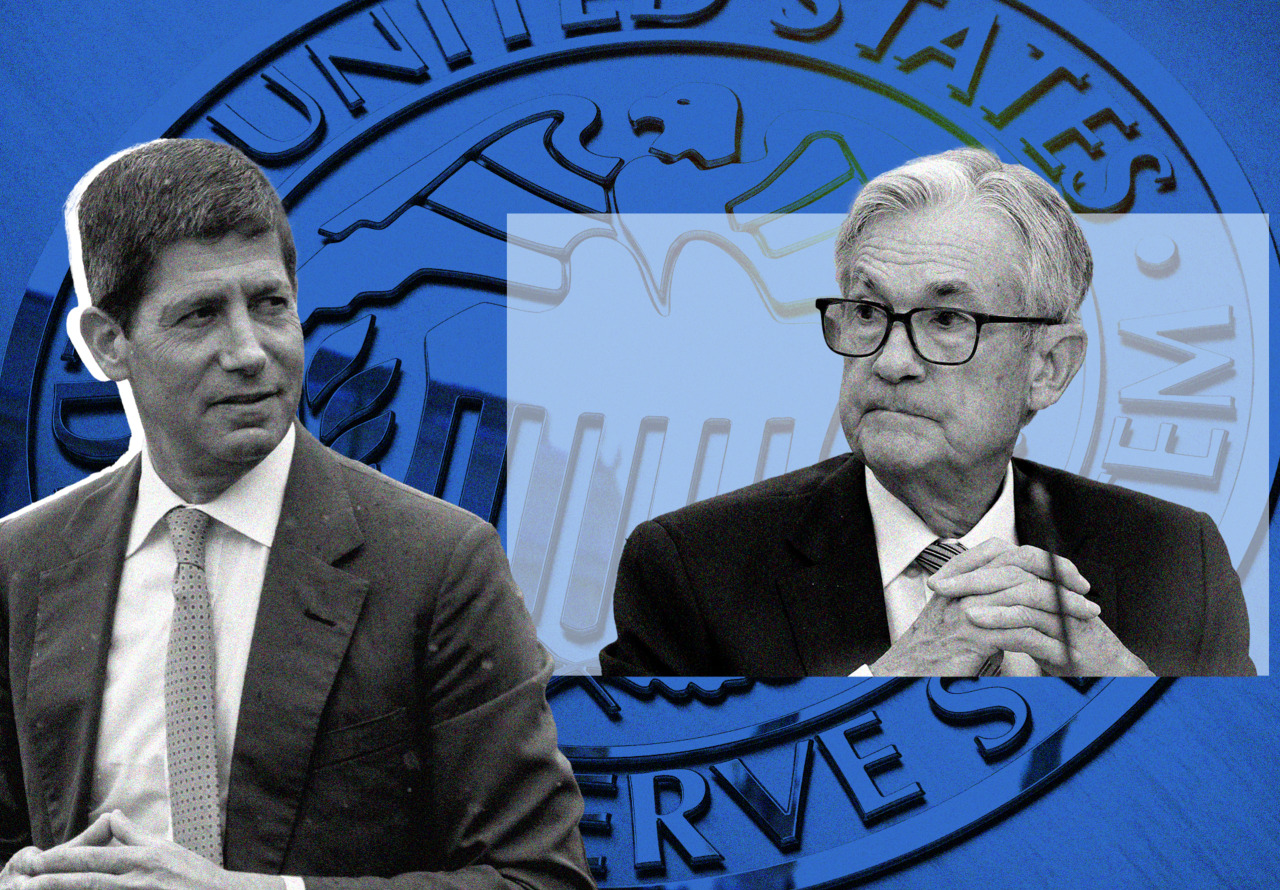
Kevin Warsh stepped into the chair of the Federal Reserve on 18 June 2026 and used his debut to do something most new central-bank leaders avoid in their first week on the job: he put the institution's recent inflation record on trial. The policy rate held steady, as expected, but the framing was the news. Warsh told reporters that the Fed would "fix the five years of misses on inflation" and, in nearly the same breath, declined to offer guidance on what the next move would be. The market reaction was immediate — and it cut against the easy-money consensus that had built up around his nomination.
The early read on Warsh, both inside the administration that elevated him and on Wall Street, was that his appointment signalled a turn toward monetary accommodation. That reading now looks premature. Warsh's opening statement was less a dovish pivot than a credibility reset — an explicit admission that the Fed's inflation target has been missed for half a decade, paired with a refusal to pre-commit to a cut path. For a market that had front-run dovishness, that combination is uncomfortable.
The opening statement
Reuters reported on 18 June 2026 that Warsh had "kicked off" his tenure as chair with a "sweeping review" while leaving policy rates unchanged. The piece landed at 02:10 UTC, an unusual hour for a personnel-driven story and a signal of how closely traders were watching the transition. The substantive content was two-fold. First, an institutional admission: the Fed, under Warsh's predecessors, missed its 2% inflation target for roughly five consecutive years, and the new chair intends to make repair of that record the central organising principle of his term. Second, a procedural posture: no forward guidance. Warsh said, in remarks circulated on X by the Unusual Whales account at 19:09 UTC on 17 June 2026, that he could not give "guidance on what we're going to do next."
That second point matters more than the rate decision itself. Forward guidance has been the Federal Reserve's primary lever since the post-2008 era — a way of shaping market expectations without committing to a specific action. By stripping that lever out of his first communication, Warsh is signalling that the cost of future policy moves will be borne by the Fed itself, not by the market's expectations. It is, in effect, a reassertion of optionality, and it tilts the burden of proof toward inflation data rather than toward the chair's commentary.
The market's recalibration
The first reaction came from the bond market. Yields rose on the long end of the curve, a pattern that typically reflects expectations of either a slower path of cuts or a longer horizon over which the Fed will tolerate above-target inflation. Jeffrey Gundlach, the DoubleLine Capital chief executive, sharpened the point in remarks circulated on 17 June 2026: Warsh is "not going to be the 'easy money' chairman many hoped for." Gundlach's reading is that Warsh's stance reduces the risk of overly accommodative monetary policy that could reignite inflation and push longer-term borrowing costs higher. In plain terms, the bet that Warsh would arrive ready to cut aggressively — the trade that had been working for months ahead of his confirmation — is now the trade most exposed if inflation re-accelerates.
The equities reaction was more muted, partly because the rate decision itself was unchanged and partly because Warsh's first appearance did not include a forecast revision. But the dollar-side picture shifted. The combination of a chair who has publicly called the prior five years a failure and who refuses to pre-commit is, in the currency market's language, a hawkish surprise wrapped in a neutral decision. Traders who had positioned for a dovish debut are now sitting on a stale thesis.
What the new chair actually said
Warsh's language was unusually direct for a central banker. "We'll fix the five years of misses on inflation" is a sentence that names a failure and assigns the institution, not external shocks, the responsibility for repair. The "I can't give you guidance on what we're going to do next" clause is the more telling half, because it forecloses the most common interpretive crutch that markets use to smooth policy transitions. Together, the two sentences amount to a contract: the Fed will run a tighter ship on inflation, and it will not pre-announce how. That contract is harder for the bond market to price than either a clear hawkish signal or a clear dovish one.
There is a structural argument underneath the rhetoric. Five consecutive years of misses is, by historical standards, an extended failure. The 2% target has not been hit consistently since the post-pandemic inflation surge, and the institution's response — a long pause followed by a measured hiking cycle followed by a measured cutting cycle — has, in Warsh's framing, allowed expectations to drift. If Warsh is serious about re-anchoring those expectations, the policy mix has to lean against inflation more aggressively than the market has been pricing. The most plausible version of that lean is holding rates higher for longer, not cutting sooner.
The counter-narrative, and why it still has legs
The hawkish interpretation is not the only one in circulation. A counter-narrative holds that Warsh's refusal to give guidance is itself dovish — a sign that the chair wants to keep all options open, including the option to cut in the second half of 2026 if disinflation continues. Under this read, the "fix the misses" line is rhetorical cover for an institution that has, in practice, grown more tolerant of above-target inflation. The dovish camp points to Warsh's own prior commentary on the costs of overly tight policy, and to the political pressure on the administration to deliver cheaper credit.
This is a live disagreement, not a settled one. The dovish case is weakened, however, by two facts. The first is Gundlach's observation: a chair who opens by calling the last five years a failure is, in the market's eyes, signalling that the bar for declaring victory on inflation is now higher than the 2% target itself. The second is the timing. Warsh's debut came against a backdrop of sticky services inflation and a labour market that has not weakened enough to force the Fed's hand. Under those conditions, the cost of cutting is higher than the cost of waiting — and Warsh, by declining to guide, has made waiting the default.
What this means for the dollar, and for the rest of the world
A Federal Reserve that runs a tighter ship on inflation has consequences well beyond the Treasury market. The dollar is the world's reserve currency, and a credible anti-inflation Fed is, on the margin, a stronger-dollar Fed. Emerging-market borrowers who have leaned on dollar liquidity over the last two years — sovereigns, corporates, the commodity exporters that finance imports in greenbacks — face a higher carry cost if the rate path stays elevated. The Global South's negotiating position on trade, debt restructuring, and development finance is shaped, in part, by how long the Fed holds. A Warsh-led Fed that is willing to be unpopular at home to defend its inflation target is, by extension, willing to make life harder for everyone who has been living on cheap dollars.
That is the structural frame worth keeping in view. The Federal Reserve's domestic mandate is price stability and full employment. Its external effect is the price of the dollar, and through it, the cost of capital for roughly the entire non-US economy. When the Fed's chair opens his tenure by calling five years of misses a failure, he is not just making a domestic argument. He is telling the rest of the world that the cost of holding dollar-denominated assets is going to reflect US inflation discipline more honestly than it has in years. For some borrowers, that is a problem. For creditors, it is overdue.
The uncertainty that remains
What is not yet clear is whether Warsh's opening is a one-time communication or the new template. Central-bank chairs often use their first appearance to set a tone, then revert to the institution's more cautious default register. If Warsh softens in his second and third appearances, the bond market's initial reaction will look like an over-read, and the easy-money trade will rebuild. If he holds the line, the curve will continue to steepen, the dollar will find support, and the doves will have to find a different story.
A second uncertainty is the inflation data itself. Five years of misses is a fact, but the next print could vindicate either the hawkish or the dovish reading. If core services inflation rolls over in the second half of 2026, the cost of holding rates higher for longer falls — and Warsh's refusal to guide will look less like hawkish resolve and more like prudent optionality. If it does not, the chair's opening statement becomes the most important thing he has said.
What the sources do not specify is the internal politics of the Federal Open Market Committee under Warsh's leadership. The committee's composition, the regional bank presidents' views, and the staff's inflation projections are all relevant to how the next six months will unfold, and none of those were surfaced in the initial reports. Monexus will track the FOMC minutes and the dissent patterns as they emerge; for now, the signal is what the chair said in public, and the signal is hawkish.
Desk note: the wire led with the rate decision. Monexus led with the framing — because in central banking, the framing is the policy.
Wire provenance
This editorial synthesis draws on the following public wire/social posts:
- http://reut.rs/43IvXmM
- https://www.federalreserve.gov/
- https://www.federalreserve.gov/monetarypolicy/fomccalendars.htm