Warsh's First Fed: A New Framework, Same Old Pressure
On his first meeting as chair, Kevin Warsh held rates steady and rolled out a reform agenda — but the political pressure on the central bank is now openly transactional.
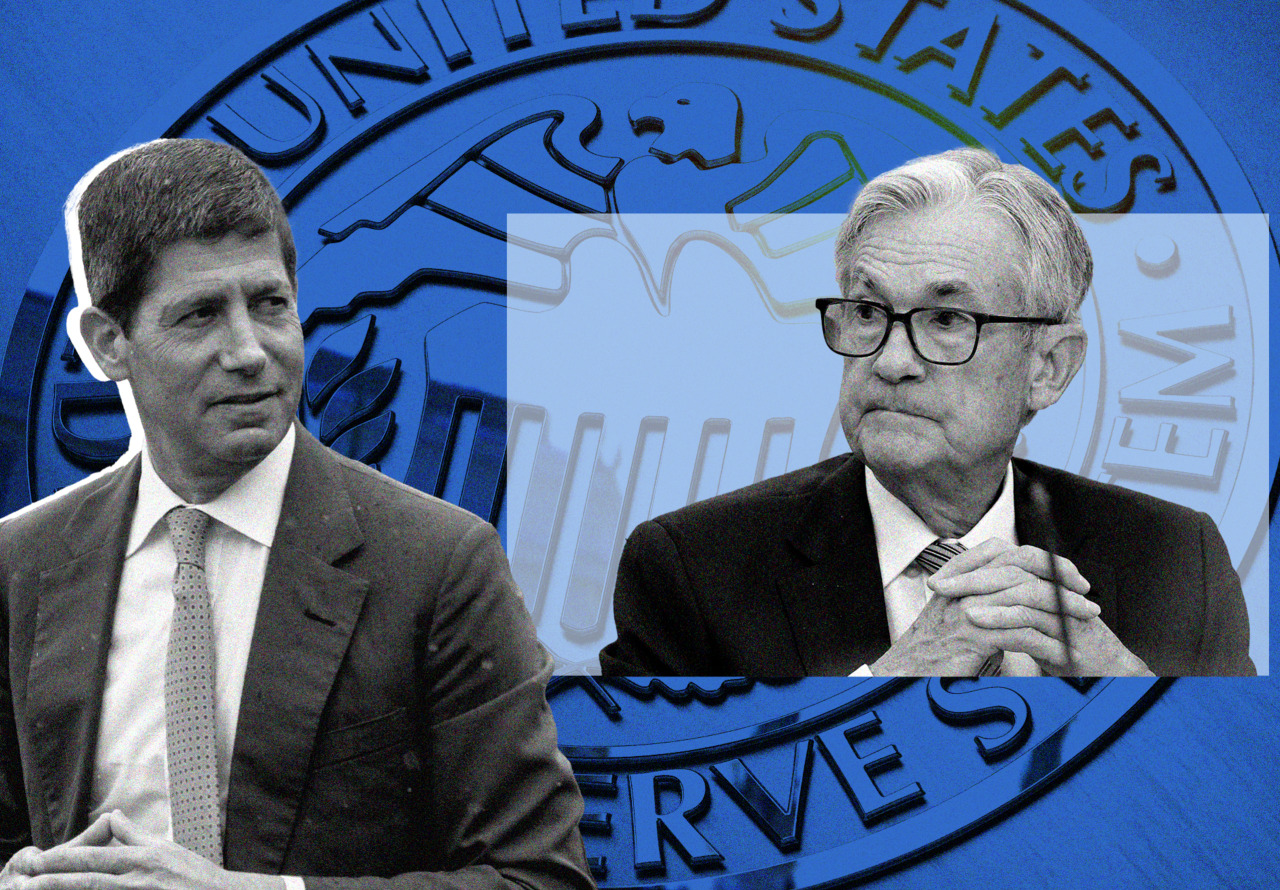
The Federal Reserve on 17 June 2026 kept its benchmark policy rate in a range of 3.5% to 3.75% — the fourth hold of the year — and used the occasion to launch something larger: an ambitious reform agenda to reshape how the US central bank conducts and communicates monetary policy. The decision, announced at the close of Kevin Warsh's first Federal Open Market Committee meeting as chair, was telegraphed in advance. What was not was the scope of the institutional rewrite attached to it. Officials, according to Reuters, "agreed to leave interest rates unchanged despite inflation stuck well above their target" while simultaneously opening what the wire described as "a new era of US monetary policy."
The conjunction is the story. A central bank that is not moving rates has nevertheless decided to move everything around them — the language it uses, the framework it inhabits, the way it signals. Warsh inherited an institution that has spent three years explaining why it cannot deliver the cuts markets want, while inflation has refused to retreat in the way the Fed's own models said it would. His answer, on day one, is to change the conversation.
The first meeting, parsed
The headline decision is unremarkable on its face. The FOMC held the federal funds rate at 3.5% to 3.75%, a range it has now occupied for the fourth consecutive meeting of 2026. Polymarket's news desk recorded the hold within minutes of the release, a reminder that prediction markets had effectively priced the outcome before the statement landed. Cointelegraph's market wrap noted that crypto traders read the statement as broadly dovish on framing, even though the rate path was unchanged — a distinction that says less about crypto than it does about the Fed's growing reliance on tone as a policy instrument.
The reform agenda is the real headline. Reuters' 00:50 UTC dispatch on 18 June describes it as an effort to "reshape how the US central bank conducts and communicates monetary policy." That is a sweeping remit. It implies changes to the Statement on Longer-Run Goals and Monetary Policy Strategy — the document the Fed reviews every five years and which defines its inflation target, its employment mandate, and its tolerance for shortfalls. It implies changes to forward guidance, to press conference format, to the dot plot, and to the relationship between the Board in Washington and the regional Reserve Banks. None of these are small things. Each is a place where a chair can leave a fingerprint that lasts beyond their tenure.
US equities did not celebrate. The Dow fell roughly 1%, the S&P 500 shed 1.2%, and the Nasdaq slid about one-and-a-third percent on the day, with Reuters attributing the move to traders betting that the Fed's "next move would be a rate cut." That is the curious arithmetic of a hold that reads as dovish: a central bank that refuses to cut is nonetheless being priced for cuts, because the alternative — admitting that inflation is structurally higher — is politically intolerable.
The Iran shadow over the meeting
It is impossible to read the 17 June FOMC as an event that took place in a single policy silo. The same trading day carried fresh presidential commentary on Iran — President Donald Trump's remarks on the status of negotiations with Tehran — and markets treated the two as a joint signal. BBC News's lead on the rate decision framed it explicitly: "Fed holds US interest rates steady as uncertainty over Trump's Iran deal remains." Cointelegraph went further, headlining its wrap "Crypto market treads thin ice following Warsh FOMC, Trump Iran comments" and noting that "markets wobbled after mixed comments from President Trump on the Iran peace deal."
The Fed is not supposed to set policy in reaction to a presidential foreign-policy negotiation. But the markets clearly are. An Iran deal that holds would, on most plausible channels, lower the oil-price tail risk that has kept services inflation sticky; an Iran deal that collapses would tighten the same channel. The FOMC statement made no mention of geopolitical risk, but the trading around it was a referendum on Tehran.
That dependence is itself the policy story. A central bank that cannot move without first parsing a presidential Truth Social post is no longer running a sovereign monetary policy in the textbook sense. It is running a co-managed one, in which the White House sets the headline risk and the Fed chooses how much to accommodate.
A framework, not a forecast
The deeper move — the reform agenda — is best read as an attempt to reclaim some of the ground the institution has lost. Three years of above-target inflation have stripped the Fed of the credibility that defined it from the Volcker era through the Bernanke-Yellen decade. Its own preferred measure, the personal consumption expenditures price index, has spent most of that period running above 2% in a way that no longer looks like transitory noise. The 2020s framework review, which formally adopted average inflation targeting, has been quietly disowned in practice even before Warsh arrived.
A new framework is the obvious remedy. It gives the chair cover to redefine what "success" looks like: a higher inflation target, a more flexible employment mandate, a different rule for shortfalls versus overshoots. Reuters' description of an "ambitious reform agenda" suggests the Fed is preparing to publish something close to a constitutional rewrite. That document, when it lands, will be the most consequential monetary-policy text of the decade — more so than any individual rate decision — because it will define the range within which all future decisions are taken.
The risk is that a framework written under political pressure becomes a framework written for political pressure. If the new target is chosen because 2% has become politically expensive to defend, rather than because the underlying price dynamics have genuinely shifted, the institution will have acknowledged that its inflation target is negotiable. Once that concession is made, it is very hard to unmake.
Markets, politics, and the price of being read
The trading-day response — equities down, rates down, crypto wobbly — is the part of the story most likely to age badly. Daily moves are noise; framework changes are signal. What matters is the gap between what the Fed says it is doing and what traders believe it is doing. On 17 June, that gap narrowed slightly: a chair who campaigned on reform delivered reform, even if the rate path was unchanged. The credibility gain, if any, will be tested at the next inflation print and the next Iran headline.
The political economy underneath is harder to ignore. Warsh is a chair appointed by a president who has made interest-rate cuts a personal grievance. The FOMC is, by statute, independent. But its reform agenda is being launched into a political environment in which that independence is openly contested. A framework rewrite, in normal times, would be welcomed as technical housekeeping. In 2026, it will be read as a signal of submission or defiance, depending on the reader.
Stakes, and what remains uncertain
What is at stake, concretely, is whether the dollar bloc's anchor institution emerges from this period with the ability to act against its own government's preferences. If the new framework tolerates higher inflation and loosens the conditions under which the Fed raises rates, the practical effect is to make US fiscal policy easier to finance at the margin. The winners are borrowers, the Treasury, and risk assets. The losers are pension funds, savers, and any emerging-market central bank whose currency is de facto pegged to the dollar. The time horizon over which this plays out is years, not months, but the direction is set on day one of a chair's tenure.
What remains genuinely uncertain is the content of the framework document itself. Reuters' reporting on 18 June describes the agenda as launched, not as published. The Fed's preferred inflation target, the language around shortfalls versus overshoots, the fate of the dot plot, the role of the regional banks — none of this has yet been specified in a way that markets can price. Until it is, the 17 June statement should be read as an opening move in a longer negotiation between the institution, the administration, and the bond market. The rate decision was the least important thing the Fed did on Wednesday. The reform agenda is the one that will define the chair.
This publication reads Warsh's first FOMC as a quiet institutional rewrite dressed in a routine rate hold — and as the latest sign that the boundary between US monetary and political authority is now a matter to be negotiated, not assumed.
Wire provenance
This editorial synthesis draws on the following public wire/social posts:
- https://www.federalreserve.gov/monetarypolicy/fomccalendars.htm
- https://www.federalreserve.gov/monetarypolicy/files/fomcgoalslongerrun.pdf