Year three arrives for eight former five-stars: breakout or bust in 2026?
Eight former five-star recruits enter their third college season with NFL traits intact and patience nearly gone. The 2026 campaign will sort the prospects from the cautionary tales.
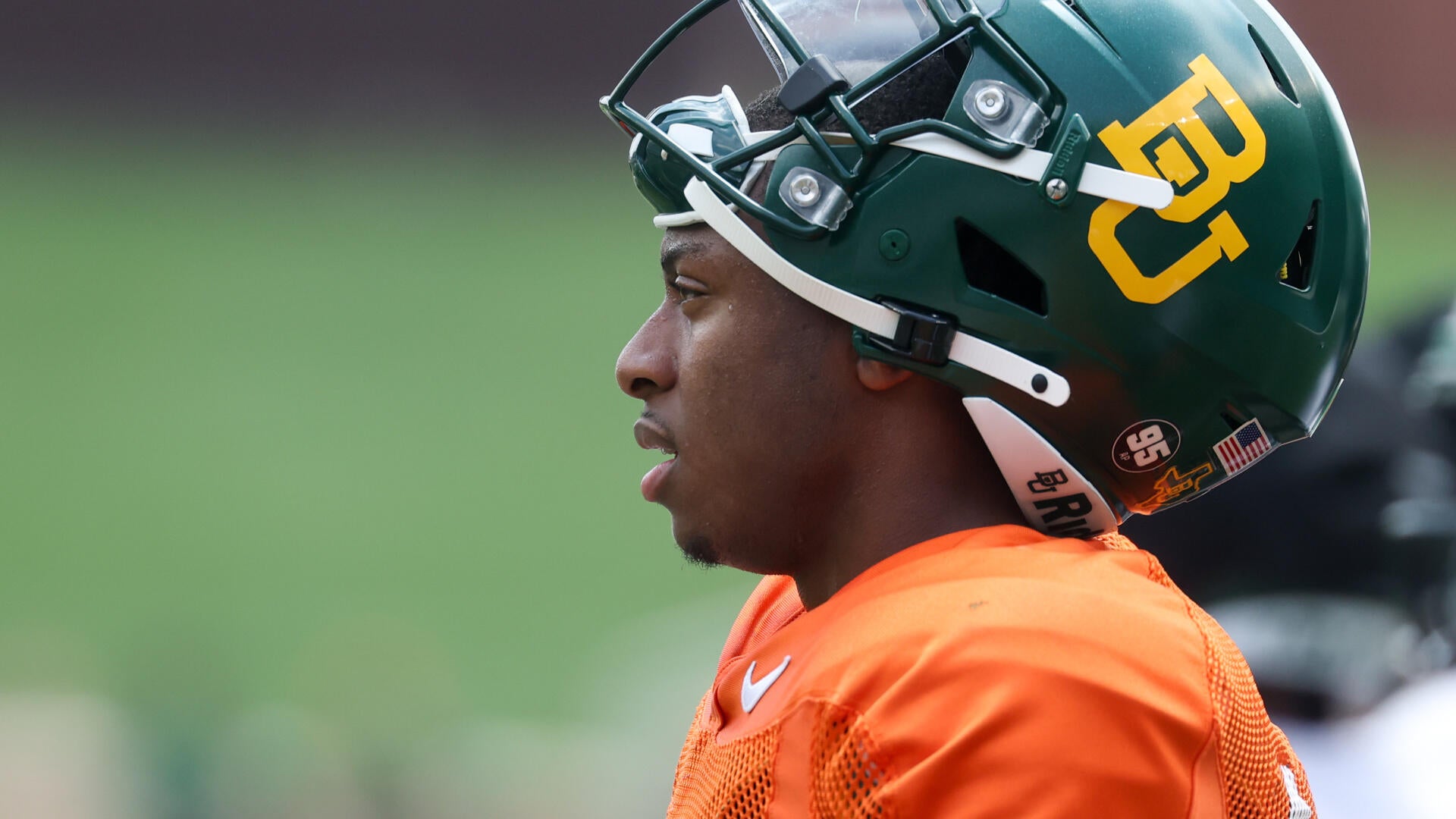
The arithmetic of college football recruiting cuts both ways. A five-star ranking buys a prospect three seasons of tolerance — a runway long enough to absorb a coordinator change, a positional switch, a losing season, or a coaching overhaul. By Year 3, the runway is gone. CBS Sports identified eight former five-star recruits who enter the 2026 season with NFL-calibre traits still visible on tape but without the production typically expected of the class's marquee names, a list that doubles as an early warning system for programs that bet the most recruiting capital on the fewest players.
The premise is straightforward: pedigree is a leading indicator, not a guarantee, and the third season is where the gap between ceiling and résumé becomes hardest to ignore. CBS Sports framed the group as players "running out of time to prove themselves," a phrasing that reflects the NFL's increasing willingness to draft on traits over volume but also the reality that scouts read the third year as the last clean sample of a player operating in a stable offensive or defensive system.
The Florida pivot: Lagway as the marquee case
Few players on the list carry the weight of Florida quarterback DJ Lagway. Signed as the headliner of a class built around him, Lagway arrived in Gainesville with the billing of a programme-restoring arm talent. The 2025 season did not deliver on that billing in the aggregate — the Gators' record sagged, the offensive line shuffled, and the coaching staff turned over — but his physical tools remained the kind that NFL evaluators file under "traits worth a third-year look." CBS Sports's framing positions 2026 as the year in which a fully healthy off-season and a settled scheme finally translate into the box-score production that recruiting rank promised.
The risk is structural, not personal. Quarterbacks who do not show decisive Year 2-to-Year 3 improvement rarely make the leap in Year 4, because the schedule thickens and the defensive coordinators have a full spring and summer of tape to attack the tells. A third-year breakout for Lagway would re-order the SEC East conversation. A third-year plateau would push the conversation toward transfer-portal arithmetic and Day 3 draft projections.
The defensive linemen and the production gap
Five-star defensive linemen face a different calculus. The traits — first-step quickness, length, hand technique — translate to the league even when the college stat sheet stays modest, but NFL defensive-line coaches have grown allergic to projection picks who never produced disruption at the college level. CBS Sports's list includes former five-star edge rushers and interior defenders whose snap counts rose in 2025 without the corresponding jump in pressures, tackles for loss, or sack totals. The structural question for those players is whether a defensive coordinator willing to scheme them into one-gap situations can manufacture the production the raw athlete has so far failed to generate on his own.
The counter-reading is that defensive-line production is the worst-position stat to evaluate in college, because scheme and surrounding talent swamp individual contribution. A five-star edge rusher playing behind a rebuilding secondary will see fewer clean third-down pass-rush opportunities than a comparable prospect at a roster-complete programme. The dominant framing — that Year 3 production is the right cut — holds up at most positions but frays on the defensive line, where context matters more than counting stats.
The skill-position logjam
Wide receivers and running backs on the list face a different problem: depth-chart mathematics. The transfer portal has compressed the developmental timeline for skill players, because programmes can replace a stalled prospect with a veteran in a single off-season. CBS Sports noted that several of the eight entered summer 2026 in contested rooms — either competing against established starters for first-team snaps or, in some cases, reportedly eyeing the portal themselves. The year-three breakout is harder to deliver when the offensive coordinator has the option to rotate in a senior with two years of in-system knowledge.
The structural point is that the five-star label was a 17- or 18-year-old's scouting report, and the industry has since layered transfer-portal scouting, NIL valuation, and NFL draft projection on top of it. A player who was a five-star in 2023 is now being graded against 2026 standards that include maturity, off-field consistency, and scheme-versatility. The list, in that sense, is less a verdict on the players than a measure of how much the industry has moved.
What the 2026 season will and will not resolve
By December, the list will have sorted itself in two directions. The breakouts will re-enter the first-round conversation, with NFL teams re-allocating scouting resources and the prospects' NIL valuations repricing upward. The busts will face the more punishing path: a transfer-portal move to a lower tier of competition, a Day 3 draft slide, or, in the harder cases, an attempt to extend college eligibility into a fifth season under the new NCAA framework that governs extra years of competition for former five-stars who have not exhausted their clock.
What the season will not resolve is the structural question of whether five-star rankings are predictive at all. Recruiting services have improved at projecting offensive skill players and have lagged on the defensive line and offensive line, where the body of work required to evaluate is longer than the high-school film cycle allows. The eight players on CBS Sports's list are the leading edge of a much larger cohort: every five-star class since 2020 has produced a third-year inflection point, and every cycle that inflection point is read as a referendum on the class. The framing is convenient for the industry. It is also, by now, well-worn enough that the right editorial read is to treat the list as a useful early signal rather than a verdict.
This piece focuses on a CBS Sports positional rundown; Monexus has framed it as a structural question about evaluation timelines rather than a series of individual player verdicts.