The $80 Billion Question: Washington's Iran Tab and the Talks That Weren't
On the same day the Pentagon told lawmakers it needs $80 billion for an Iran war, planned US-Iran talks in Switzerland collapsed before they began — and a Pentagon AI chief claimed Grok helped drop 2,000 munitions in 96 hours.
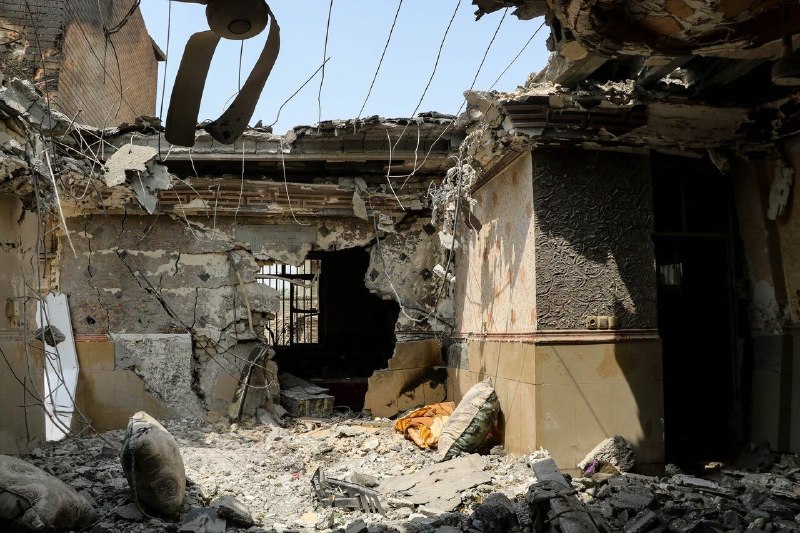
On 19 June 2026, two stories arrived within hours of each other and refused to sit comfortably side by side. At 17:15 UTC, the Wall Street Journal reported, via a Reuters wire, that the Pentagon had told US lawmakers it needed roughly $80 billion to cover the cost of an Iran war and a stack of other bills now coming due. By the morning, a scheduled round of US-Iran talks in Switzerland had failed to proceed as planned, according to CNBC. And in between, a Pentagon AI chief announced — via a post on X, picked up by the prediction-market account Polymarket — that SpaceX's Grok had helped US forces deploy more than 2,000 munitions against Iran in a 96-hour window. The shape of a war economy, a diplomatic breakdown, and a private-sector AI bragging-rights claim have collided in a single news cycle.
The thread that runs through all three items is the rapid conversion of the Iran confrontation from a posture problem into a spending problem. A war that Washington has, at various points in 2026, described as both imminent and containable is now producing line items on Capitol Hill. The dollar figure, the venue, the AI vendor name, and the failure of intermediaries are all signals worth reading carefully — because each one tells a different constituency what kind of conflict this is becoming.
The $80 billion ask
The Pentagon's $80 billion request, as reported by the Wall Street Journal on 19 June and circulated by Reuters, is not a single program. It is a bundled supplemental: the cost of an active Iran campaign, the cost of replenishing munitions expended in that campaign, and the cost of what the Pentagon has taken to calling "other bills" — a category that, in past supplementals, has covered everything from inflation-adjusted pay for service members to defueling costs for aging platforms. The figure lands at a politically awkward moment. The Trump administration's broader defence posture, including a renewed emphasis on homeland missile defence and a sizeable investment in Indo-Pacific deterrence, has already absorbed several tranches of supplemental funding in 2025 and early 2026. An $80 billion ask for one theatre alone resets the budget conversation and forces Congress to choose between continuing to fund the war and funding the rest of the national-security to-do list.
Two things are worth flagging about the number. First, it is a request, not an appropriation. The dollar figure tells us what the Pentagon believes the war has cost and will cost; it tells us nothing about what Congress will actually grant, and the gap between request and appropriation has, in recent supplementals, been substantial. Second, the figure sits next to the munitions-replenishment problem. The 2,000-munitions-in-96-hours claim, taken at face value, implies an expenditure rate that cannot be sustained from stocks already on the books. The bill, in other words, is not a tail cost; it is a refill.
The Swiss talks that weren't
The diplomatic track, by contrast, was supposed to lower the temperature. The CNBC report, filed at 06:17 UTC on 19 June, described a US-Iran accord effort that "hit an early snag after Swiss talks failed to proceed as planned." The framing matters: the talks did not collapse mid-session or break down over a specific text. They failed to start. According to the CNBC account, the interim deal under discussion — a confidence-building arrangement that, in earlier reporting, had been described as a package of sanctions relief in exchange for Iranian constraints on its nuclear and missile programs — could not get the parties into the same room on schedule.
Two reads of the cancellation are plausible. The first is procedural: in mid-June, Iran's parliament was finalising a response to a UN board of governors resolution, and Tehran often uses such windows to delay face-to-face contact in order to extract further concessions. The second is structural: the moment the Pentagon's $80 billion number is in the air, the leverage calculus shifts. A US negotiating team that is also defending an $80 billion supplemental is, in effect, asking Congress to ratify a posture of restraint while the war machine produces the bill. That is a hard sell. The fact that the talks failed to proceed as planned is therefore not a story about Swiss diplomacy so much as it is a story about the price tag intruding on the table.
The counter-narrative, supplied by Iran-aligned outlets in past reporting cycles and worth naming plainly, is that Tehran has used the diplomatic process to buy time for its missile and proxy programmes and that a slow-walked interim deal would simply have legitimised that interval. From that vantage, the failure of the Swiss talks is not a loss; it is the absence of a concession. Both reads are partially right. The honest summary is that the diplomatic track is the only one producing less than $80 billion in spending, and it is the one currently stalled.
Grok at the edge
The third item in the day's news flow is the most novel, and the most difficult to verify. According to a Polymarket-flagged X post, a Pentagon AI chief announced that SpaceX's Grok helped US forces deploy more than 2,000 munitions against Iran in 96 hours. The phrasing is careful: Grok "helped" with the deployment, not the targeting or the kill chain. The most plausible interpretation is a logistics and planning function — sorting target packages, optimising sortie sequencing, and matching weapons to platforms under time pressure. That is a meaningful warfighting capability, but it is a step removed from a system that fires autonomously.
The structural question is whether the private-sector AI tool — a product of a company whose owner has been a vocal presence in US political culture — has now become a procurement item that defence departments and congressional appropriators must debate on its own terms. If the Pentagon is publicly tying an $80 billion war to a third-party AI vendor, the vendor is no longer a sub-tier supplier. The pricing, the data rights, the export-control posture, and the dependency risk all move up the agenda. The Grok disclosure, in this sense, is not a technological story. It is a procurement story dressed up as a technological one.
What the sources do not specify is the nature of the contract under which Grok is being used, the data on which the model was running during the 96-hour window, or whether the deployment was on classified networks. Those gaps are real, and they will not be filled by social-media announcements.
What the $80 billion actually buys
Setting the three items side by side produces a coherent picture, and it is not a comfortable one. The Pentagon is asking Congress to fund a war whose logistics have already been partly outsourced to a private AI vendor. The diplomatic track that might have de-escalated the conflict has stalled, in part because the war's cost is now visible to the same officials who would have to sign off on a deal. And the war's expenditure rate — 2,000 munitions in 96 hours, if accurate — implies a consumption curve that no pre-existing stockpile can match. The bill, in other words, is a binding constraint on the next six to twelve months of US Middle East policy.
For Iran, the constraint cuts the other way. Tehran's defence-industrial base does not face the same appropriations process; its replenishment cycle is internal and continuous. A war of attrition, even an $80 billion one, is therefore not self-evidently unwinnable for the Iranian side, and the failure of the Swiss talks removes the most plausible off-ramp. For the Gulf monarchies, the trajectory raises the price of insurance — both literal, in the form of stepped-up US arms sales and basing fees, and figurative, in the form of exposure to an extended conflict. For Europe, the $80 billion figure lands in the middle of an already-tense debate over continental rearmament; an $80 billion Iran supplemental makes the question of how much European NATO members can be expected to cover elsewhere, in Ukraine and the Indo-Pacific, considerably harder.
The stakes for ordinary Iranians are direct and grim. A conflict that consumes 2,000 munitions in 96 hours, sustained over months, does not leave the country's civilian infrastructure untouched, regardless of how the targeting is described. Iranian state media will frame that impact as a deliberate campaign; Western wire reporting will tend to frame it as collateral. The reporting that ultimately lands with readers will depend, as it usually does, on which sources are granted the burden of description.
What we know, and what we do not
A few claims in this story are firm. The Pentagon has asked lawmakers for $80 billion to cover the cost of an Iran war and other bills, per the Wall Street Journal report carried by Reuters on 19 June 2026 at 17:15 UTC. A US-Iran meeting in Switzerland failed to proceed as planned on the same morning, per CNBC. A Pentagon AI chief publicly tied SpaceX's Grok to a 2,000-munition, 96-hour operational metric, per an X post flagged by Polymarket on 18 June 2026 at 21:26 UTC.
A few claims are not. The exact composition of the $80 billion is not in the public reporting; the warhead types, the platform mixes, the basing costs, and the intelligence support are not itemised. The reasons the Swiss talks failed to begin are not specified in the CNBC report. The relationship between the Grok disclosure and the $80 billion request — that is, whether the AI vendor is being positioned as a justification for the spend, or whether the spend is being positioned as a justification for the vendor — is not addressed in any of the three source items. And the diplomatic outlook, in the absence of a working channel in Switzerland, is genuinely uncertain. The next credible off-ramp is the kind of claim a reporter cannot make in advance.
The Monexus read is that this is one news cycle, not yet a story. The next 72 hours will tell whether the $80 billion figure is treated as a negotiating chip, a budget reality, or a war-economy floor. The wires today reported all three pieces; the framing has not yet been chosen.
Desk note: Monexus has treated the three wire items as a single cluster, rather than three separate stories, because their joint publication on 19 June 2026 changes the read of each. The $80 billion ask is a spending story; the cancelled Swiss talks are a diplomacy story; the Grok disclosure is a procurement story; together they describe the maturation of a war that has, until now, been reported as a contingency.
Wire provenance
This editorial synthesis draws on the following public wire/social posts:
- http://reut.rs/4eR4FAW
- https://x.com/polymarket/status/2066749481068953600
Follow the event.
These dated source records provide context. They do not retrospectively verify this archive article.
Separate what the nuclear watchdog reported from what it could not determine after the June 2025 strikes.