A Hill That Won't Settle: The Ali al-Taher Standoff and the Slow Bleed of the Israel–Hezbollah Frontier
A four-soldier death toll on a contested ridge and two failed Israeli attempts in 48 hours expose how the northern front has calcified into positional warfare.
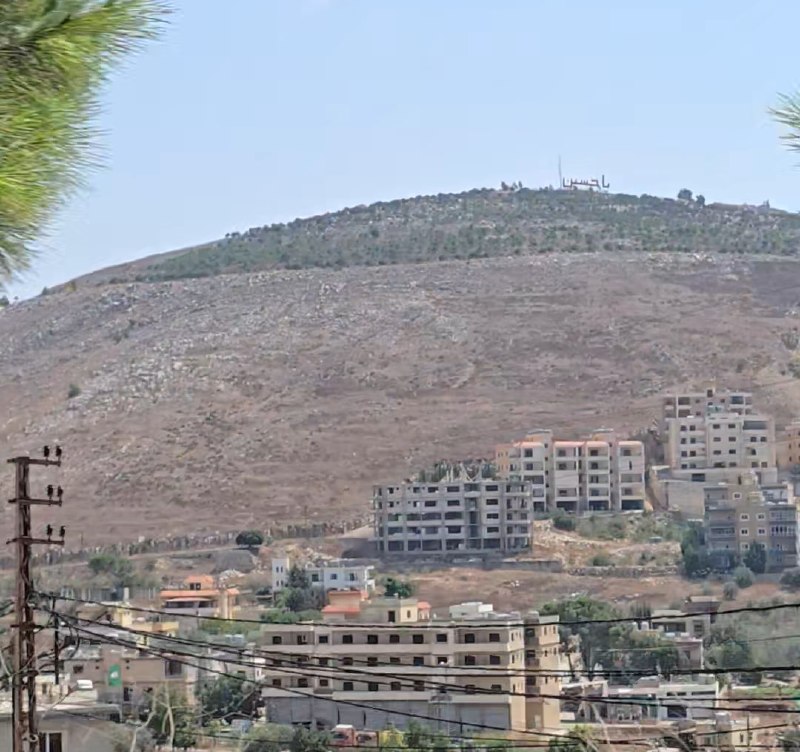
On the morning of 19 June 2026, three open-source intelligence feeds — an account tied to regional military mapping, a southern-Lebanon witness channel, and a Tel Aviv–adjacent aggregator — carried converging reports from the same stretch of contested ground: the Ali al-Taher heights, a ridge overlooking the Lebanese–Israeli border that has become one of the most fought-over features on the northern front. By 06:41 UTC, an Israeli-aligned channel was reporting that four Israeli soldiers had been killed overnight in clashes with Hezbollah over control of the hilltop, and that the IDF had "eventually failed to capture the surrounding area." Less than two hours later, a southern-Lebanon correspondent was describing fire still being exchanged across the ridge. By 07:56 UTC, the mapping channel declared that a renewed IDF push on the hill had been repelled by Hezbollah fighters defending what the channel called "one of Hezbollah's main strongholds."
The picture emerging across those three feeds is not that of a sweeping operation or a decisive counter-offensive. It is a hill that has refused to settle — two Israeli attempts within roughly 48 hours, at least four soldiers killed, no clear change in the front line. The northern border between Israel and Lebanon, which for most of the past two decades was treated as the quieter of Israel's frontiers, has hardened into a positional fight in which terrain is contested at a scale measured in metres, and in which the cost of those metres is being counted in body bags.
A ridge, three feeds, one contested account
The three accounts published within ninety minutes of each other on 19 June tell a coherent story, but they are not identical. The wfwitness channel, which has positioned itself as an on-the-ground correspondent in southern Lebanese villages along the frontier, framed the engagement as ongoing: "Clashes over the Ali al-Taher heights between the IDF and Hezbollah are still ongoing, with Israeli forces still attempting to secure control of the hill," and added in the same message that "the IDF failed" in an earlier, unspecified attempt. The rnintel channel, running what it labels intelligence-grade aggregation, reported a specific casualty figure — four Israeli soldiers killed overnight — and stated that "the IDF eventually [failed] to capture the surrounding area." The AMK_Mapping channel, which specialises in geospatial tracking of operations, characterised the morning's renewed push as a new attempt that "failed, with the advancing forces being repelled by Hezbollah," and described the hill as one of Hezbollah's main strongholds, overlooking areas the channel did not name in the truncated message.
Each feed has a clear institutional vantage point. wfwitness is proximity-based; rnintel is aggregation-based and Israeli-leaning in its sourcing; AMK_Mapping claims a more technical, mapping-led approach. The convergence of the three on the same outcome — a repelled IDF attempt, Israeli casualties, continued Hezbollah control — is the basis for treating the underlying event as well-corroborated at the level of "something happened here," even if the precise casualty count, the precise extent of the ridge still held by each side, and the precise Israeli tactical objective cannot be settled from these sources alone.
What the three feeds cannot tell us is what the IDF itself says. There is no IDF Spokesperson statement in this source set confirming or denying the four-soldier death toll, the failure of the operation, or the description of the engagement as a repulse. The official Israeli line on the operation, when it arrives, is likely to use different language — "operational activity to remove terrorist infrastructure," "targeted clearing operation," or the bureaucratic term the IDF uses for limited-objective ground pushes inside Lebanese territory. Whether the official framing will describe the engagement as a tactical pause, a tactical withdrawal, or an ongoing operation is the kind of language decision that will itself become a contested piece of evidence.
What "Ali al-Taher" actually is
The hill is referred to in the available feeds by name — Ali al-Taher — but neither of the three messages gives coordinates, elevation, or distance from the Blue Line. The AMK_Mapping message describes it as a stronghold that "overlooks" territory beyond, which is consistent with the way ridgeline positions have been described throughout the current northern front: high ground that can serve as observation, mortar and anti-tank positions, and as a launchpad for short-range fire into Israeli communities in the Galilee panhandle.
Hills like Ali al-Taher matter out of proportion to their physical size because the entire border landscape is built around them. Southern Lebanon rises sharply from the Israeli border, and the handful of ridgelines that command sightlines over the Hula Valley, over Metula, and over the cluster of northern Israeli towns that have been evacuated since hostilities intensified, are the geometry that determines who can see whom and who can shoot whom. When a single hill is described as one side's "main stronghold," the operational claim embedded in that description is that its loss would expose the defending side's positions on adjacent ridges to flanking fire, and would shorten the effective range at which Israeli armour and infantry could be engaged.
This is why an Israeli attempt that fails, and a Hezbollah defence that holds, has weight beyond the four soldiers named in the rnintel report. The hill, if the mapping channel's framing is correct, is not a tactical feature — it is a structural one. Whoever holds it imposes the terms of movement on the ridges on either side.
The casualty arithmetic, and what the feeds do not give us
Four Israeli soldiers killed overnight is a specific number, and it comes from a single feed — rnintel. The other two feeds do not repeat the figure. Without an IDF Spokesperson confirmation, and without a wire-service corroboration in the available sources, the four-soldier figure must be treated as an initial account, not as an established toll. That this is a known weak point in the reporting is itself worth noting: the sources published in the open-source environment on operations of this kind almost always lead with a higher figure, which is later adjusted down as names are matched to units and next-of-kin notifications are processed.
What is more telling is the direction of the error than the absolute number. In an operation that the IDF frames as ongoing and tactical, an early count of four dead is unlikely to be revised downward significantly; if anything, it is the kind of figure that tends to be confirmed, then quietly expanded as additional names emerge from hospitals and from the IDF's own casualty notification process. Even at the conservative end, a four-soldier toll from a single night on a single ridge is the kind of loss figure that, if confirmed, would land inside Israel as a politically charged event — the first engagement of the northern ground phase to produce a casualty figure high enough to register at the national level.
The feeds do not provide a Hezbollah casualty figure. Hezbollah does not, as a rule, publish its losses in real time, and the channels covering the engagement from the Lebanese side do not here offer one. That asymmetry is structural: the Israeli side leaks under pressure from a domestic media and political environment in which every fatality is named; the Hezbollah side leaks under different rules, and on its own clock.
The shape of a frozen front
Read together, the three morning feeds describe a pattern that has become characteristic of the northern front over the past several months: short, sharp Israeli attempts to seize specific pieces of high ground, followed by Hezbollah counter-pressure that prevents consolidation, followed by another attempt within days on the same objective. This is not the rhythm of a campaign of movement. It is the rhythm of a frozen front being tested, ridge by ridge, in engagements whose strategic meaning is greater than their tactical outcome.
A frozen front does not stay frozen indefinitely. It either thaws into a wider operation — the kind of broader ground push into southern Lebanon that Israeli planners have at various points telegraphed and held back — or it grinds. What the Ali al-Taher sequence suggests is grinding. Each IDF attempt costs the IDF soldiers, ammunition, and political capital at home. Each Hezbollah defence costs Hezbollah fighters, exposure of its positions to Israeli air and artillery, and the political necessity of being seen to hold the ground that its domestic audience understands as Lebanese territory. Both sides are paying a continuous price for a front line that is, in territory held, almost unchanged from where it was a week ago.
The structural frame here is straightforward. A two-decade period in which the northern border was the quieter of Israel's two active frontiers has ended. What replaced it is not a single decisive operation but a continuous contest over a finite set of ridges, villages, and observation points, in which the operational tempo is set by the side that can sustain the next attempt — and absorb the cost of the attempt that just failed.
What remains uncertain
Three things in the available reporting are not yet settled. First, the four-soldier casualty figure: it comes from one Israeli-leaning aggregator, has not been repeated by wire services in this source set, and awaits IDF confirmation or denial. Second, the precise current status of the hilltop: the AMK_Mapping message describes a repulse of "advancing forces," the rnintel message describes a failure to "capture the surrounding area," and the wfwitness message describes ongoing clashes — three slightly different framings that can be reconciled only with later reporting. Third, the Israeli political reaction: a four-soldier toll from a failed operation, if confirmed, is the kind of event that produces a public statement from the Defence Minister's office, an opposition response, and a domestic press cycle. None of that has yet appeared in this source set.
What can be said with the materials available is narrower than what the headlines will probably claim. On 19 June 2026, at the time these three feeds were posted, Israeli forces had attempted to take the Ali al-Taher heights, had been engaged by Hezbollah defenders, and had not been confirmed by the IDF or by wire reporting in this source set as having secured the position. The hill remained contested. The four soldiers named by rnintel were, on that channel's account, killed in the engagement. The rest is to be confirmed.
Desk note: Monexus is reporting this engagement on the basis of three converging open-source feeds and is flagging, rather than asserting, the four-soldier casualty figure pending IDF confirmation. Where mainstream wires will lead with the Israeli official line and treat the Hezbollah hold of the ridge as the disputed element, this piece treats the repulse as the corroborated baseline and the Israeli official framing as the still-unconfirmed variable.
Wire provenance
This editorial synthesis draws on the following public wire/social posts:
- https://t.me/AMK_Mapping
- https://t.me/wfwitness
- https://t.me/rnintel