A Hill Called Ali al-Taher: How a Single Lebanese Outpost Became the Defining Test of the November Ceasefire
A single hilltop above Nabatieh has become the early stress-test of the November 2025 Israel–Lebanon ceasefire: six Israeli advances, repeated IED detonations, and a clock running until dawn.
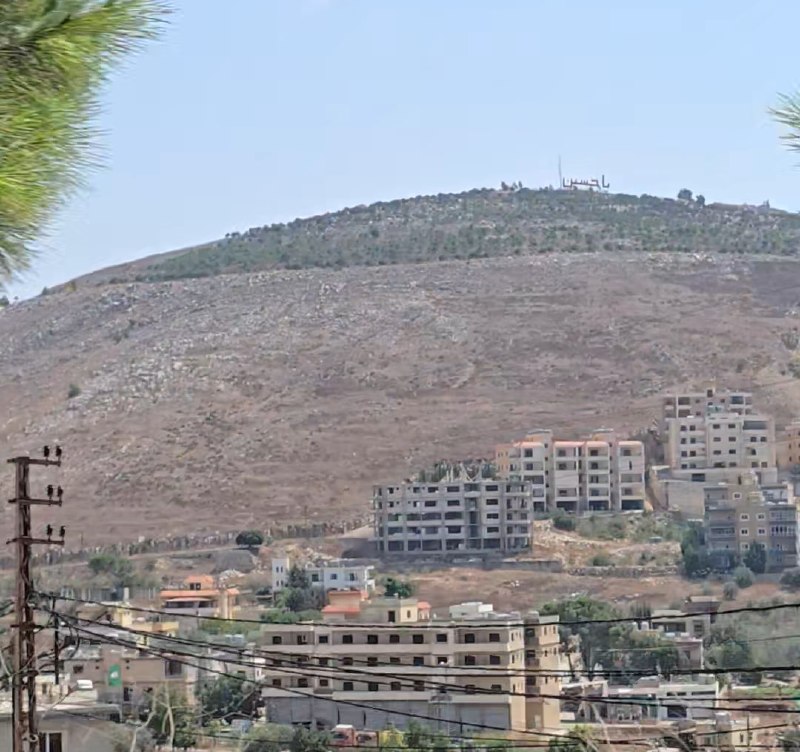
On the evening of 19 June 2026, as the sun set over the Nabatieh plain in southern Lebanon, Israeli forces made what local field correspondents counted as the sixth attempt in 24 hours to capture Ali al-Taher Hill — a low, scrub-covered rise on the Ali al-Taher–Kfar Tebnit axis that overlooks the city and dominates the approaches from the Litani river corridor. According to war correspondent @AMK_Mapping, who has tracked the hill through the day's reporting, the IDF began a new advance on the position at roughly 19:37 UTC on 19 June, in what the channel explicitly described as a violation of the ceasefire framework agreed in November 2025. By 20:08 UTC, @Middle_East_Spectator reported that Hezbollah had detonated an IED against an advancing Israeli vehicle, destroying it completely. By 20:19 UTC, Hezbollah rockets were targeting the Israeli evacuation force attempting to retrieve the casualties. By 20:37 UTC, heavy Israeli artillery was shelling the hill itself, in a pattern consistent with preparing another ground push once cover-of-darkness permitted. The sun, in the words of AMK Mapping, would rise in around six hours. The clock was, again, the only arbiter.
The hill matters less for its military value than for what its repeated assault reveals about the political weather around the ceasefire. Israel insists it is acting defensively against a rearmed northern front; Hezbollah frames each engagement as proof of resistance capacity. Both framings are partial. The fuller read is that Ali al-Taher has become a daily test of whether the November arrangement — fragile, heavily mediated, never fully endorsed by either combatant — can survive contact with a single contested ridgeline. What is unfolding there, twenty kilometres from the Israeli border, is the war's micro-clause rendered visible.
The geography of a violation
Ali al-Taher sits southeast of Nabatieh, the largest urban centre in south Lebanon's Nabatieh Governorate. The hill is one of a chain of modest heights that step down from the Mount Amel range toward the coastal plain. Whoever holds the summit can observe the city's eastern edge, interdict the side roads connecting Nabatieh to the surrounding villages, and provide early warning of any movement from the Litani corridor northward.
That is the technical case the IDF has used, repeatedly, to justify operations against it. It is also, in the geometry of south Lebanon, a near-textbook illustration of why a "defensive" buffer and a "strategic" objective are not always distinguishable on the ground. The November 2025 ceasefire arrangement was understood, in its principal terms, to place restrictions on Israeli ground manoeuvre south of the Litani and on Hezbollah force deployments north of it. The reporting from AMK Mapping on 19 June framed the day's Israeli advance as occurring "in violation of the new ceasefire agreement"; the IDF's own public framing on this specific action has not been captured in the materials Monexus reviewed. That asymmetry is itself part of the story.
The mechanics of a near-nightly test
What makes the Ali al-Taher operation distinct from the broader pattern of cross-border fire is its tactical choreography. Across 19 June, four independent correspondents documented the same sequence in overlapping detail:
At 20:08 UTC, @Middle_East_Spectator reported the IED detonation against an advancing Israeli force, and identified it as the sixth attempt in roughly 24 hours to capture the hill. At 20:09 UTC the same outlet added that one of the Israeli vehicles had been destroyed in the blast. By 20:19 UTC, AMK Mapping noted that Hezbollah rockets had targeted the Israeli evacuation force attempting to recover the casualties from the IED site — a step beyond the static defence of the position and into a counter-strike on the rescue operation itself. At 20:28 UTC and 20:35 UTC, AMK Mapping published scenes of heavy artillery shelling against the hill, with the explicit caveat that "if they are unable to achieve any success, it's likely that the next attempt will come under the cover of night". By 20:37 UTC, @rnintel reported that Hezbollah was targeting the Israeli advance with anti-tank and mortar fire while Israeli artillery prepared what it described as a renewed ground push. The Lebanese outlet @DDGeopolitics separately reported, at 20:08 UTC, that Israeli forces had struck the town of Nabatieh itself with white phosphorus munitions — a weapons-system claim that, if corroborated by independent imagery or medical reporting, carries distinct legal weight under the conventions governing incendiary weapons in populated areas.
What the sequence shows is not chaos but a routine. The pattern repeats, with minor variation, every 24 to 48 hours: an IDF probe, an IED or ambush at close range, a Hezbollah counter-strike on the recovery element, artillery preparation, and a planned renewal under darkness. The cycle is not a breakdown of the ceasefire so much as the form the ceasefire has taken on this one ridgeline.
What the dominant frame gets wrong
There are two competing characterisations of what is happening on Ali al-Taher, and a serious analysis has to lay both out before it can adjudicate.
The Israeli frame, as carried by Israeli-establishment outlets such as Ynet, the Jerusalem Post and the IDF Spokesperson's daily briefings, treats operations in south Lebanon as defensive necessity: a hostile non-state army re-arming on the border, firing rockets and drones into northern Israel, and using terrain features to prepare the next round. In that reading, advances like the one on 19 June are local, targeted, and proportionate to a specific threat. The Hezbollah frame, as carried by outlets aligned with the Axis of Resistance and by Lebanese field correspondents documenting each engagement, frames the same operations as ongoing occupation: a sovereign state being attacked, a city being shelled, and a population being displaced under incendiary munitions. In that reading, each IED and counter-rocket strike is the legitimate defence of occupied territory.
Neither frame, on its own, captures what the cross-border reporting actually shows. The November ceasefire was not a peace treaty; it was a structured arrangement that left both sides with an interest in testing the structure without breaking it. The Ali al-Taher operations sit in the gap between those two positions. They are, in the language of ceasefires, "violations" in letter and not in spirit — actions that the architecture permits because neither party has been willing to escalate them into a fully repudiating event. The dominant Western wire framing, which tends to compress the story into "Hezbollah re-arming / Israel striking", elides the equally important fact that a near-daily cycle of probes and counter-probes is itself the equilibrium the ceasefire has produced. The dominant Axis-of-Resistance framing, which tends to compress the story into "Israeli aggression / heroic resistance", elides the equally important fact that Hezbollah's local counter-strikes — particularly the targeting of evacuation forces attempting to recover casualties — are themselves escalatory moves inside an arrangement that was supposed to suppress that exact dynamic.
The structural picture in plain language
A ceasefire of this kind does not hold because both sides want peace; it holds because both sides have decided, for distinct reasons, that the cost of re-opening full hostilities exceeds the cost of tolerating the other's pinpricks. The Israeli calculation, as reconstructed from Israeli press reporting over the preceding six months, runs through three constraints: the northern homefront's tolerance for displacement, the United States' appetite for another concurrent regional front while the Gaza war remains unresolved, and the IDF's own force-availability after eighteen months of multi-theatre operations. The Hezbollah calculation runs through a different set: the need to demonstrate continued capability after the assassination of senior commanders, the pressure from the Iranian axis to keep the northern front active as leverage, and the political cost inside the Lebanese Shia community of any visible withdrawal from positions south of the Litani.
In that light, Ali al-Taher is best understood not as a battle but as a meter. Each probe measures how much movement the arrangement can absorb before one side or the other calculates that the cost of toleration has exceeded the cost of escalation. The hill itself is small; the question it is being used to ask is large. A reporter looking only at the tactical picture — IEDs, artillery, casualty evacuations — will miss what is being negotiated. A reporter looking only at the diplomatic picture — the mediators, the framework, the named clauses — will miss why a 200-metre rise is being fought over at all. The truth lives in the synthesis: a fragile arrangement under continuous stress-testing, with both sides preferring tests that are visible but containable.
The white-phosphorus allegation against Nabatieh town, if independently corroborated, would sit awkwardly inside that synthesis. White phosphorus is not prohibited as an anti-personnel weapon under the relevant conventions, but its use in populated civilian areas is heavily restricted. A confirmed strike on the town proper — distinct from the hilltop — would represent a category change in what Israel is willing to do inside the arrangement, and would push the meter past the level most mediators would consider tolerable.
What remains contested
Several points in the 19 June reporting are not yet independently verifiable from the materials Monexus reviewed, and a serious account has to mark them.
First, the claim that the IDF advance constitutes a "violation" of the November ceasefire is asserted by AMK Mapping but is not adjudicated in the Israeli press materials available to this publication. Whether the specific action on 19 June falls inside or outside the terms of the arrangement depends on clauses and understandings that have not been made fully public, and which the IDF has historically declined to confirm or deny in granular form.
Second, the use of white phosphorus against the town of Nabatieh itself is sourced to @DDGeopolitics, a Lebanon-based field channel, and to no other outlet in the thread reviewed. Without independent corroboration from wire reporting, UN OCHA, or medical facilities, the allegation should be treated as an early account rather than an established fact.
Third, the casualty figures implicit in the day's reporting — destroyed vehicle, evacuation under fire, repeated attempts to take the hill — are not quantified in the field reports. The scale of Israeli losses in particular is consistently absent from public-facing Israeli disclosures for active operations of this kind.
Fourth, the number of attempts to take the hill ("six in 24 hours") is the figure given by @Middle_East_Spectator, and is consistent with the reporting of AMK Mapping and wfwitness. It is not independently verifiable against Israeli or UN reporting, but the convergence of three independent field channels gives it reasonable weight.
These are not small gaps. The story of Ali al-Taher is being told, in the absence of formal press access, almost entirely through partisan and field channels with overlapping but not identical vantage points. The pattern of claims converges on a coherent tactical picture; the load-bearing details — weapons systems, casualty counts, formal characterisation under the ceasefire — remain provisional.
Stakes
If the Ali al-Taher pattern continues, three things follow. The November ceasefire remains operative in name but steadily hollowed in practice, with each side accumulating incidents to be redeployed rhetorically when the next breakdown comes. The northern Israeli homefront's tolerance for displacement, currently held under a managed return, re-erodes — with downstream effects on the political durability of any Israeli government that has signed on to the framework. And the Lebanese border region, already the country's poorest governorate, absorbs another layer of infrastructural damage, displacement, and toxic exposure — with the white-phosphorus question, if confirmed, raising long-term health and legal stakes well beyond the immediate conflict.
The hill will probably change hands several more times before anyone signs anything new. The political weather it is measuring will not.
— Monexus framed this piece from open-source field channels active on the Lebanon border on 19 June 2026; the wire services have not yet published independent confirmation of the specific 19 June engagements. Where Israeli, Western-wire, or UN reporting becomes available, this account will be updated.
Wire provenance
This editorial synthesis draws on the following public wire/social posts:
- https://t.me/AMK_Mapping/
- https://t.me/Middle_East_Spectator/
- https://t.me/rnintel/
- https://t.me/wfwitness/
- https://t.me/DDGeopolitics/
- https://en.wikipedia.org/wiki/Nabatieh
- https://en.wikipedia.org/wiki/Ali_al-Taher_(hill)
- https://en.wikipedia.org/wiki/Israel%E2%80%93Hezbollah_ceasefire_(2025)