The Hill That Won't Fall: How Ali al-Taher Became the New Litmus Test of the Israel–Hezbollah Frontier
A ridge the size of a city block has become the most contested piece of ground on the Israel–Lebanon frontier. Three days of fighting there expose how tactical deadlocks are shaping strategic doctrine.
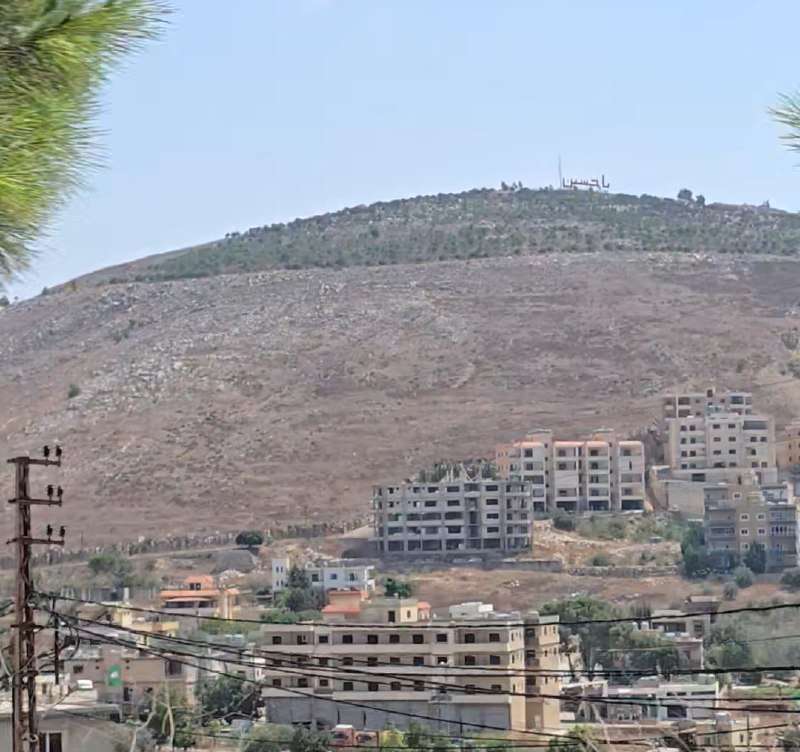
At first light on 19 June 2026, guided missiles streaked uphill toward Israeli armour dug into the scrub of south Lebanon's Ali al-Taher ridge. Hezbollah's own media arm, the Al-Manar-adjacent channels that publish in parallel on Telegram, said the strikes hit IDF tanks in the Ali al-Taher area overnight into Thursday, claiming direct responsibility. By mid-morning, open-source battlefield mappers were reporting the opposite of what those strikes implied: an Israeli attempt to seize the hilltop had been repelled, with advancing forces pulled back under fire. The two accounts, fired across the same ridge within hours of each other, are not contradictory so much as complementary. Each side is telling the truth about its own action; neither is describing the war the other is fighting.
The hill is roughly the size of a city block, but its tactical value is geometric rather than symbolic. Ali al-Taher sits on the spine of the southern Lebanon highlands and looks down onto the Israeli towns and staging areas that have absorbed rocket and anti-tank fire since the frontier reopened in late 2023. Whoever holds the ridge controls the line of sight into the Hula Valley and the northern approaches to Kiryat Shmona; whoever loses it loses the ability to fix the other side inside overlapping fields of fire without exposing their own armour. The fights of 19 June are the third serious Israeli attempt to take and hold the position in two weeks, according to mapping accounts that trace the ridge's daily status by satellite, drone footage, and combatant radio traffic. The pattern of those attempts, and the speed with which Hezbollah has been able to reconstitute its position each time, is starting to redraw the operational vocabulary of the frontier.
What happened on the ridge on 19 June
The most recent round began overnight, when Hezbollah channels on Telegram posted a brief claiming responsibility for guided-missile strikes against IDF armour in the Ali al-Taher area, asserting that Israeli forces attempting to advance on the hill had been engaged and that the attack was part of a broader response to Israeli operations in the south. The English-language Hezbollah account English Abuali carried the claim at 08:10 UTC on 19 June, framing the firing as a defensive response to an Israeli push.
Within two hours, AMK Mapping, a Beirut-based open-source intelligence account that tracks the south Lebanon front, posted a different reading of the same hours. The Israeli attempt to capture the hill, AMK wrote at 07:56 UTC, appeared to have failed; advancing forces had been repelled by Hezbollah fire. Ali al-Taher, the channel added, remained one of Hezbollah's principal strongholds, with line-of-sight reach across the border area.
By 07:09 UTC, the war correspondent channel War Fzone, operating under the handle @wfwitness on Telegram, had posted a third frame: clashes were still ongoing over the heights, Israeli forces were still attempting to secure the hill, and earlier Israeli pushes to consolidate the position had not held. The phrasing of all three messages is consistent with the same underlying firefight, viewed from three different vantage points. None of them claims a definitive outcome. All three treat the ridge as a contested and unresolved piece of ground as the day begins.
The absences in the public record matter as much as the claims. No Israeli military spokesperson statement on the 19 June engagement is reproduced in the available thread material. No wire-service confirmation of the Hezbollah strike, no footage geolocated to the precise contour of the ridge, no independent casualty figure from either side. The picture on 19 June is built almost entirely from partisan Telegram channels on both sides, and from the open-source cartographers who try to reconcile them in real time. That is itself a structural fact about how the frontier war is now being read by anyone outside the operations rooms of either army.
The counter-narrative: what the wire is not yet saying
Mainstream Western wire reporting on the Israel–Hezbollah front has, over the past two months, settled into a vocabulary of attrition. Israeli officials are quoted on tempo and targeting; UNIFIL spokespeople are quoted on blue-flag movements; Lebanese and Israeli civilian casualty figures are cited from the Lebanese health ministry and the IDF. What the wires are not yet doing is naming the individual tactical features, the ridges, the wadis, the specific villages, where the line of contact is actually being contested day to day. The reporting is correct at the strategic level and almost silent at the operational one.
That silence has consequences. When the public record on a specific fight is dominated by partisan and open-source channels, the canonical version of what happened gets written by whoever posts first and most loudly. On 19 June, that meant Hezbollah's guided-missile claim was in the public domain before the open-source mappers, and the open-source mappers' reading of an Israeli repulse was in the public domain before any wire could decide what, if anything, to confirm. By the time a wire desk gets to the same morning, the war has already moved on to the next ridge, the next salvo, the next disputed claim. The wire then publishes a synthesis that captures the strategic shape and quietly concedes the tactical detail to the channels.
The structural problem is not new. It is the same problem that has accompanied every phase of this war in Gaza, in the West Bank, and in the north. The institutions with the resources and the editorial discipline to write the authoritative record move too slowly for a war that is now paced by Telegram. The institutions with the speed, the partisan accounts and the open-source mappers, are not in a position to write a record that holds weight across the political spectrum. The result is an information environment in which the only people writing about Ali al-Taher in close to real time are the people fighting on it, the people watching them through drone footage, and the people mapping their movements in spreadsheets.
What the hill's geometry implies
Strip the rhetoric away and Ali al-Taher is a textbook defensive feature. It is high relative to the surrounding terrain, with restricted approaches on at least two sides. The vegetation is thin enough to deny cover at long range. The line of sight into northern Israel is uninterrupted. Any force that takes the hill and tries to hold it is exposed to anti-tank guided weapons fired from the reverse slope and from the neighbouring ridgelines, and to indirect fire from the broader Hezbollah mortar and rocket array. Any force defending the hill has to do so against an attacker who can choose the time, the axis, and the weight of the assault.
For the IDF, the calculus is the standard one for high-intensity manoeuvre against a peer-light adversary: take the high ground, deny the line of sight, fix the defender in place, and use the position as a launch pad for the next operation inland. The problem is that the operation does not end when the hill is taken. It ends when the hill is held, and the holding cost, in armour, in personnel, and in daily resupply under observed fire, is what has produced the pattern of repulses and re-attempts that AMK and War Fzone have been documenting.
For Hezbollah, the calculus is the inverse one. The hill is one of an interlocking series of positions along the ridge, none of which can be held in isolation. Losing Ali al-Taher is not a strategic disaster; it is a tactical inconvenience that hands the initiative for forty-eight hours to the IDF before the position is re-taken or bypassed. The Israeli operation, in other words, is paying a high operational price for a feature whose loss Hezbollah can absorb and whose retention Hezbollah can contest indefinitely. The map of the south Lebanon front is starting to look less like a frontline that one side is winning and more like a slow-motion negotiation over who has to pay more to hold each square kilometre.
That is the structural shift, and it is the part of the story the partisan accounts on Telegram are not equipped to capture on their own. The partisan accounts are excellent at the micro: this tank, this missile, this ridge. The structural shift is visible only when the micro is read across weeks and across ridges, which is the work of the open-source mappers and, in due course, of the wires and the think tanks. None of that work has caught up with the morning of 19 June. It will catch up. The pattern it will describe is the one the partisan accounts are already showing in fragments.
Precedent: the ridge wars of 2024 and what they cost
The Israel–Hezbollah frontier has been fought over features like Ali al-Taher before, with very different outcomes. The 2024 operations in the southern Lebanon border zone saw Israeli armour and engineering units push into several villages and ridgelines in a campaign the IDF framed as a limited operation to push Hezbollah north of the Litani. Some of those positions were held for weeks, some for months, and the cost in armour and personnel was, by any independent reading, heavy. The Hezbollah response, in 2024, was the salvo of rockets, drones, and anti-tank missiles that displaced tens of thousands of Israelis from the north and produced the cross-border escalation that culminated, eventually, in the ceasefire of late 2024.
The geometry of the present fighting is different. The 2024 operations pushed into the lowland and the village line, where the IDF's edge in armour, engineering, and air support was decisive. The 2026 operations are pushing into the highland, where the defender's edge in knowledge of the dead ground, in pre-sited fire plans, and in the ability to absorb a single ridge loss and contest the next one, is much greater. The Israeli operation that worked in the lowland is being reapplied, with limited adjustment, to the highland, and the result is the pattern of repulses and re-attempts that the open-source mappers have been documenting for weeks.
This is not an argument that the Israeli operation cannot succeed. The IDF has the resources, the engineering capability, and the air superiority to take and hold any single feature in south Lebanon, including Ali al-Taher, if it is prepared to pay the price. The argument is that the price of taking the highland feature by feature, ridge by ridge, in a campaign of limited duration and limited political mandate, is high enough that the campaign is likely to be re-thought before it is finished. The pattern of the last two weeks, with three serious attempts on the same hill and no consolidation, is consistent with the early phase of a campaign that has not yet found a sustainable answer to the highland problem.
The stakes over the next thirty days
The frontier war in south Lebanon is, in its present form, a war of tempo and cost. Tempo belongs, for the moment, to the open-source mappers and the partisan Telegram channels, who are documenting the war at a speed the wires cannot match. Cost belongs, for the moment, to the IDF, which is paying the operational bill for a campaign whose political ceiling is unclear. Hezbollah is paying a different cost, in the cumulative exposure of its southern commanders and its anti-tank units to Israeli fire, and in the slow drift of its more exposed positions toward the kind of attrition that the 2024 campaign inflicted.
Over the next thirty days, the question that the Ali al-Taher fighting is putting on the table is whether the Israeli campaign can be re-scoped from a ridge-by-ridge operation into something more decisive without crossing the political threshold that the late-2024 ceasefire was designed to keep below. The IDF has options: a deeper push into the highland, a widening of the front to multiple ridges simultaneously, a shift to a siege-and-starve posture around the Hezbollah positions, or a stand-down and a reversion to the cross-border fire regime that obtained between late 2024 and mid-2026. Each of those options is being argued inside the Israeli defence establishment in real time, and the hill fights of 19 June are the operational evidence on which that argument is being made.
For the Lebanese civilian population in the south, the operational argument is being made at ground level, in the villages below the ridge, where the displacement, the damage, and the daily exposure to crossfire are the price of the tactical negotiation above them. The wire reporting on the civilian cost of the campaign is consistent and credible; the wire reporting on the operational logic of the campaign is, as of 19 June, several days behind the partisan and open-source record. That gap is itself a story, and it is the one this publication is most interested in following as the next month unfolds.
What remains genuinely uncertain, on the morning of 19 June, is whether the hill will change hands again before the day is out. The partisan accounts on both sides are explicit that the fight is ongoing; the open-source mappers are explicit that the Israeli consolidation has not held; the wire is, as of writing, silent on the specific feature. The canonical version of the day will be written in retrospect, and it will be written by the institutions that take the time to weigh the partisan claims against each other. Until then, the hill sits where it sat at dawn, contested by two armies that are both paying more for it than either would like, and watched over by a public record that is faster than the wires and more partisan than the cartographers would like.
Wire provenance
This editorial synthesis draws on the following public wire/social posts:
- https://t.me/englishabuali
- https://t.me/AMK_Mapping
- https://t.me/wfwitness