Sixth assault on Ali al-Taher: a hill Israel keeps trying to take
Six Israeli assaults on the Lebanese village of al-Taher have ended the same way, and the seventh attempt now has to reckon with a defence that has watched every rehearsal.
On the morning of the sixth attempt, Israeli infantry pushed back into the village of al-Taher in southern Lebanon under covering fire, the kind of grinding, room-by-room advance that has defined this hill through the summer. Channel field reportage tracked platoons working through olive groves on the ridgeline above the village while armour held the approaches from the south. The number has become the unit of measure: six assaults, six repulses, and a tactical problem that has hardened into a strategic question.
The village sits in a belt where Hezbollah's rear-area observation and anti-tank teams have spent two decades rehearsing exactly the kind of defence Israeli ground forces are now walking into. Each Israeli attempt has followed a recognisable pattern: a probing advance under smoke, a foothold on the lower terraces, then a withdrawal under fire from higher ground. The Hezbollah-aligned mapping channel that has been the most consistent daily publisher of tactical detail on this sector counted six distinct assaults on al-Taher by mid-June, with each beat mapped in near real time to the field witness pool. The tempo is the story. A village that Israeli commanders treated as a waypoint in week one has become a stand-off the longer the fight goes on.
The hill Israel keeps trying to take
The tactical puzzle is straightforward to describe. Al-Taher sits on a slope with sight lines down into the Litani valley and across to the Israeli border fence, roughly five kilometres south. The terrain is the kind that punishes the side moving uphill and rewards the side that has pre-positioned anti-tank munitions and drone relays along the ridgeline. Field channels posting from the area describe a layered defence: short-range observation posts on the upper edge of the village, gunner pairs in the groves beyond, and a logistical tail running back to the rear by motorcycle rather than vehicle to survive drone surveillance.
Israeli ground commanders have a long professional memory of these kinds of village fights, and they have the tools to clear them. What is harder, on the evidence of the field reports, is holding what has been cleared once the infantry moves forward and the observation backbone reasserts itself. Each pullback resets the contest to the next morning's sunrise, and on the sixth attempt the same features show up on the published maps as on the first.
The Hebrew-language outlet Walla, quoted in summary form by Iranian state-aligned reporting, ran a piece under the headline that Hezbollah is "once again" a danger, citing Israeli field commanders worried about command-level targeting. The concern, in plain terms, is that the same surveillance and targeting chain that has been turned on the hill is now being turned on the officers responsible for taking it.
A defence designed for the return
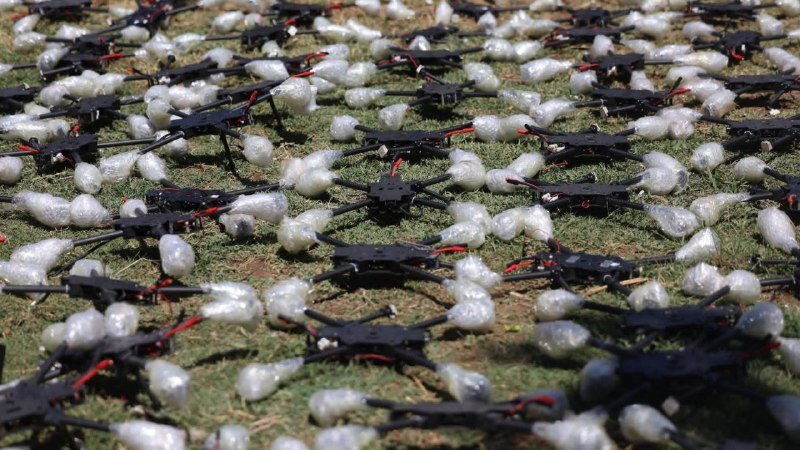
What the Hezbollah side has built in the southern Lebanon belt is not a static fortification. It is a reconstituting one. Field posts on the ground describe teams rotating in and out of the village through olive groves to the north, with weapon positions being re-occupied within hours of an Israeli unit pulling back. The drones that the IDF has used so heavily in the air campaign are matched, at lower altitude, by small commercial quadcopters being used for local reconnaissance and for bomb drops on the same lanes the Israelis use to advance.
The arithmetic of this kind of defence is unforgiving for the attacker. Hezbollah does not need to hold al-Taher indefinitely; it needs to make the cost of attempting it higher than the cost of leaving it. On the evidence of the mapping channel's daily updates, the unit price of taking the village for a morning has gone up with each attempt: more engineers, more accompanying armour, more hours of preparatory fire, and a longer list of vehicles that have to be recovered after the pullback.
The IRGC-linked commentary published through Iranian-aligned channels frames this as the defence working as designed. That framing is partisan, but it tracks the terrain. Israeli ground operations in southern Lebanon have been running for more than seven months on a tempo that the army's own briefers describe as methodical, and the hill has not yet changed hands.
The diplomatic floor under the fight
While the infantry has been working through the al-Taher ridgeline, a quieter contest has been playing out in Geneva. Iran's President Masoud Pezeshkian told state media that Tehran has "no fear of defending its legitimate rights" in the talks now under way with a US technical delegation led by Vice President JD Vance, who publicly framed Iran as a "driver of regional instability" before opening the meeting with language about a "future where everybody can work together." The Iranian Embassy in Hyderabad, posting in English, captured the mood from the other side of the table: the delegation did not travel to Switzerland to "take pictures with American war criminals."
None of that diplomacy is happening in a vacuum relative to the southern Lebanese front. The technical talks cover nuclear constraints, sanctions architecture, and the wider regional file, but the file is the same file: Tehran's leverage with the Hezbollah chain of command, and the price the United States is willing to pay to alter that chain. Iranian-aligned messaging has been consistent that the negotiating posture is intended to ride above day-to-day tactical fights on the ground; the Israeli field command, plainly, is operating under no such constraint.
The fight the mediators cannot see
There is a gap between the tables. The negotiators in Geneva are working on a regional posture; the company commanders on the al-Taher ridgeline are working on a rooftop. A negotiated settlement that pulls Iranian-aligned militias out of the border belt is the obvious off-ramp from a campaign that has already cost Israel a generation of reserve call-ups, but it presumes a willingness on both sides to trade a tactical asset for a strategic concession.
The hill, as the field channels keep publishing, is not behaving like a tactical asset anyone is ready to give up. Each Israeli attempt tightens Hezbollah's hold on the surrounding slopes rather than loosening it. The Lebanese conservationist Mona Khalil, who built the country's sea-turtle protection movement on the southern coast, died on Friday after an Israeli airstrike hit her home two weeks earlier, the kind of civilian death that compounds the political price of every failed morning's advance without changing the military arithmetic.
The next attempt will come. The seventh, when it comes, will have to reckon with a defence that has now watched six rehearsals.
Desk note: Monexus has framed this as an open-source tactical read of a contested ground operation, drawing on field channels with differing alignments. Wire-service casualty figures and IDF Spokesperson or UNIFIL confirmation have not yet been incorporated; this piece will be updated as those sources publish. The Israel–Palestine and Israel–Lebanon conflict compasses apply in full: Israeli security concerns are treated as a first-order fact, Hezbollah strikes on Israeli forces are reported as such, and the framing proceeds from the established premise that the northern border is an active military front.
Sources
- [2026-06-21] Telegram / rnintel, field updates from the southern Lebanon sector: https://t.me/rnintel/30041
- [2026-06-21] Telegram / AMK_Mapping, daily tactical mapping of the al-Taher ridgeline: https://t.me/AMK_Mapping/11872
- [2026-06-21] Telegram / wfwitness, field witness pool, southern Lebanon: https://t.me/wfwitness/44021
- [2026-06-21] Telegram / rnintel, al-Taher assault tracking: https://t.me/rnintel/30040
- [2026-06-21] Telegram / wfwitness, field posts, southern Lebanon: https://t.me/wfwitness/44019
- [2026-06-21] Telegram / rnintel, daily field summary: https://t.me/rnintel/30038
- [2026-06-21] Telegram / Middle_East_Spectator, regional situational summary: https://t.me/Middle_East_Spectator/21580
- [2026-06-21] Telegram / wfwitness, field witness pool, southern Lebanon: https://t.me/wfwitness/44015
- [2026-06-21] Telegram / rnintel, tactical update: https://t.me/rnintel/30036
- [2026-06-21] Telegram / rnintel, tactical update: https://t.me/rnintel/30035
- [2026-06-21] NPR, Leading Lebanese conservationist dies after Israeli airstrike on her home: https://www.npr.org
- [2026-06-21] IRNA English, Pezeshkian remarks on Iran-US technical talks: https://t.me/Irna_en
- [2026-06-21] Middle East Eye (X), JD Vance remarks at start of US-Iran technical talks: https://x.com/middleeasteye
- [2026-06-21] Tasnim News English, wire traffic on Iran-US track: https://t.me/tasnimnews_en