Six attempts on one hill: what the Ali al-Taher fight says about the southern Lebanon front
For the sixth time in days, Israeli forces tried to seize Ali al-Taher hill above Nabatieh — and a Hezbollah IED stopped them. The pattern, more than any single blast, is the story.
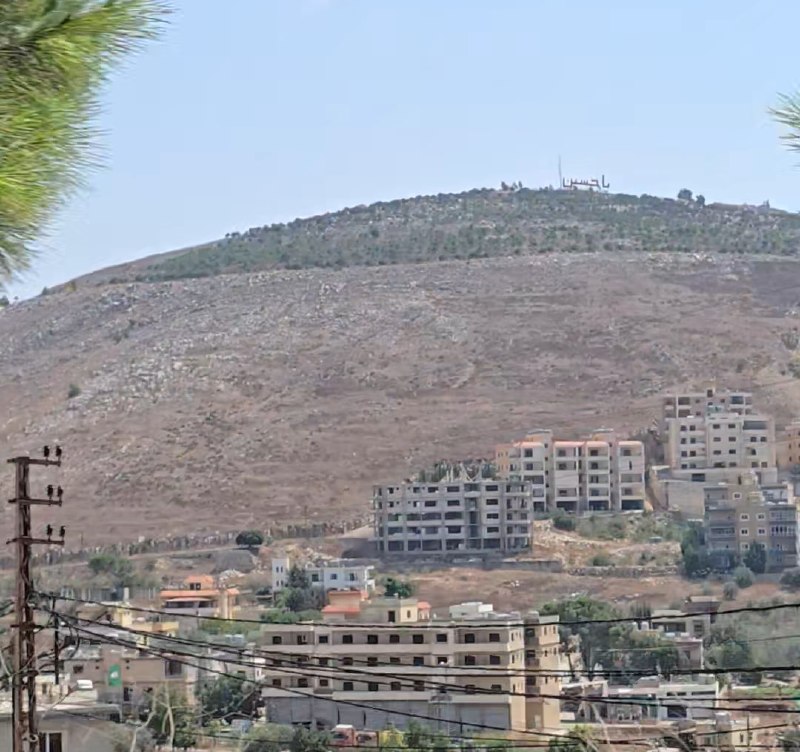
On the evening of 19 June 2026, an Israeli force attempting to advance on the Ali al-Taher hill, a strategic ridge overlooking the city of Nabatieh in southern Lebanon, was caught by an improvised explosive device that Hezbollah said it had planted in the path of the column. Footage circulated on Telegram channels covering the southern front showed at least one vehicle destroyed in the blast. Within the hour, Israeli artillery had struck the town of Nabatieh itself with what regional war-monitoring accounts identified as white phosphorus munitions — a use of incendiary ordnance against a populated area that international humanitarian law treats as presumptively unlawful outside open, unpopulated terrain. Two scenes, separated by minutes, both inside the same hill-to-town corridor.
This is the sixth Israeli attempt to take Ali al-Taher documented on open-source channels since the latest ceasefire framework took effect. The hill matters because it commands Nabatieh — a city of roughly 100,000 people and the administrative capital of south Lebanon — and because the southern Lebanese borderlands remain the only place where the Israel–Hezbollah front is still being fought with regular infantry tactics, road-laid explosives, and direct fire support. The Israeli push, Hezbollah's IEDs, and the artillery counter-strikes together describe a small, contained, and deeply characteristic campaign: one hill, retried again and again, while diplomacy in Beirut, Doha, and Washington runs in parallel and largely elsewhere.
What actually happened, in the order Telegram showed it
The reporting sequence on the evening of 19 June begins at 19:37 UTC, when the mapping account AMK_Mapping posted that "the IDF has begun a new attempt at capturing the strategic Ali al-Taher Hill overlooking the city of Nabatieh," framing the operation explicitly as "in violation of the new ceasefire agreement." By 20:03 UTC, the Russia-aligned channel rnintel reported that "IDF ground forces are again attempting to advance towards Ali al-Taher, southeast of Nabatieh," and noted that "Hezbollah detonated an IED against Israeli forces attempting to invade the area." Two minutes later, at 20:05 UTC, the Beirut-based DDGeopolitics carried a second line: "Israeli forces struck the town of Nabatieh in southern Lebanon with white phosphorus munitions." By 20:08 UTC, the war-monitoring account wfwitness had posted footage of the IED strike on an Israeli vehicle near Ali al-Taher, and by 20:09 UTC, the Middle East Spectator feed was running the same strike as its lead item, headlined as "the 6th attempt by the IDF to capture Ali Al-Taher hill."
The order matters. The IED detonation is the event that opens the cycle; the white-phosphorus strike on Nabatieh town is the response. Two of the five sources flag the ceasefire violation framing explicitly; none of the five describe the Israeli advance as defensive. Read together, they describe a pattern in which Hezbollah's principal battlefield tool along this corridor is the buried roadside device, and the Israeli answer to a stalled ground advance is escalating fire onto the town below.
The case that the hill matters more than the headlines suggest
A single ridge, retried six times, is a small story by any reasonable metric of the war. Ali al-Taher is not the Litani line; it is not the border villages of October 2023; it does not, on its own, change the balance of force between Israel and Hezbollah. But the southern Lebanese front has spent most of 2026 in a peculiar state — neither the full ground war of late 2024 nor a stable ceasefire. Operations of the kind now being run at Ali al-Taher are how that ambiguity is enforced on the ground.
The strategic logic, on the Israeli side, is straightforward. Nabatieh is the largest population centre in the southern belt. Whoever holds the ridgeline above it observes the approach roads into the city, dominates the secondary road network that Hezbollah uses to move anti-tank squads and resupply missiles, and can fire into the town itself without the kind of ammunition expenditure that artillery requires. A persistent Israeli presence on the hill would convert the ceasefire from "no ground operation south of the Litani" into "no Hezbollah presence in the southern suburbs," which is the outcome the Israeli security establishment has demanded since the original November framework fell apart.
Hezbollah's logic is the mirror image. A buried IED does not need to destroy a tank; it needs to make the cost of the next attempt higher than the cost of leaving the hill contested. Six failed attempts in a single week is the kind of figure that, when it lands in domestic Israeli media, makes the operational case for any further push more difficult to sustain. The explosives are cheap. The vehicles are not. The arithmetic favours the defender.
This is why the pattern, more than the blast itself, is the news. The IED that destroyed the vehicle on 19 June was tactically identical to the IED that destroyed the vehicle on the previous attempt, and the one before that. What changed, across the six attempts, was the accumulation of effort and embarrassment.
Why the white-phosphorus strike on Nabatieh is the harder story
The harder story on the same evening is the artillery exchange. DDGeopolitics, in two near-simultaneous posts at 20:03 UTC and 20:05 UTC, identified the munitions used on Nabatieh town as white phosphorus — a designation that, if confirmed by independent munition-residue analysis, would put the strike inside a category international humanitarian lawyers have been flagging across multiple Israel–Hezbollah fronts since 2023.
White phosphorus is not, in legal terms, categorically banned. Its use is permitted as a smoke-screening or illumination munition, and is permitted against exposed military targets. Its use against populated civilian areas is presumptively unlawful under the principle of distinction, and the customary-law prohibition on weapons that cause superfluous injury or unnecessary suffering is engaged when the munition's primary effect is incendiary rather than obscurant. The Reuters, AP, and BBC visual record from earlier rounds of the southern Lebanon campaign has shown white phosphorus canisters falling on residential streets, and the consistent pattern in independent reporting is that the munition is being used as a fires weapon rather than a screen.
The Israeli defence establishment has consistently rejected the framing, arguing that smoke and illumination rounds are being misidentified and that any use against populated areas is incidental. That rebuttal is a legitimate position and is owed in any honest account. The counter-position — held by UN agencies, by the International Committee of the Red Cross, and by most Western wire reporting — is that the visible residue patterns in southern Lebanon match incendiary rather than obscurant deployment. The 19 June episode will become a test case for that debate precisely because the same open-source channels that filmed the IED also filmed the Nabatieh strike, and the time stamps place the artillery response within minutes of the IED detonation.
The ceasefire that isn't
The framing that "this is a violation of the ceasefire" — explicit in AMK_Mapping's 19:37 UTC post — assumes a working agreement whose terms are being broken. The reality on the southern front in mid-2026 is more ambiguous. The original November 2024 arrangement collapsed within weeks of signature; what replaced it is, in practice, a series of rolling understandings brokered variously through Beirut, Doha, and Washington, each of which holds for as long as neither side finds it cheaper to break.
The Israeli operation at Ali al-Taher is best read inside that ambiguity. It is not the first ground operation of the war; it is not even the first of June. It is one of a sequence of probing actions that test whether Hezbollah's tolerance for losing a hill is finite, and whether the international mediators can be relied on to do more than note the violation. Hezbollah's IED answer is the same test in reverse: how much Israeli political appetite is there to keep retrying a single hill, one destroyed vehicle at a time, while domestic news cameras cover the cost?
Western wire coverage of the southern front over the past six months has, on balance, treated these operations as the kind of localised friction that any ceasefire produces. The Hezbollah-aligned channels, including the Lebanon-focused outlets carried by wfwitness and DDGeopolitics, treat the same footage as evidence of an Israeli war crime in progress. Both framings are partly right and partly self-serving. The honest read is that the southern front is a slow-motion siege by other means — one in which a hill becomes the entire diplomatic chessboard, because both sides find it easier to keep fighting at Ali al-Taher than to negotiate a settlement anywhere else.
What we still do not know
The 19 June picture is dense on footage and thin on corroboration. No independent munition-residue confirmation of white phosphorus in Nabatieh has yet been published by Reuters, AP, or AFP; the identification rests on Telegram-sourced visual accounts and on the consistent pattern of prior episodes. The Israeli casualty count from the IED strike has not been released by the IDF Spokesperson's unit at the time of writing; Hezbollah's claim of a vehicle destroyed is consistent with the circulated video, but the number of wounded, and whether any soldiers were killed, remains unverified. The legal characterisation of the white-phosphorus strike will depend on Israeli disclosure of which munition type was fired and at what angle — disclosure that has, in prior episodes, taken weeks or months.
The diplomatic back-channel is even less visible. There is no public confirmation that any of the mediating governments — Qatari, French, or American — has been formally notified of the 19 June operation, or that the operation is being treated in those capitals as a ceasefire violation rather than as the kind of tactical adjustment all sides accept. Until one of the mediators breaks that silence, the Ali al-Taher hill will keep being the unit of measure, and the IED will keep being the tool that decides who holds it next.
Monexus framed this story as the pattern, not the blast: six attempts on one hill, one incendiary counter-strike on the town below, and a ceasefire that survives in name rather than in practice. Wire coverage at this hour is fragmented between Lebanese and Hezbollah-aligned channels on Telegram and Western-agency reporting that has not yet filed a 19 June dateline; we have leaned on the open-source channel record where the wire is silent and noted the gaps where it is.
Wire provenance
This editorial synthesis draws on the following public wire/social posts:
- https://t.me/Middle_East_Spectator
- https://t.me/wfwitness
- https://t.me/DDGeopolitics
- https://t.me/rnintel
- https://t.me/AMK_Mapping
- https://en.wikipedia.org/wiki/Nabatieh
- https://en.wikipedia.org/wiki/White_phosphorus_munitions
- https://en.wikipedia.org/wiki/Israel%E2%80%93Hezbollah_conflict_(2023%E2%80%93present)
- https://t.me/Middle_East_Spectator
- https://t.me/wfwitness
- https://t.me/DDGeopolitics
- https://t.me/rnintel
- https://t.me/AMK_Mapping
- https://en.wikipedia.org/wiki/Nabatieh
- https://en.wikipedia.org/wiki/White_phosphorus_munitions
- https://en.wikipedia.org/wiki/Israel%E2%80%93Hezbollah_conflict_(2023%E2%80%93present