Vozinha's mother finishes US paperwork as Cape Verde's World Cup fairytale grips the archipelago
With Cape Verde still alive in the tournament, the goalkeeper's mother completed travel paperwork in Praia for a long-awaited reunion in the United States.
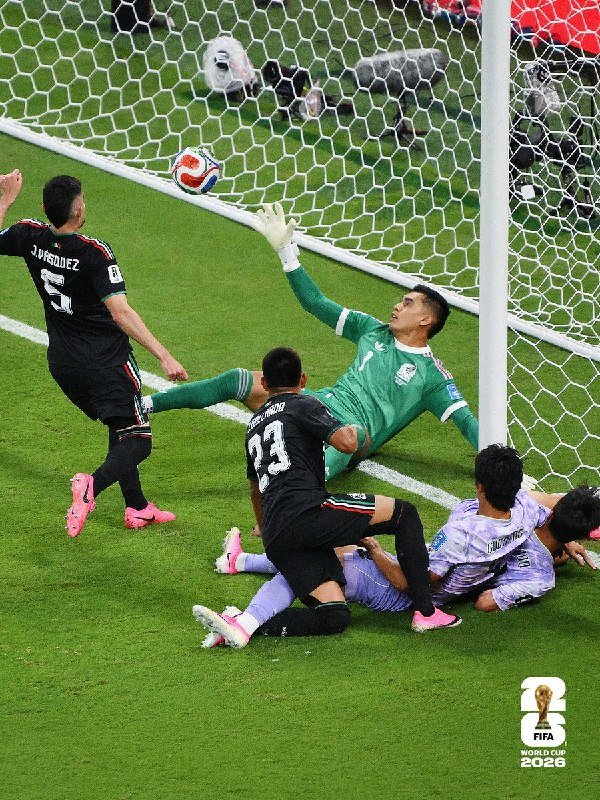
At roughly 23:31 UTC on 18 June 2026, news began circulating that the mother of Cape Verde's first-choice goalkeeper had left her home on São Vicente island and travelled to Praia, the archipelago's capital on Santiago, to finalise the paperwork required to fly to the United States. According to a thread on Unusual Whales' X account, Ana Candida Evora was completing travel documents for a journey that would, if granted, allow her to see her son play on the world's largest football stage for the first time in person.
Six hours later, at 02:30 UTC on 19 June, the Caracas-based outlet teleSUR published an interview conducted with the same woman as she prepared for the trip. The two items, separated by a continent and a time zone, frame a single story: a small island nation on the West African coast is suddenly visible on a global stage, and the human weight of that visibility is being carried, in part, by a mother and a son separated by an ocean and a visa system.
A reunion routed through Praia
Cape Verde — a ten-island archipelago of roughly 600,000 people that became independent from Portugal in 1975 and has never previously qualified for a World Cup — has emerged as one of the stories of the 2026 tournament. Vozinha, the 39-year-old goalkeeper whose full name is Ivan Cruz, captains the side and has been central to the campaign. The mechanics of his mother joining him, however, are routine and unromantic: a domestic flight between islands, paperwork in the capital, and the long administrative path to a US entry visa.
The Unusual Whales thread identifies the route plainly: São Vicente, the island on which Vozinha grew up in the northern Barlavento group, to Praia, on Santiago in the Sotavento, to complete the formalities. The two-source trail — Unusual Whales in English and teleSUR in Spanish — is notable only because it shows how a story with no major-wire pickup yet has nonetheless crossed information networks before any single legacy outlet has filed a full report.
The teleSUR interview
The teleSUR item frames the reunion as "emotional" and foregrounds Vozinha's "standout performance" for the national team, though the published portion of the thread is truncated before naming the opposition or the final score. teleSUR is a Latin American state-aligned outlet whose football coverage is generally sympathetic to Global South national teams, and the editorial register of the clip — a mother speaking from a Praia office while her son prepares for a match several thousand miles away — is straightforward human-interest, not geopolitical argument.
Cape Verde's diaspora is large and politically engaged. The country is estimated to have more nationals living abroad than at home, with substantial communities in the United States, Portugal, the Netherlands, France, and Angola. A World Cup cycle, and a mother's trip to watch her son, sits inside that longer history of separation and return.
What the sources do not specify
The two thread items do not state which match Vozinha is being reunited with, which round of the tournament Cape Verde has reached, or whether the visa has been issued. They do not specify a date for the flight, the mother's exact age, or the cost of the trip. They do not record a direct quote from Vozinha himself. Any of these details, if added to the public record, would have to come from a later wire report or an interview with the family — and this article does not speculate about them.
The counter-read is also worth naming: a global football tournament routinely produces human-interest vignettes about players' families, and there is no suggestion in either item that the visa process has become a difficulty rather than a formality. The story may resolve, in a few days, as a routine reunion at an airport gate, with no further complications.
Stakes for an island nation
For Cape Verde, the larger pattern is demographic and symbolic. A country that has never qualified for a World Cup is now visible to a global audience, and the visibility runs in both directions: players with diasporic family ties carry those ties onto the pitch, and audiences in the countries those families live in are watching. A mother finishing paperwork in Praia, on a working day in mid-June, is the small administrative version of a much larger current.
Whether the trip happens, and on which day, will become clear in the next 48 to 72 hours. The two items on the public record so far are sufficient to establish that the journey is being attempted — and that the World Cup, for one Cape Verdean family, is being watched from two sides of the Atlantic at once.
Desk note: Monexus has reported this from a single research-feed trail (Unusual Whales and teleSUR) rather than a wire roundup, and has declined to name an opponent, a scoreline, or a visa status that the sources do not specify. Where a major-wire item files, this article will be updated.
Wire provenance
This editorial synthesis draws on the following public wire/social posts:
- https://x.com/unusual_whales/status/2067786946915561472
- https://x.com/telesurenglish/status/206779800000000000