Cruz breaks with Trump on Iran deal as 60-day clock starts ticking
Republican Senator Ted Cruz publicly opposed the Trump administration's emerging arrangement with Tehran on 19 June 2026, hours after the president framed the talks as a concession extracted from a finished adversary.
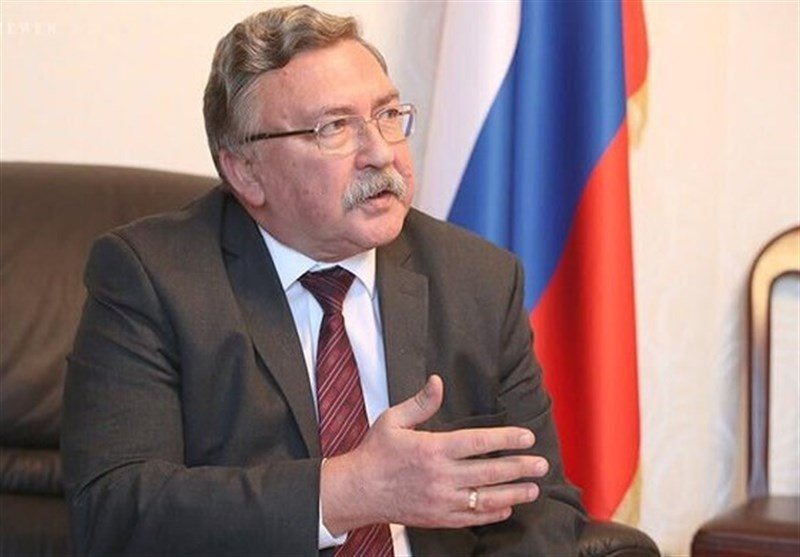
Senator Ted Cruz broke publicly with the Trump administration on 19 June 2026 over the president's emerging framework with Tehran, warning that the Islamic Republic would redirect any unfrozen funds toward a nuclear weapons programme. The intervention, carried on Telegram channels including English Abuali and Abuali Express at 19:10 UTC and 18:57 UTC respectively, is the first sustained intra-Republican objection to surface since Donald Trump returned to office and revived direct engagement with Tehran.
The president's own framing of the talks left little room for compromise. On a post circulated by @sprinterpress at 18:24 UTC, Trump declared the United States had not negotiated out of desperation and insisted Iran was "FINISHED." The same post laid out a 60-day timetable and a flat refusal to release funds: "They get no money, not ten cents!" The juxtaposition is awkward: a 60-day diplomatic runway presupposes money moving somewhere, even if only as a future deliverable, while the hard-line messaging insists the Islamic Republic is being bled dry rather than accommodated.
What Cruz actually said
In the posts distributed through English Abuali and Abuali Express on 19 June 2026, the Texas senator framed the arrangement in unusually stark terms. The current regime, he argued, is "lying." The $300 billion figure — long circulated as the rough scale of Iranian assets that could be unlocked through sanctions relief or back-channel arrangements — would, in Cruz's telling, be ploughed directly into a weapons programme rather than civilian use. The posts did not specify which mechanism would release the funds, nor did they name any text or signed instrument. Cruz's complaint is therefore directional rather than textual: he is opposing the architecture before its details are public.
That sequencing matters. Congressional debate on the Joint Comprehensive Plan of Action in 2015 dragged for months after the text was finalised in Vienna, but the political objection this time is arriving while the document is still being negotiated. The Cruz critique, in effect, is preemptive.
The 60-day clock and the money question
Trump's 19 June 2026 messaging sketches a two-month window in which the United States would test Iranian compliance before any transfer of funds or formal sanctions rollback. The arithmetic of that timeline is delicate. Iranian crude exports have fluctuated through the sanctions era, and Tehran has long demanded the release of foreign-currency reserves held in third-country banks as a precondition for any durable deal. Trump's "not ten cents" line and the $300 billion Cruz refers to are not the same number — but they describe the same ledger: the pool of capital that would flow to Tehran if sanctions enforcement eases.
Inside the administration, the apparent bet is that a 60-day proof-of-concept — verifiable limits on enrichment, monitoring access from the International Atomic Energy Agency, and a freeze on proxy activity — can be demonstrated before any money moves. Inside the Cruz wing of the Republican caucus, the bet is the opposite: that no quantity of inspection or interim freeze is worth the financial risk of regime access to hard currency. Both positions are coherent; what divides them is the discount rate applied to Iranian behaviour.
Why a single senator matters
Cruz is not a marginal voice. He ran for the Republican presidential nomination in 2016, sits on the Senate Commerce and Judiciary committees, and has spent more than a decade building a foreign-policy brand around scepticism of any accommodation with Tehran. A public break from a sitting Republican president on an Iran framework is therefore not a personal curiosity. It signals that the 60-day window the White House has set for itself is also a 60-day window for internal GOP opposition to organise.
Congress does not vote to approve or reject an executive-branch understanding with a foreign government the way it would vote on a treaty. But it controls the appropriations, sanctions architecture, and confirmation leverage that determine whether any deal survives contact with US law. Cruz's argument — that the regime will pocket the money and lie about the weapons work — is the argument that will follow the White House into every markup hearing for the rest of the calendar year.
Stakes and what to watch
If the 60-day window closes without a signed text, Trump's current posture can be read as the policy outcome. If it closes with an arrangement, the Cruz wing will have roughly four months — through the autumn appropriations cycle and into a likely end-of-year review of Iranian sanctions waivers — to force concessions or attach conditions. The structural pattern is familiar from the Obama-era JCPOA fight: a presidential signature, a congressional review mechanism, and a domestic political argument about whether to trust Iran's commitments more than Iran's incentives.
The sources circulating on 19 June 2026 do not specify which agencies are drafting the framework, which intermediaries are shuttling between Washington and Tehran, or whether the $300 billion figure includes assets in escrow, oil-receivable accounts, or frozen central-bank reserves. The picture is one of a negotiating track being described publicly in incompatible registers — Trump's "not ten cents" and Cruz's "$300 billion for nukes" — while the underlying document remains, so far, undiscussed. That gap is where the next two months of American Iran policy will actually be written.
Wire provenance
This editorial synthesis draws on the following public wire/social posts:
- https://t.me/englishabuali
- https://t.me/abualiexpress
- https://t.me/englishabuali
- https://t.me/abualiexpress
Follow the event.
These dated source records provide context. They do not retrospectively verify this archive article.
Separate what the nuclear watchdog reported from what it could not determine after the June 2025 strikes.