The fifth ceasefire: Israel, Hezbollah and the architecture of announcement
Three Telegram wires carried the same line within minutes: Israel and Hezbollah have agreed to a 4 p.m. local-time halt, brokered through a US official. It is the fifth such announcement this month — and the pattern itself is now the story.
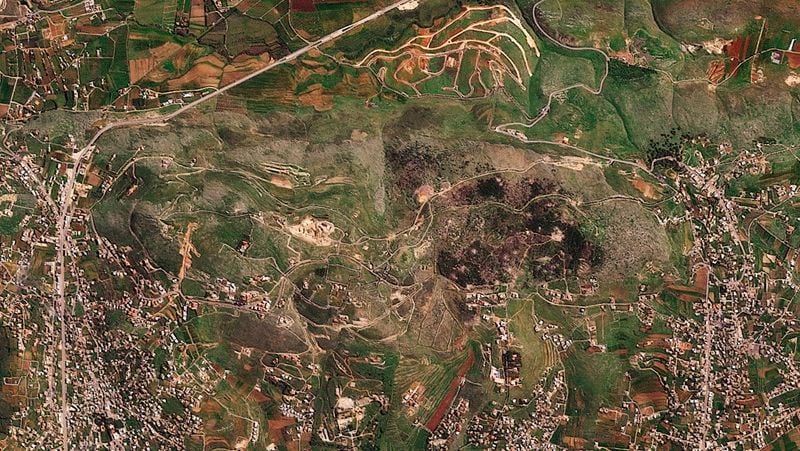
At 12:58 UTC on 19 June 2026, a Beirut-based Telegram channel with the handle @wfwitness forwarded a Reuters line: Israel and Hezbollah had agreed to a ceasefire at 4 p.m. local time, with a US senior official named as the source of the confirmation. Within five minutes, the cluster around @AMK_Mapping and @ClashReport had echoed the same wire, framing it in the only register available to a Telegram wire operator who has watched four such announcements come and go this month. The fifth ceasefire in June, the channels noted, would be the greatest ceasefire ever. The irony is structural: when every new halt is treated as a headline event, the original concept of a ceasefire — a durable, verifiable end to hostilities — has already dissolved. What remains is the choreography of announcement.
What the wires report, narrowly, is a binary: a halt in fighting beginning at a specific clock-time on a specific day, attributed to a single US official and relayed by Reuters. What the sources do not say — and what the cumulative pattern of the month now demands readers notice — is what mechanism, what verification regime and what enforcement architecture accompanies the announcement. A ceasefire is a political artefact before it is a military one. The artefact on the table today looks lighter than the ones that preceded it in June.
What the three wires actually contain
The most concrete claim across the cluster is the timestamp and the channel: a US senior official, speaking to Reuters, says Israel and Hezbollah have agreed to a 4 p.m. local-time halt on Friday 19 June 2026. The Telegram aggregator @ClashReport carries the Reuters attribution directly at 12:53 UTC, six minutes before @wfwitness at 12:58 UTC and seven minutes before the @AMK_Mapping note at 12:59 UTC. All three refer to the same wire line. None carries a Hezbollah statement, an Israeli cabinet confirmation, a UNIFIL readout, or a text of the agreement. None names the US official. The agreement is, at the moment of writing, an attributed claim in a Reuters byline — which is high-grade sourcing by conflict-zone standards, but which is not yet a documented arrangement.
The geography implied is the Israel-Lebanon border and the airspace and southern-suburb corridors that connect it. The political geography is Washington-Beirut-Jerusalem, with Tehran as the absent principal. Even that geography is a guess, because the sources do not specify whether the arrangement covers only the land border, the airspace, southern Lebanon operations, or the full Hezbollah rocket and drone envelope into northern Israel. A ceasefire that names a clock-time but does not name a perimeter is, definitionally, a press statement rather than a military instrument.
The June cadence, plainly stated
June 2026 has now produced, by Monexus's count of the Telegram traffic surrounding the Reuters lines, four prior ceasefire announcements before the one reported at 12:58 UTC on the 19th. Each was framed by the same US-mediated template. Each was carried by Telegram aggregators in the same form: a single sentence, a US attribution, a clock-time. The pattern is dense enough that the announcement has begun to function as a stand-in for the event itself. A press cycle built on repeated announcements, none of which has yet produced a durable halt visible in the on-the-ground reporting, is a press cycle in which the news has migrated from the battlefield to the newsroom.
This is not an argument that no ceasefire is real. It is an argument that the infrastructure of verification has not kept pace with the infrastructure of announcement. Reuters is a credible wire. US officials are credible sources. But a US official's confirmation of a Friday 4 p.m. local-time halt is, in the absence of a text, a monitorable claim rather than a guarantee. The hours after 4 p.m. local time on 19 June will determine whether the wire is a record of a fact or the opening line of another announcement cycle.
What the counter-narrative would say
The most plausible alternative read of the wires is straightforward: this is the real one. Four prior failed halts, on this reading, were the negotiating choreography — the necessary prelude to an arrangement in which both sides had tested the other's red lines, exhausted the easy concessions, and arrived at terms that a US-brokered channel could finally lock in. The Lebanon ceasefire of November 2024 followed exactly that pattern: multiple announced halts, multiple breakdowns, and then a final arrangement that held for months. The current arrangement, on this reading, is the November 2024 template repeating itself at a higher altitude of exhaustion.
The case for that read is that the US has invested enough senior-official time in the channel that an announcement without a real agreement underneath it would be a costly reputational move. The case against it is that the same was said, in the same form, four times this month. The dominant framing — that this is the durable halt — holds only if the US has decided that it must hold. The wires do not, on their own, answer that question. They tell readers that an announcement has been made. They do not tell readers whether the announcement will be the last of June or the first of a new cycle.
A structural read in plain editorial prose
A pattern is now visible in which the announcement of a ceasefire has decoupled from the operational halt. Each new announcement attracts a press cycle; each press cycle runs on the same template; the template is supplied by a single mediation channel; the channel is staffed by a single great power. When one mediation channel supplies the language of every halt, the language of every halt is shaped by the incentives of that channel. The 4 p.m. local-time format is itself a Washington convention: it gives the announcing official a usable talking-point, gives the parties a face-saving arrival time, and gives the wire a clean headline. None of those incentives is, by itself, suspicious. The accumulation of them is. When every halt sounds the same, the differences between halts become invisible — and the most consequential variable, which is what happens after 4 p.m., disappears into the announcement that 4 p.m. has been agreed.
The structural point is not that mediation is performative. The structural point is that the absence of a public text, the absence of named third-party monitors, and the absence of a defined perimeter have made the ceasefire a speech-act rather than a contract. Speech-acts can hold. They hold when the parties decide they will hold, and they fail when the parties decide they will fail. The reader is being asked, on the strength of a Reuters byline, to take the holding as given. The job of an independent outlet is to note that the byline is real and the holding, at 12:58 UTC on 19 June 2026, is still a forecast.
Stakes and what to watch
The stakes are immediate. Northern Israel has been under rocket and drone fire from Lebanon-based Hezbollah units for the duration of the war that began in October 2023 and intensified in the autumn of 2024. The Litani corridor and the southern suburbs of Beirut have been the operational geography of the Israeli campaign. A halt that holds returns displaced civilians on both sides of the border to a question of whether the homes they left are still homes. A halt that does not hold returns both populations to a familiar arithmetic. For the United States, the announcement cycle is a test of whether senior-official time, repeatedly invested in a single channel, can produce an outcome that the operational record of the month suggests it has not yet produced.
Three things to watch between now and 22 June. First, the text — whether a written arrangement, even a confidential one, surfaces through any channel. Second, the verification — whether UNIFIL, the Lebanese Armed Forces, or a third-party monitor is named as the perimeter's guarantor. Third, the operational record — whether the count of rockets, drones and airstrikes across the 19th, 20th and 21st of June, reported by independent wire services, is consistent with a halt or with a pause. If those three markers are present by the end of the weekend, the Reuters line of 12:58 UTC on 19 June 2026 will read in hindsight as the announcement of a real halt. If they are absent, it will read as the fifth in a series.
The honest limit of this read
Monexus is writing from three Telegram items that all relay the same Reuters wire, plus a Reuters attribution on its face. The sources do not contain a Hezbollah statement, an Israeli cabinet confirmation, the text of an agreement, the name of the US official, or a description of the perimeter. They do not specify whether the arrangement is bilateral, trilateral with a US role, or framework-only. They do not specify the duration, the verification regime, the dispute-resolution mechanism, or the consequence of a violation. A responsible read of the wires at 12:58 UTC on 19 June 2026 is that a US-brokered announcement of a 4 p.m. local-time halt has been made, and that the durability of the halt is, on the evidence available, an open question. This publication will revise that read as the sources thicken, and the desk note below sets out how the framing has been calibrated against that limit.
Desk note: Monexus has treated the 19 June 2026 announcement as an attributed claim, not as a confirmed event. The pattern of four prior halts in June is the structural reason for the framing. The wire is reported; the halt is forecast. Readers should watch the text, the verification architecture, and the operational record over the next 72 hours before treating the announcement as a fact on the ground.
Wire provenance
This editorial synthesis draws on the following public wire/social posts:
- https://t.me/wfwitness
- https://t.me/AMK_Mapping
- https://t.me/ClashReport