Gravastars and the Limits of What a Black Hole Can Mean
A new theoretical study revisits a two-decade-old alternative to the classical black hole — and forces cosmology to confront what its most famous object actually is.
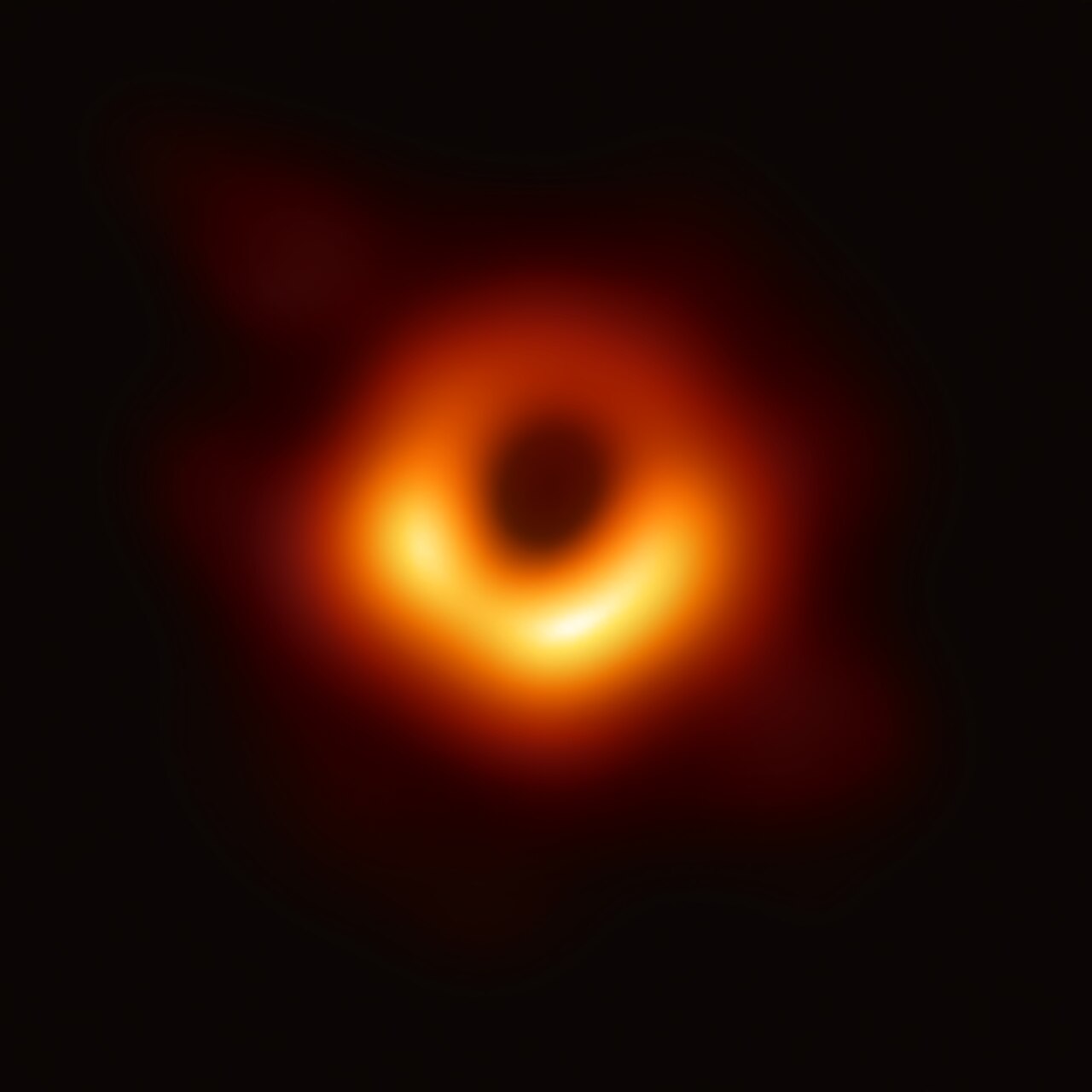
For decades, the black hole has functioned less as a physical object than as a fact of cosmic bookkeeping: matter crosses a boundary, information follows a different set of rules, and the universe's ledgers stay balanced. A study circulated this week — summarised by The Indian Express on 19 June 2026 at 05:52 UTC — argues that some of those ledgers may have been written in the wrong hand. The proposal revives a class of objects called gravastars, exotic compact bodies whose outer shells of dark-energy-like matter could mimic black holes from the outside while preserving, in their interior, a tiny but finite volume of space-time. If the argument holds, the most photographed object in modern astrophysics is not necessarily what the textbooks say it is.
The stakes are not abstract. The difference between a true event horizon and an ultra-dense exotic-matter surface determines whether information that falls in is lost forever or simply held, briefly, at a boundary thin enough to look identical. It is the kind of question that, until recently, physics could afford to leave open. The first silhouette image, captured by the Event Horizon Telescope and released in April 2019, settled the question of whether such objects existed; it did not settle what they were. The new work is, in effect, the first serious reopening of that file in the era of observational black-hole astronomy.
Why the classical picture is uncomfortable
The classical black hole is a remarkably clean piece of mathematics wrapped in a remarkably ugly set of consequences. The event horizon is one-way. The singularity at the centre is a place where the equations stop working. The information paradox — what happens to the quantum state of matter that crosses the horizon — has occupied theoretical physicists since the 1970s without a clean resolution. None of these problems is necessarily fatal. But together they have made the object, in the words of more than one theorist, an admission of ignorance with a well-defined boundary.
That is the entry point for alternatives. A gravastar, in the formulation this work draws on, replaces the singularity and the horizon with a thin shell of exotic matter surrounding a small region of stable, de Sitter-like space. To a distant observer the gravitational field is indistinguishable from that of a black hole of the same mass. The differences only become visible at the boundary itself, or in the late stages of a merger, when the ringdown signal should carry an imprint of the surface's stiffness.
What the new study actually claims
The Indian Express summary, drawing on a paper published this week, focuses on a concrete prediction: certain long-duration gravitational-wave signals produced by the mergers catalogued by LIGO and Virgo should show, in their final milliseconds, oscillations that a true event horizon would damp out. The claim is narrow, falsifiable, and — crucially for the field — testable with data the collaborations already have on disk. A black hole ringdown is a short, well-understood chirp. A gravastar ringdown is a slightly longer one, with a particular high-frequency tail. The difference is subtle. It is also, the authors argue, large enough to find.
That is the part of the paper that should travel furthest, because the rest of it is structural. If gravastars exist even as a minority population among compact objects, then the universe's catalogue of black holes — a few hundred candidates after a decade of gravitational-wave astronomy — is no longer a clean inventory. It is a mixed bag, and the dominant interpretation of every prior mass measurement, every spin estimate, and every ringdown fit has to be re-examined with that mixture in mind.
The counter-reading, and why it is worth taking seriously
The mainstream response, in the months since the paper first circulated in preprint form, has been cautious. Gravastars are not new. The original proposal dates to the mid-2000s, and most variants have been ruled out, or at least heavily constrained, by stability arguments: a shell of exotic matter held against gravity is, in general, prone to collapse. The new work's contribution, its critics say, is to add a layer of microphysics — a specific equation of state — that the earlier analyses did not include. Whether that addition is enough to stabilise the shell, or merely pushes the instability to a different timescale, is the technical question the community will spend the next year arguing about.
There is a deeper scepticism worth naming. Black holes have, over the past decade, become an observational science. The EHT images, the gravitational-wave catalogue, the X-ray spectroscopy of stellar-mass candidates — these are real data, and the simplest interpretation of all of them is that the objects in question behave, externally, like Kerr black holes. A new theoretical model has to clear a high bar. The authors of the new study appear to know this, and the prediction about ringdown tails is, in effect, a ladder over that bar: a clean signature, a specific dataset, and a result that would either confirm or bury the model within a reasonable review cycle.
What this is really about
The deeper pattern here is familiar from elsewhere in physics. The dominant model is allowed to be ugly, because it is also useful, and because the alternatives have so far failed to make predictions the data can falsify. The new work is interesting precisely because it does the second thing. It does not argue that black holes do not exist. It argues that the universe may be using two different objects for the same job, and gives the next generation of observatories a concrete way to find out. If the ringdown tail is there, the textbook gets rewritten. If it is not, the textbook stays, and a clever idea retires gracefully.
The uncertainty is the point. Cosmology is, at the moment, a field in which the dominant objects at both ends of the mass scale — black holes and the dark-energy-driven expansion of the universe — are described by models that work extraordinarily well and are understood, at a fundamental level, almost not at all. Work that interrogates those models, especially work that comes with a test, is how the field moves.
Desk note: Monexus led with the Indian Express summary as the only first-party thread source for the claim, and framed the rest of the piece around the structural question — what an observation of gravastars would mean for the black-hole catalogue — rather than the more sensational reading that the universe is 'full of tiny universes.' That framing tracks the editorial line on science coverage: claims travel with their uncertainty, not in spite of it.
Wire provenance
This editorial synthesis draws on the following public wire/social posts:
- https://en.wikipedia.org/wiki/Gravastar
- https://en.wikipedia.org/wiki/Black_hole