A battalion commander, an ambush, and the quiet arithmetic of the southern Lebanon front
Four Israeli soldiers, including a lieutenant colonel from the 52nd Armoured Battalion, were killed in an overnight Hezbollah ambush in southern Lebanon — the latest data point in a grinding cross-border war now measured in armoured crews, not firefights.
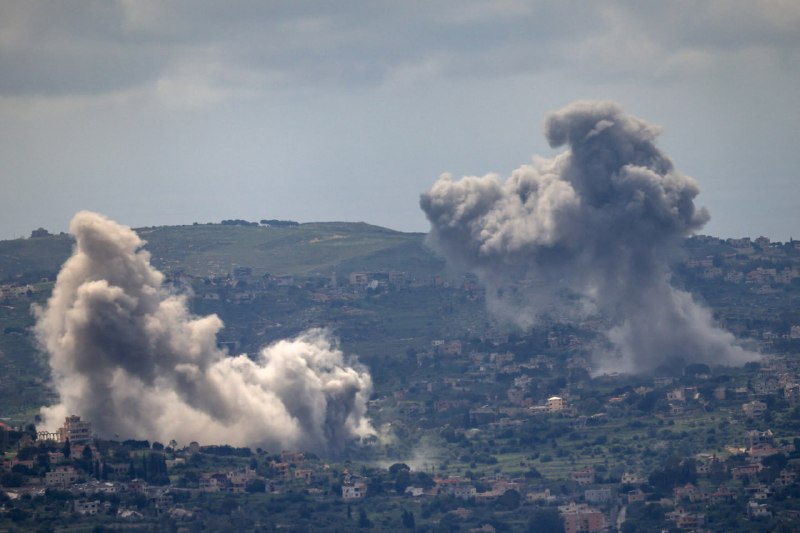
On the night of 18–19 June 2026, in the contested scrubland of southern Lebanon, an Israeli armoured column from the 52nd Battalion of the 401st Armoured Brigade drove into a Hezbollah-prepared killing zone. By sunrise, the Israel Defense Forces had confirmed the deaths of four soldiers — among them a lieutenant colonel commanding the battalion. The militant group's media arm, The Cradle, reported the engagement as a deliberate tank ambush; the IDF framed it as combat in a sector where, in the army's own telling, the war has long since ceased to be measured in raids and now counts in armoured crews lost.
That gap — between a Hezbollah communications claim and an Israeli casualty confirmation — is the news. Both sides now concede the cost. What they dispute is the meaning of it: a tactical reversal on the ground, or the steady arithmetic of a war of attrition that Israel can blunt but cannot break?
The engagement, as both sides describe it
Hezbollah's English-language channel The Cradle, citing the Israeli military's own statement, said the four soldiers were killed in a "lethal overnight resistance operation" carried out by the group's fighters. The Cradle's framing was unambiguous: a "tank ambush" in southern Lebanon that eliminated an Israeli armoured battalion commander and three other soldiers in a single engagement. The outlet published the claim on 19 June 2026 at 06:51 UTC, alongside imagery distributed through its Telegram channel.
The IDF's confirmation, carried by the open-source mapping account AMK Mapping on the same morning at 06:40 UTC, was more austere. Four soldiers of the 52nd Armoured Battalion, 401st Armoured Brigade, had been killed in fighting with Hezbollah in southern Lebanon, including a Lieutenant Colonel commanding the battalion. No date of death was specified beyond "recent fighting"; no operational details were released. The 401st is one of the IDF's three regular-armoured brigades, and the loss of a battalion commander in a single incident — particularly inside Lebanon rather than at the border — is the kind of casualty the Israeli military is at pains not to repeat.
The two accounts agree on the outcome. They diverge on everything else: who set the terms, who closed the distance, and whether the engagement reflects a Hezbollah capability or an Israeli vulnerability.
The southern Lebanon front is no longer a border problem
For most of the year preceding the engagement, the Israel-Lebanon frontier had settled into a familiar pattern of standoff fire, targeted strikes, and village-by-village exchanges along the Blue Line. What changed in the spring and early summer of 2026 was depth. Hezbollah's antitank and rocket teams have demonstrated a willingness to engage Israeli armour well inside southern Lebanon, rather than at the immediate border fence, and Israeli ground forces have correspondingly pushed north of the line to contest the launch zones.
The 401st Brigade is built for that contest. Its Merkava tanks and Namer armoured personnel carriers are designed for high-intensity manoeuvre warfare, and the 52nd Battalion has been a steady presence in the north since mobilisation began. The loss of a lieutenant colonel commanding the battalion inside Lebanon signals that Israeli armour is operating close enough to prepared Hezbollah kill zones for the group's tactics to matter — and that those tactics, when they land, cost the IDF not just troopers but the experienced mid-grade officers it can least afford to replace.
This is not a single ambush. It is the visible edge of a campaign of attrition that has been running in southern Lebanon for months, in which Hezbollah's armoured-killing capability — a combination of Kornet and Konkurs antitank guided missiles, TOW systems, and drone spotters — is being deliberately concentrated against the platforms and crews that anchor the Israeli ground push.
Counter-narrative: what the IDF says it is doing, and what it is not
The Israeli military's public framing of the southern Lebanon campaign rests on three claims. First, that ground operations are incremental and conditions-based, intended to dismantle Hezbollah launch infrastructure village by village rather than seize and hold territory. Second, that Hezbollah's tactical competence has been degraded by sustained Israeli air and ground manoeuvre since operations resumed in earnest earlier in the year. Third, that the loss of a battalion commander and three soldiers, while heavy, is the kind of exchange rate the IDF can absorb in pursuit of a longer-term denial-of-launch-zone objective.
Each claim has weight. The Israeli Air Force has flown daily strike packages against Hezbollah command nodes and weapons depots across southern Lebanon and the Beqaa Valley; ground manoeuvre, while constrained by the political ceiling on a deeper push toward the Litani, has been methodical. The casualty toll on the Hezbollah side over the same period has been steady and visible. Israeli military spokespeople have argued, in briefings carried by mainstream wire services, that the operational logic is denial, not occupation, and that the southern Lebanon campaign is best read as a defensive consolidation rather than an offensive.
Hezbollah's counter-narrative is structurally simpler. The group claims that its antitank and combined-arms teams retain the ability to inflict disproportionate losses on Israeli armour inside Lebanon, that the rate of Israeli casualties is a constraint on how far the IDF can push north of the border, and that the killing of a battalion commander is evidence of restored deterrence after a year of Israeli strikes on the group's leadership cadre. The Cradle's reporting on the 19 June engagement is part of that argument — a tactical event staged for strategic effect.
Both readings are partly right. The IDF is, in fact, fighting a denial campaign and absorbing losses in pursuit of it. Hezbollah is, in fact, capable of inflicting those losses at moments and places of its choosing. The unresolved question is whether the exchange rate favours Israel across months, or whether the loss of experienced mid-grade officers inside Lebanon begins to bite at unit cohesion before Hezbollah's own stockpiles and personnel run thin.
The structural picture, in plain terms
What is happening on the southern Lebanon front is the part of the wider Middle Eastern contest that does not appear on cable news as cleanly as the air war. It is a contest of stocks and crews: how many antitank teams Hezbollah can keep in the field, how many tanks and qualified commanders the IDF can keep forward, and how long each side's political leadership will accept the casualty rate required to maintain its present posture.
For Israel, the constraint is not the budget. It is the bench. Armoured battalion commanders are produced by a long training pipeline and cannot be replaced by reserve call-up alone. For Hezbollah, the constraint is reconstitution under sustained Israeli surveillance and strike activity — the group's ability to replenish both weapons and the experienced operators who know how to employ them.
A single ambush does not decide that contest. A sequence of them — over weeks, against the same brigade, in the same depth of southern Lebanon — does. The 19 June engagement is the latest entry in that sequence. Whether it is an outlier or the new central tendency is the question Israeli and Hezbollah planners are both, separately, trying to answer.
Stakes: what the next months look like
If the Israeli campaign holds to its stated conditions-based logic, the next several weeks will see continued incremental ground manoeuvre in southern Lebanon, sustained strike activity against Hezbollah launch infrastructure, and a steady — but not catastrophic — Israeli casualty rate measured in small units rather than single events. The political ceiling on a deeper push toward the Litani will remain, and the IDF will continue to absorb the loss of battalion and company commanders as the cost of denying Hezbollah the launch zones from which it has, in previous months, fired into Israeli towns.
If the Hezbollah counter-campaign holds, the group will continue to concentrate antitank capability against Israeli armour inside Lebanon, will seek to inflict the kind of disproportionate losses that make the Israeli ground push politically expensive, and will treat the killing of officers as a strategic objective in its own right. The group's media apparatus — including The Cradle's English-language channel — will frame every successful ambush as restored deterrence.
The plausible outcome is neither side's preferred one: a grinding, low-visibility contest along a depth of perhaps ten to fifteen kilometres north of the Blue Line, in which each side is able to hurt the other without either achieving a decisive shift. The 19 June engagement, on the evidence available, fits that pattern.
What the open sources do not yet tell us is whether the lieutenant colonel's loss is the start of a higher tempo or the continuation of an existing one. The IDF has not yet released operational details; Hezbollah's account is a claim that the Israeli confirmation has not, in substance, contradicted. Until the IDF publishes a fuller after-action account, the analytical centre of gravity sits in the casualty list itself: four names from a single battalion, in a single night, on a single road in southern Lebanon.
Desk note: Monexus has treated this engagement as a single tactical event inside a sustained campaign, not as an inflection point. The dominant wire framing has tended to read each Hezbollah ambush as a one-off operational surprise; the longer arc, on the open-source record, is a steady rate of Israeli armoured losses inside Lebanon against a Hezbollah antitank campaign that has been running since the spring. Where the wire line and the Hezbollah-aligned line diverge — on who set the terms of the engagement — both have been reported, and the judgment left to the reader.
Wire provenance
This editorial synthesis draws on the following public wire/social posts:
- https://t.me/thecradlemedia
- https://t.me/AMK_Mapping
- https://en.wikipedia.org/wiki/401st_Armoured_Brigade_(Israel)
- https://en.wikipedia.org/wiki/Merkava
- https://en.wikipedia.org/wiki/9M133_Kornet
- https://en.wikipedia.org/wiki/Blue_Line_(Israel%E2%80%93Lebanon)
- https://en.wikipedia.org/wiki/Hezbollah
- https://en.wikipedia.org/wiki/Israel_Defense_Forces
Follow the event.
These dated source records provide context. They do not retrospectively verify this archive article.
Separate what the nuclear watchdog reported from what it could not determine after the June 2025 strikes.
- https://t.me/thecradlemedia
- https://t.me/AMK_Mapping
- https://en.wikipedia.org/wiki/401st_Armoured_Brigade_(Israel
- https://en.wikipedia.org/wiki/Merkava
- https://en.wikipedia.org/wiki/9M133_Kornet
- https://en.wikipedia.org/wiki/Blue_Line_(Israel%E2%80%93Lebanon
- https://en.wikipedia.org/wiki/Hezbollah
- https://en.wikipedia.org/wiki/Israel_Defense_Forces