Hormuz reopens, sort of: inside the 60-day oil corridor test between Washington and Tehran
A memorandum of understanding has tanker traffic moving again through the Strait of Hormuz. The fee dispute, the dollar mechanics, and the 60-day clock all remain unresolved.
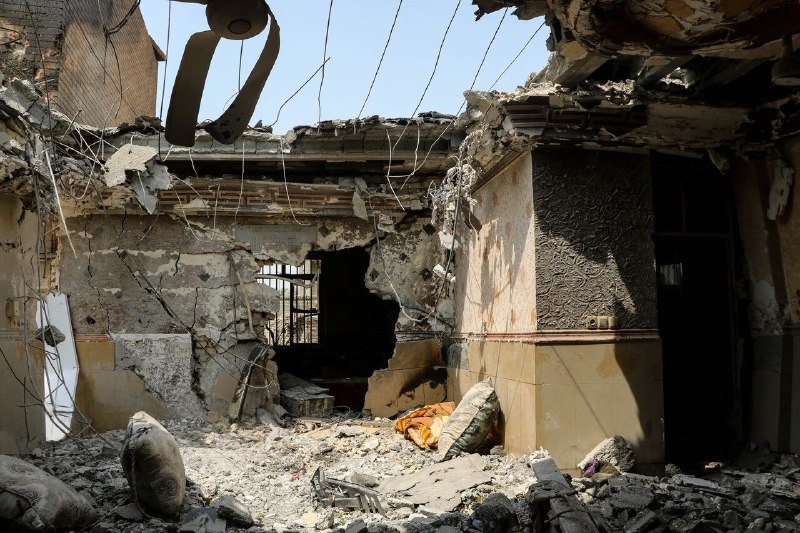
Six oil tankers moved through the Strait of Hormuz on the day after the United States and Iran signed a memorandum of understanding halting the latest round of escalation. Ship traffic through the world's most important oil chokepoint resumed on 18 June 2026, according to Nikkei Asia reporting relayed over Telegram on 2026-06-18T21:31 UTC. The accompanying ceasefire architecture is provisional. Iran has pledged, per a Polymarket wire at 2026-06-19T12:57 UTC, to suspend planned Strait of Hormuz transit fees for sixty days while negotiations with the United States continue. Iranian state media, cited by Unusual Whales at 2026-06-18T22:31 UTC, has framed the eventual charges as a normal "fee for services." The numbers in the meantime are real and rising: a Telegram channel tracking Iranian energy flows, GeoPWatch, reported at 2026-06-19T13:46 UTC that Iran had exported $1.44 billion worth of crude oil in the previous five days.
The corridor is open, but the price of passage remains the central question of the negotiation. What the past week has produced is not a settlement. It is a 60-day window during which both sides can test whether an arrangement is possible — and during which each retains the credible threat to walk away and re-impose pressure. The tanker movement is a sign of life; it is not a sign of resolution.
What actually happened on the water
The deal, as described in the wire traffic from 18 June 2026, has three moving parts. First, tanker traffic resumed through Hormuz the day after the memorandum was signed. Second, Iran committed to suspending the transit fees it had been preparing to levy on vessels passing through the strait. Third, the suspension is explicitly time-boxed to a sixty-day negotiating window with the United States.
That sequence matters. The fees were not a hypothetical. Tehran had been preparing to charge for the passage of commercial vessels through a waterway roughly 21 nautical miles wide at its narrowest point, through which a significant share of seaborne crude passes daily. By suspending the fees during talks rather than abolishing them, Iran is signalling that the right to charge remains a live negotiating instrument, not a withdrawn position. Iranian state media's "fee for services" framing, picked up by Unusual Whales on 2026-06-18T22:31 UTC, reinforces that read. The service being paid for, in Tehran's telling, is the provision of secure transit — a service the world's navies, including the United States Fifth Fleet, currently provide without invoicing.
The immediate physical effect is the resumption of commercial flow. Six tankers is a thin initial pulse, not a return to baseline. It is enough to demonstrate that the agreement is operational, and that shipowners, operators, and charterers are willing to resume routings through the strait under its terms. The export number from the GeoPWatch channel on 2026-06-19T13:46 UTC — $1.44 billion of crude in five days — is a figure consistent with Iran continuing to move oil at scale, irrespective of what is happening on the diplomatic surface. That suggests the agreement, whatever its political content, has not yet imposed a binding cap on Iranian flows.
The two readings of "services"
Every agreement about a chokepoint produces two narratives, and this one is no exception. The Western framing, implicit in the wire coverage of the deal, is that Iran's planned fees were an extortionate measure, weaponising geography against the rest of the world, and that their suspension is a concession extracted by American pressure. The Iranian framing, explicit in state-media reporting circulated via Unusual Whales at 2026-06-18T22:31 UTC, is that Iran, as the territorial authority on the northern shore of the strait, is entitled to charge for the use of infrastructure it secures — analogous to port dues, canal tolls, or pilotage fees elsewhere in the world.
Neither framing is fully adequate on its own. The strait is not Iranian territorial water; international maritime law treats it as a corridor through which transit passage must remain free. But the practical provision of security in the waterway is performed, in part, by Iranian forces on the northern shore, and Iran has spent decades building the military capability to make that provision costly to ignore. The dispute, in other words, is over whether geography alone confers a right to be paid for transit, or whether the absence of recognised territorial sovereignty forecloses that right. The 60-day suspension is the period during which both sides are testing whether a price can be agreed without the question of principle being formally resolved.
The fee-for-services line is also worth reading alongside the export figure. $1.44 billion in five days is roughly $290 million per day, which annualises to over $100 billion in run-rate terms if sustained — far in excess of any plausible transit-fee schedule. The current arrangement, in effect, monetises the oil itself; the proposed transit fees would have monetised the corridor. The negotiating question is whether Iran extracts value from selling the commodity, from taxing its movement, or from both. The 60-day window is the period during which that question is supposed to get a structured answer.
The structural layer: dollar mechanics and the price of the corridor
Strip away the tanker count and the fee dispute, and the underlying negotiation is about who gets paid for the privilege of moving Middle Eastern hydrocarbons to global markets. That question has a long history and a specific dollar-politics texture. Oil denominated in US dollars, cleared through dollar-clearing banks, and insured by members of the International Group of Protection and Indemnity Clubs has been the operating norm for half a century. Any arrangement that allows Iran to charge a non-dollar-denominated transit fee, or to require settlement in a currency other than the dollar, would constitute a small but symbolically meaningful erosion of that norm. Conversely, an arrangement under which Iran agrees to charge fees but only in dollars, and to clear them through the existing financial plumbing, would be an affirmation of the status quo at the precise moment when its erosion is being mooted.
The sources in this thread do not specify the settlement currency or the clearing mechanism for the suspended fees. That is one of the things the 60 days is meant to clarify. But the broader pattern is recognisable. Chokepoint negotiations — the Suez Canal in the 1950s, the Bab el-Mandeb in recent years, the Strait of Hormuz in earlier rounds — tend to settle on arrangements that preserve the dollar-cleared architecture of seaborne oil while redistributing a slice of the rent to the state controlling the geography. The current round is being conducted against a backdrop in which the political viability of that architecture is being openly debated in capitals outside Washington. The negotiating room is therefore narrower than it would have been ten years ago, but the structural pull of the existing system is also stronger than the rhetoric around its erosion would suggest.
The tanker movement itself is a quiet but important signal. Six tankers in a single day is not a market-moving volume. It is, however, a market-resuming signal — a declaration by shipowners that they are willing to commit vessels to the route under the new terms. That declaration is what converts a memorandum of understanding into an operating reality, and the speed of its conversion tells the market how seriously to take the agreement.
The 60-day clock and what it actually tests
A sixty-day negotiating window is long enough for two things to happen. It is long enough for the parties to reach a substantive arrangement on transit fees, naval posture, sanctions sequencing, or some combination of those — in which case the memorandum evolves into a more durable framework. It is also long enough for one or both sides to walk away, re-impose the measures that were suspended, and return to the conditions that produced the original escalation.
The asymmetric incentives inside that window are worth noting. Iran has an interest in demonstrating that it can credibly threaten to re-impose fees, because the credible threat is what gives the negotiating position its weight. The United States has an interest in demonstrating that the threat was extracted under pressure and not under negotiation, because that framing strengthens the sanctions-and-pressure architecture it has used for the past decade. The other states whose oil moves through the strait — the Gulf producers, the major importers in Asia, the European refining system — have an interest in a quiet, fee-light, low-friction passage that does not require them to take sides.
The export figure from the GeoPWatch channel on 2026-06-19T13:46 UTC — $1.44 billion in five days — is consistent with Iran continuing to maximise its crude flows during the negotiating window, presumably because the current arrangement allows those flows to clear at existing price levels without the friction of a contested transit fee on top. If those flows were to be disrupted by an escalation, the price impact would propagate quickly through Asian refining margins and European product markets. That propagation is the cost both sides are now managing against the clock.
What the sources do not yet tell us
The wire traffic on 18 and 19 June 2026 establishes the shape of the arrangement — resumption, suspension of fees for sixty days, ongoing US-Iran negotiations — but leaves several questions open. The exact text of the memorandum of understanding has not been published in the items this publication has reviewed. The settlement currency for any future fees is not specified. The mechanism for enforcement, if either side walks away, is not specified. The role of third parties — the Gulf states, the major importers, the insurers — is not specified. The $1.44 billion five-day export figure is a single-source data point from a channel tracking Iranian energy flows, and its methodology is not described.
These are the kinds of gaps that will be filled, or not, over the next sixty days. The fact that they are gaps at this stage is itself informative: the agreement, as of 19 June 2026, is operating more as a halt to the immediate escalation than as a structured framework for the underlying dispute. The negotiations that are now beginning are the negotiations over whether such a framework is possible.
This publication framed the resumption of Hormuz traffic as an operating reality test rather than a diplomatic settlement, and treated the suspended Iranian transit fees as a live negotiating instrument rather than a withdrawn position. The dollar-clearing question, central to any durable arrangement, is left open in the wire traffic reviewed here and will be revisited as the sixty-day window unfolds.
Wire provenance
This editorial synthesis draws on the following public wire/social posts:
- https://t.me/GeoPWatch
- https://t.me/NikkeiAsia