The Hormuz Bargain: How a 60-Day Pause Reshapes Oil, Crypto and the Dollar's Long Game
A 60-day suspension of Iranian transit fees through the Strait of Hormuz has reopened the world's most important oil chokepoint, but the weeks of disruption have already cost the market an estimated 1.15 billion barrels — and pushed Bitcoin back into Fed-driven territory.
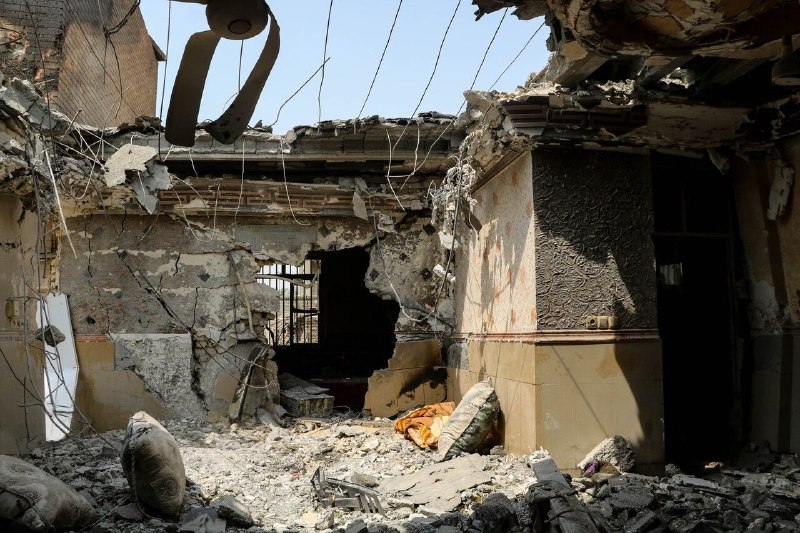
The Strait of Hormuz, the 33-mile-wide corridor through which roughly a fifth of seaborne oil normally moves, was effectively quiet by midday on 19 June 2026. Iran's pledge to suspend planned transit fees for 60 days, announced in the course of negotiations with the United States, had steadied tanker traffic. A memorandum of understanding, reported by The Indian Express, was the political vehicle that brought the disruption to an end. The price of that interruption, however, was already written into the supply ledger: 1.15 billion barrels of lost or deferred shipments, according to the same reporting, a number that captures both the cargoes that never moved and the ones that were re-routed around the Cape of Good Hope at materially higher cost.
What had looked, in early spring, like a manageable irritant between Washington and Tehran had become, by mid-June, a stress test of three things at once: the chokepoint politics of Middle Eastern energy, the political ceiling on Federal Reserve easing, and the long-running question of whether non-state monetary assets can hedge a dollar-priced shock. The 60-day pause does not resolve any of them. It buys time, and the market, predictably, is trying to price the time rather than the underlying risk.
The chokepoint, in numbers
The arithmetic is stark. A passage that ordinarily clears close to 20 million barrels a day lost or diverted enough volume to register, on a cumulative basis, in nine figures. The Indian Express's figure of 1.15 billion barrels is best read as the gross throughput shortfall over the disruption window: the difference between what would have moved through the strait under normal conditions and what actually did, including the tonnage re-routed around the Cape, the cargoes deferred, and the barrels withheld as floating storage in anticipation of a deal.
That this volume could be lost or displaced without producing a more violent price spike is itself a story. The Atlantic Basin's spare capacity, the Strategic Petroleum Reserve drawdowns that Western governments quietly staged, and the demand softness coming from a Chinese economy that has been pricing in a slower growth path for two years all combined to soften the impulse. The deal, when it came, did not have to break a panic. It had to break a standoff.
Iran's specific instrument — transit fees — is worth dwelling on. The model is borrowed from precedents in other maritime corridors, and the 60-day suspension preserves it as a live policy option once the cooling-off period ends. The mechanism gives Tehran a revenue stream that does not require direct ownership of the cargo and does not require firing on tankers, while still giving the country's leadership a credible, reversible lever on global supply. The lesson other petro-states will draw is that the chokepoint is no longer only a military object. It is a billing system.
Bitcoin re-enters the Fed's orbit
On the same day the Hormuz news broke, Bitcoin tapped $63,000 on what U.S. markets observed as Juneteenth, a date whose symbolism sat uneasily against a session dominated by a single Washington institution. Cointelegraph's reporting noted that the asset avoided volatility but failed to bounce meaningfully from local lows after a hawkish Federal Reserve meeting and the geopolitical posturing over the strait. The market, in other words, did what it has done repeatedly since 2022: it traded the dollar-rate path first and the headline second.
The Federal Reserve's hawkish posture, with July rate-hike odds approaching 40% per prediction markets, has compressed the available imagination for non-yielding assets. Bitcoin's pitch as a hedge against monetary disorder is harder to deliver when the disorder in question is denominated in the same currency the asset is priced in. Polymarket's read on the same window showed the probability of a July move higher rising steadily through the week of 12 June, even as the strait story escalated.
This is the structural condition that any honest read of digital assets has to acknowledge. In the moments when Bitcoin is most useful as a geopolitical signal — when a non-aligned energy producer is squeezing a Western-aligned corridor — the asset's price is being set by the Western central bank whose policy that producer is most directly challenging. The reflexive hedge is not yet reflexive.
The other side of the bargain
The dominant Western framing of the episode has been that Iran blinked. A government that spent weeks signalling a willingness to monetise a transit corridor has, on this read, been talked back from the brink by the prospect of renewed sanctions enforcement and the quiet reassurances of Gulf neighbours who prefer their own oil to keep moving. There is something to that. Tehran's decision to suspend, rather than impose, preserves an option rather than spends one, but it also ratifies the proposition that the existing transit regime cannot simply be rewritten by fiat.
The counter-read, which has appeared in regional outlets and in commentary from analysts who treat the Iranian position with structural seriousness, is that the United States blinked first. The U.S. accepted a 60-day clock rather than a permanent rollback; it accepted an Iranian fee regime as a live policy option rather than a forbidden one; and it absorbed, in the form of higher logistics costs and a temporarily elevated insurance regime through the Persian Gulf, the bulk of the economic cost. The deal's symmetry, in this view, is the symmetry of two parties that could not afford the alternative.
This publication's read is closer to the second. The mending of the chokepoint, on terms that leave an Iranian transit-fee architecture in place and a sizeable cumulative supply loss on the books, is not a Western win. It is a managed retreat into a 60-day option window during which both sides will try to lock in the version of the corridor that suits them.
What the next 60 days will test
Three things happen between now and mid-August 2026. The first is the technical: tanker insurance underwriters, having repriced Persian Gulf risk sharply, will need a credible, observable record of unimpeded passage before they begin to lower those premia. The rate at which they do is a real-time indicator of market confidence in the MoU. The second is monetary: the Federal Reserve will have to decide, against a now-stable oil backdrop, whether its July posture is justified by domestic data or was simply a bid for credibility while energy was volatile. The third is political: Iran will weigh the value of an extension of the pause against the value of reactivating the fee instrument in the run-up to autumn sanctions reviews.
The interesting question, and the one that markets are not yet pricing, is what happens to the 1.15 billion barrels. Some of that volume reappears in the next two quarterly supply reports as a positive surprise. Some of it is gone — burned as inventory drawdowns at the customer end, or re-routed to non-strait refineries on a permanent basis. The cargoes that do not come back are the cargoes that have already been priced, and they represent the real cost of the disruption: not the spike, but the rearrangement.
Stakes, and what remains uncertain
For oil-importing economies in the Global South, the deal is relief without resolution. They pay, in the medium term, for a transit regime that a single non-aligned petro-state can hold open as a negotiating chip. For Iran, the deal preserves optionality at the cost of confirming, for now, that the U.S. dollar remains the unit in which energy is priced even when the corridor in question is contested. For the United States, the deal preserves flow at the cost of accepting a fee architecture that other states will study. For holders of Bitcoin, the deal confirms that the asset's behaviour in a real geopolitical shock is, for now, still set in Washington.
What remains genuinely uncertain is whether the 60-day suspension holds. Iranian state media has been disciplined about not overselling the MoU; Western wires have been disciplined about not underselling it. The insurance market, in the coming weeks, will be the cleanest signal. So will the tape on July Fed-watch futures, which currently imply that Hormuz relief is not yet being read as a green light for cuts. The market is, for the moment, refusing to underwrite either side's preferred narrative. That is, in this corner of the financial world, the healthiest posture available.
— Monexus framed this against the wire consensus that Iran blinked. The ledger of 1.15 billion lost or displaced barrels, and the survival of an Iranian transit-fee architecture as a live option, suggested a more symmetrical settlement; the article reads the 60-day pause as a cooling-off period inside an unresolved corridor dispute rather than a resolution of it.
Wire provenance
This editorial synthesis draws on the following public wire/social posts:
- https://x.com/Polymarket/status/