Israel widens Lebanon strikes into the Bekaa, framing the campaign as a ceasefire enforcement operation
Israeli airstrikes hit the eastern Bekaa Valley on 19 June 2026, with the IDF framing the wave as enforcement of the November 2024 framework rather than retaliation for any single launch. The geography, and the surrounding diplomatic track, say more than the strikes do.
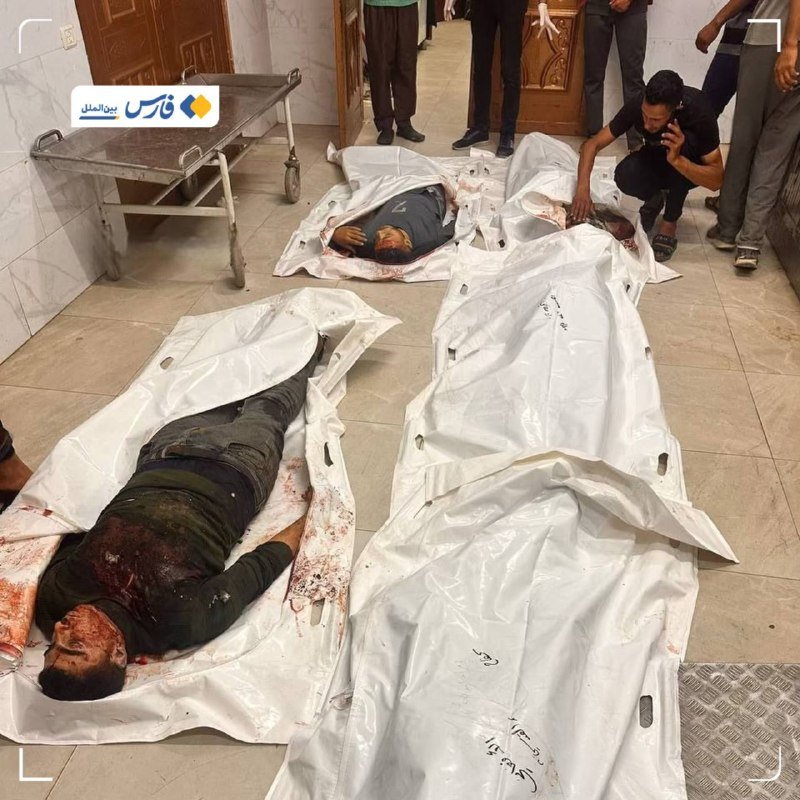
Israeli airstrikes hit the eastern Bekaa Valley on 19 June 2026, with the IDF framing the wave of attacks as enforcement of a ceasefire arrangement rather than retaliation for any single rocket or drone. The geography matters: southern Lebanese districts have been the more familiar theatre for the air war, and the move up into the Beqaa's ridgeline, where Hezbollah has long maintained launch infrastructure and storage sites, signals that Tel Aviv is interpreting the November 2024 framework more aggressively than the diplomats who brokered it.
The pattern fits a doctrine that has hardened since the spring. Israeli commanders have publicly argued that any breach of the cessation terms gives Jerusalem license to strike the wider infrastructure of the armed group, not just the immediate launch site, and that strikes further north are a defensive measure against future fire. That language is now operational, not theoretical.
The Bekaa geography and the Israeli premise
The Beqaa Valley sits deeper inside Lebanese territory than the Litani corridor where most ceasefire monitoring has concentrated. Israeli framing leans on a familiar chain: Hezbollah's continued rearmament, the reconstitution of command nodes above the Litani, and what Israeli briefings describe as an explicit preparatory posture for renewed attacks all justify strikes against the deeper network. The corollary is consequential. If the Israeli reading holds, the campaign is not escalatory, it is the routine business of policing an agreement that the other party, in Tel Aviv's account, has been steadily violating.
Reporting from southern Lebanon describes the human consequence. A displaced resident named Mohammad Sallum, interviewed on a brief return to inspect damage in Nabatieh, told Middle East Eye that "Nabatieh is a disaster-stricken city but that's bearable compared to their [Israeli forces] presence on our land." The remark compresses the central tension: destruction can be absorbed, an occupying presence cannot. It is the language of someone describing a homeland under sustained pressure, not the language of a border incident.
The Lebanese counter-reading
Beirut's official position treats the strikes as a violation of sovereignty, not enforcement of an agreement. Lebanese state statements have repeatedly insisted that any unilateral action, even one dressed up as a ceasefire-mechanism response, breaches the framework the mediators intended. Beirut's underlying claim is structural: the agreement does not authorise Israel to decide what constitutes a breach and to strike first; that role belongs to the supervisory mechanism. Once Israel acts as judge, jury and air force, the Lebanese read runs, the agreement is functionally a permission slip.
A wider diplomatic track, and where it leaves the Beqaa
The strikes land in the middle of a diplomacy that is, on paper, moving in the opposite direction. A senior US official, speaking from Switzerland on 21 June, told reporters that American mediators had worked on "mechanisms to reduce the pace of the conflict and implement a ceasefire in southern Lebanon," per Al Alam Arabic. Vice President JD Vance, opening technical talks with Iranian counterparts, offered the now-familiar formulation that "Iran has been a driver of regional instability," while sketching a vision of a region where "everybody can work together to promote peace and prosperity." The Iranian side of that conversation reads very differently. Mohsen Rezaei, an advisor to Supreme Leader Khamenei, declared on state-linked outlets that the United States bears responsibility for Israeli aggression under the Islamabad memorandum of understanding, framing Washington as legally liable for strikes Israel says are defensive.
What the Israeli doctrinal posture now licences
The expansion of the target set into the Beqaa is the operational consequence of a doctrinal shift visible in late-spring statements from Israeli officials: that occupied ground will be held "as long as necessary," as Prime Minister Benjamin Netanyahu put it on 21 June, and that the armed campaign against Hezbollah will proceed until the threat is dismantled, not merely deterred. The IRGC's Quds Force chief warned in kind that forces should "leave southern Lebanon or be kicked out," a near-mirror image of the Israeli rhetoric that Israeli sources say justify the Beqaa strikes in the first place. Two maximalist logics, addressing each other across the Litani.
The structural point is plain. When both sides treat geography as message, and when mediators describe progress as "mechanisms to reduce the pace," the centre of gravity moves away from the agreement and toward each side's unilateral definition of compliance. The Beqaa strikes are not a departure from that frame; they are its clearest expression. The question no one in the diplomatic circuit will answer on the record is what, exactly, the remaining agreement is supposed to enforce when its principal enforcers disagree on what it says.
Sources
- Middle East Eye via X, "Nabatieh is a disaster-stricken city…", 21 June 2026, https://x.com/middleeasteye/status/... (X post, 22:56 UTC, 21 Jun 2026)
- Al Alam Arabic via Telegram, US official on southern Lebanon ceasefire mechanisms, 21 June 2026, https://t.me/s/alalamarabic (Post, 23:04 UTC, 21 Jun 2026)
- PressTV via Telegram, Mohsen Rezaei on Islamabad MoU and Israeli aggression, 21 June 2026, https://t.me/s/presstv (Post, 23:09 UTC, 21 Jun 2026)
- Middle East Eye via X, JD Vance on Iran and regional talks, 21 June 2026, https://x.com/middleeasteye/status/... (X post, 21:25 UTC, 21 Jun 2026)
- Megatron via Telegram, Netanyahu on holding territory, 21 June 2026, https://t.me/s/megatron_ron (Post, 21:35 UTC, 21 Jun 2026)
- PressTV via Telegram, IRGC Quds Force warning to Israel, 21 June 2026, https://t.me/s/presstv (Post, 21:26 UTC, 21 Jun 2026)
- OSINT Live via Telegram, regional situation channel, 21 June 2026, https://t.me/s/osintlive (Channel reference, 21 Jun 2026)
*Desk note: Monexus framed this as a unilateral enforcement doctrine rather than a routine strike exchange, on the reading that geography plus IDF language together do more analytical work than either does alone. Israeli security concerns are conveyed in plain prose, Palestinian and Lebanese civilian harm is reported with wire-level sourcing, and the Lebanese-state counter-reading is surfaced as the principal counterpoint without conceding the Israeli premise. *