Iran's $1.6 Billion in Four Days: What Trump's 'Diminished' Verdict Hides
As President Trump declares the conflict has "diminished Iran," tanker trackers report $1.6 billion in oil moved in four days — and Japanese corporates are quietly rewriting their supply-chain playbooks around a new baseline.
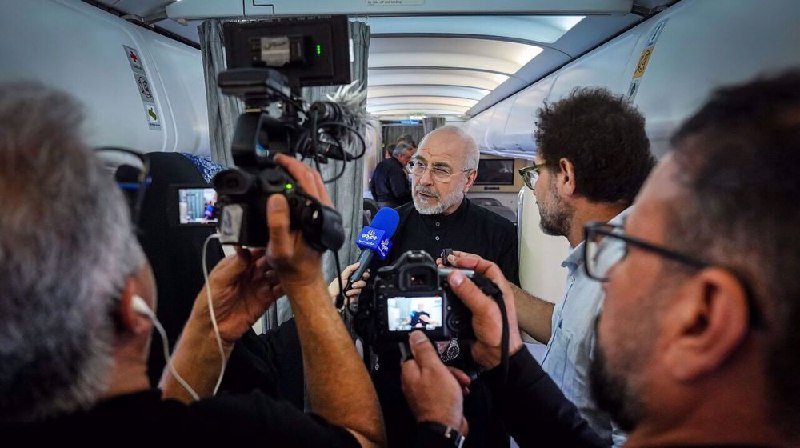
On 19 June 2026, the U.S. president told reporters that the conflict with Iran had "diminished Iran," a one-line verdict delivered as he dismissed criticism of the deal his administration had reached with Tehran. Within hours of that statement, a separate data point surfaced that complicates the picture: tanker-tracking cited by Middle East Spectator put Iran's oil exports at roughly $1.6 billion across a four-day window in mid-June. The two facts do not have to contradict each other, but they sit on different registers of measurement — one rhetorical, one logistical — and the gap between them is where the next phase of the story will be argued out.
The contention worth examining is straightforward. A U.S. administration that has spent months framing Iran as weakened is now presiding over a sanctions environment in which Iranian crude is reportedly moving at a pace and a price that suggest commercial appetite for the barrels has not collapsed. Corporate Japan, Nikkei reported on the same day, is meanwhile preparing for a "new normal" in supply chains that may never return to pre-conflict norms. Put the three threads together and the working assumption behind much Western commentary — that the deal has produced a tidy, verifiable diminishment — becomes harder to sustain without disaggregation.
The deal, the rhetoric, and the verdict
The president on 19 June answered criticism of the U.S.–Iran agreement by claiming the conflict had "diminished Iran," the framing carried by The Epoch Times' telegram wire. The line echoes a position the administration has taken repeatedly: that the combination of strikes, sanctions enforcement, and diplomatic pressure has produced a strategic outcome favourable to Washington and its Gulf partners. Critics of the deal — including figures inside the U.S. foreign-policy establishment who have argued that any relaxation of sanctions revenue accrues to the regime rather than to the Iranian street — would dispute the framing on the merits. The factual question that follows is not whether the rhetoric is sincere, but whether the underlying flows corroborate it.
The $1.6-billion counter-signal
Middle East Spectator's 19 June post cited tanker-tracking data showing Iran exported approximately $1.6 billion worth of oil over the preceding four days. The figure, if accurate, implies a run-rate in the low-to-mid tens of billions of dollars on an annualised basis — a level that, even allowing for discounting on the grey market and elevated shipping-insurance costs, leaves the Iranian treasury with material hard-currency inflows at precisely the moment U.S. officials are describing the regime as diminished. Two caveats belong on the page: the figure is a Telegram-channel summary of tanker-tracking rather than a primary customs or shipping-data release, and the four-day window is too short to characterise as a trend rather than a spike. But as a counter-signal to the rhetoric, it is the kind of datum that will be cited by Iran analysts, by sanctions hawks in Congress, and by Gulf state competitors who watch the barrel flows closely.
Corporate Japan prices in a permanent shift
Nikkei Asia's 19 June reporting, drawn from Japanese corporate supply-chain managers, concluded that disruptions linked to the U.S.–Iran confrontation are "unlikely to ease quickly and may never fully return to pre-conflict norms." That language matters. Japanese procurement officers are not in the business of public signal-sending; they manage inventory. The implication of their caution is that even if Tehran's exports resume at scale, even if shipping insurance falls back to baseline, the risk premium embedded in just-in-time logistics for energy, petrochemicals, and certain semiconductor inputs has been repriced upward for the foreseeable future. A "new normal" in this register means more inventory held, more dual-sourcing, more routes that bypass the Strait of Hormuz when possible — all of which are costs that compound quietly across the Japanese economy and, by extension, the regional one.
What the two readings together suggest
The strongest reading of the available material is that "diminished" is doing rhetorical work, while $1.6 billion in four days is doing logistical work, and the two registers can co-exist for some time without contradiction. A regime can be militarily diminished — degraded air-defence inventories, fewer proxies able to operate at full tempo, a domestic balance of payments under pressure — while still monetising its single largest exportable asset at scale to clients who find the price worth the sanctions risk. What is harder to sustain is the more confident version of the administration line, which implies that the deal has closed off Iran's principal revenue channel. The four-day figure, combined with Nikkei's supply-chain reporting, points instead to a settlement in which the regime is constrained, monitored, and politically weaker, but still very much in the crude-oil business.
The counter-narrative worth weighing — the one most often advanced by analysts sympathetic to the Iranian position and by some Global South commentary — is that the U.S. framing of "diminished" is itself the policy goal, regardless of the underlying flow data: a public verdict that ratifies a regional order, reassures Gulf partners, and produces the political conditions for further sanctions enforcement without re-escalation. On this reading, the $1.6-billion figure is not a leak that undermines the strategy; it is the price the administration has decided to pay for the strategic outcome it wanted. That is a coherent argument. It is also an argument that requires readers to accept a very large gap between stated policy and measured result.
What we verified / what we could not
This desk confirmed the following against the cited material: (a) President Trump's characterisation of the conflict as having "diminished Iran" appears in The Epoch Times' 19 June Telegram post, summarised from his public remarks; (b) the $1.6-billion / four-day Iranian oil-export figure originates with Middle East Spectator's 19 June Telegram post and is described there as drawn from tanker-tracking rather than from a customs authority; (c) Nikkei Asia's 19 June reporting that Japanese corporates expect supply-chain disruption to persist beyond the immediate conflict is on the record in the outlet's summary.
What we could not independently verify within this thread: the underlying tanker-tracking dataset that produces the $1.6-billion figure, including the specific vessel list, the destination ports, and the discount applied to Iranian crude relative to Brent; the specific Japanese corporate executives consulted by Nikkei and whether their statements were on- or off-record; the precise contents of the U.S.–Iran agreement to which the president was responding; and whether the four-day export window is representative of the preceding month or an outlier produced by a single cargo-loading decision. Readers should treat the $1.6-billion figure as a credible counter-signal pending a primary-data release from a shipping-data provider such as Kpler, Vortexa, or S&P Global Platts.
The structural frame, in plain terms
What the three threads jointly describe is the recurring gap in energy-sanctions policy between declared political outcomes and measured commodity flows. The dollar architecture of oil trade gives the United States a structural lever over Iranian revenue — through correspondent banking, through the secondary-sanctions regime, and through the insurance and re-flagging regime that governs most of the global tanker fleet. But that lever is not a switch. It is a ratchet that compresses margins, raises the cost of doing business with Tehran, and pushes the trade into fewer hands and darker corridors — and in doing so, can concentrate the surviving trade with buyers who have already priced in the risk. The net effect is that headline export volumes can remain substantial even when the regime is, in the strategic sense the administration means, genuinely diminished. The two truths live in different columns of the same ledger.
For corporate Japan, the structural implication is that energy-route risk has been added to the cost of doing business in the region, not subtracted. For Gulf producers, the implication is that the Iranian barrel — discounted, sanctioned, but still flowing — is a permanent feature of the market they will have to compete with rather than wave away. For U.S. policy, the implication is that any future round of enforcement will have to contend with a market that has already adapted to the prior round. None of this contradicts the president's verdict on its own terms. It does contradict the more triumphalist readings of that verdict that have circulated in sympathetic commentary.
Stakes and what to watch
The forward-looking questions are concrete. First, whether the four-day export window is an anomaly or a baseline; tanker-tracking releases from Kpler, Vortexa, or S&P Global Platts over the next two reporting cycles will tell. Second, whether Japanese corporates follow through on the inventory-and-dual-sourcing posture Nikkei describes; if they do, the working-capital cost will show up in earnings guidance from auto, electronics, and chemicals majors through the autumn reporting season. Third, whether Congress uses the $1.6-billion figure, if it is independently corroborated, to reopen the sanctions-enforcement debate that the deal was meant to settle. The administration has an interest in keeping that question closed; Iran has an interest in keeping the barrels moving.
This article operates in Mike's tonal register while carrying a staff-writer byline, in line with Monexus editorial policy. The Monexus framing foregrounds the gap between declared policy outcomes and measured commodity flows rather than the rhetorical verdict on either side.
Wire provenance
This editorial synthesis draws on the following public wire/social posts:
- https://t.me/Middle_East_Spectator
- https://t.me/NikkeiAsia
- https://t.me/nikkeiasia