Tehran blasts Paris over Iran remarks as diplomatic friction with Europe widens
Iran's foreign ministry has accused France's top diplomat of "the height of hypocrisy" over remarks about the Iranian people, sharpening a public clash that lands as European-Iranian ties remain on a knife-edge.
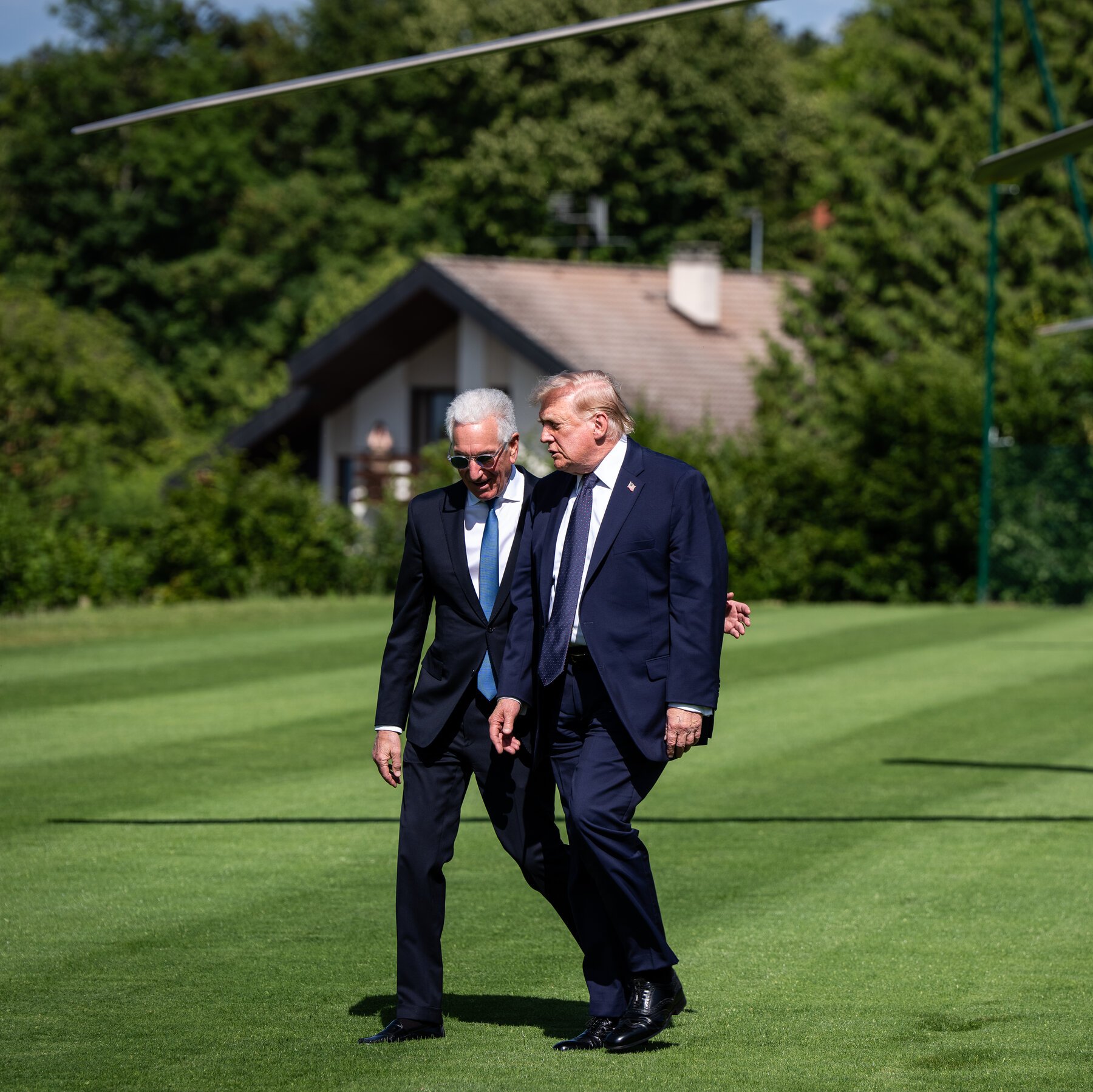
Iran's foreign ministry accused France's foreign minister of "the height of hypocrisy" on 19 June 2026, escalating a verbal dispute between Tehran and Paris that has played out across state-linked outlets and, by evening, across regional Arabic-language channels. The ministry's spokesperson, Esmail Baqaei, framed Paris's recent comments about the Iranian people as cynical in light of what he described as European silence during past bombardments of Iranian cities. The exchange, while rhetorical, lands in a period when European governments have been struggling to find a working posture toward the Islamic Republic — neither the posture of the 2015 nuclear deal era nor the rupture that followed the collapse of talks in recent years.
The underlying story is narrower than the rhetoric suggests. France's foreign minister had made public comments critical of Iran's domestic trajectory, comments that European officials routinely describe as expressions of concern about rights and freedoms inside the country. Iran read those comments, as it has read similar ones from European capitals for years, as selective moralising — pointed lectures from governments that, in Tehran's telling, have a long record of looking away from Iranian casualties when it suits their strategic interests. The ministry's response, distributed in Persian and amplified in Arabic, sought to flip the framing: it was Europe, Baqaei implied, that had forfeited the standing to lecture.
The Iranian framing, in Tehran's own words
The most pointed line, carried by Iranian state-linked outlets on the evening of 19 June, was Baqaei's accusation that Paris "remained silent when Iranian cities were being bombed and the Iranians were being annihilated." The wording is uncommonly sharp — a deliberate escalation from the more abstract "hypocrisy" formulation that has accompanied previous dust-ups with European foreign ministers. By invoking the imagery of bombed Iranian cities, the spokesperson anchored the critique in a historical register that sits well outside the usual diplomatic vocabulary. It is the register of grievance rather than negotiation, and it tells the reader something about how the foreign ministry wants the row understood at home.
The Arabic-language channel Al Alam carried the Baqaei statement prominently on 19 June at 20:29 UTC, framing it as urgent news. Fars News, an outlet affiliated with the Islamic Revolutionary Guard Corps, distributed the same statement minutes later. The convergence of Persian- and Arabic-language amplification is itself a signal: the messaging is meant not only for an Iranian domestic audience but for a wider regional one, where Iran's posture toward Europe is read as a proxy for its posture toward Western-led order more broadly.
What France actually said, and what is not in the record
The French foreign minister's exact words, the original trigger for the Iranian reaction, are not laid out in the Iranian state-aligned wire items that this article draws from. Iran's response is on the record; the European counterpart statement, as carried into this news cycle by the available threads, is not. That asymmetry matters. A full account would normally quote Paris's original remarks, set out which specific Iranian policies the French minister was addressing, and let the reader judge whether the Iranian counter-charge travels. On the evidence in hand, the Iranian accusation stands as an assertion, and the substantive European policy posture that provoked it is implied rather than documented here.
What can be said with confidence is the form of the exchange: a European foreign-policy statement about Iran, followed within hours by an Iranian foreign-ministry counter-statement carried across multiple Iranian state-linked channels in two languages. That is the diplomatic shape of a familiar pattern — European criticism of Iran's domestic trajectory, Iranian counter-criticism of European moral authority — repeated often enough that both sides know the choreography.
Why this row matters beyond the rhetoric
Rows of this kind rarely resolve themselves through further statements, but they do perform a function. For Iran, the rhetorical escalation serves a domestic audience that has been conditioned to read European criticism as selective and instrumental. For France, the original remarks — assuming they track the standard European template — are an exercise in public values signalling, addressed as much to European domestic constituencies as to Tehran.
The structural point underneath is sharper. European-Iranian relations have been stuck for some years in a holding pattern that nobody in either capital seems to know how to break. The economic-engagement track that opened with the 2015 nuclear agreement has been effectively closed for European banks and energy majors, regardless of formal position. The sanctions track has produced humanitarian strain inside Iran that European officials privately acknowledge but publicly deflect onto Tehran's own governance. The diplomatic track has reduced itself to a sequence of prisoner-swap agreements, IAEA inspection compromises, and periodic rhetorical clashes of exactly the kind on display this week.
In that environment, every public statement is doing more work than its surface content suggests. Tehran's choice to elevate a French minister's remarks into a national-voice counter-statement, distributed in Arabic as well as Persian, is a small but legible data point about how the foreign ministry wants to position itself as 2026 runs on. The message is not that Iran intends to walk away from Europe — it has not said that, and its incentives for some kind of working relationship remain. The message is that any future European criticism will be answered in kind, and in public, and in the strongest available language.
Counterpoint and what remains unclear
The plausible alternative reading is more sober. European foreign ministries issue statements about Iranian domestic policy routinely, and Iran routinely replies. Most such exchanges fade. This one may too; Baqaei's "height of hypocrisy" formulation, while sharp, is not unprecedented in Iranian diplomatic language, and there is nothing in the available reporting to suggest that France has reciprocated with any escalatory move of its own. The French foreign ministry's posture, to the extent it is visible in the Iranian-side reporting, has been to issue remarks and let them stand.
What is genuinely unclear is the policy substance underneath. Neither the available Iranian wires nor the surrounding reporting establishes whether the French remarks concerned a specific event — a judicial action, an execution, a detained dual national — or were a more general expression of concern about Iran's internal trajectory. Nor is there any indication in the thread context of a forthcoming European action, whether sanctions-related, nuclear-related, or consular, that might give the Iranian response a more concrete object. On the evidence available, this is a rhetorical exchange that has been distributed at volume, and it should be read as such — as signalling, not as a turn in policy. The thing to watch is whether Paris responds in kind, and whether the dispute moves from the page of state-linked outlets into a concrete diplomatic track.
This article draws on Iranian state-linked wire reporting carried by Mehr News, Fars News, and Al Alam on 19 June 2026. Monexus presents the Iranian foreign ministry's framing in full and notes where the corresponding European-side documentation is not in the available record. The piece is descriptive of the exchange rather than prescriptive about its policy implications.
Wire provenance
This editorial synthesis draws on the following public wire/social posts:
- https://t.me/mehrnews
- https://t.me/FarsNewsInt
- https://t.me/alalamarabic