Iran's state press runs hot on foreign-policy week, but the framing reveals the fault line
Fars and Mehr News spent the week of 19 June 2026 framing Tehran as the steady hand in a turbulent region — a posture that exposes more about Iranian press priorities than it does about the underlying diplomacy.
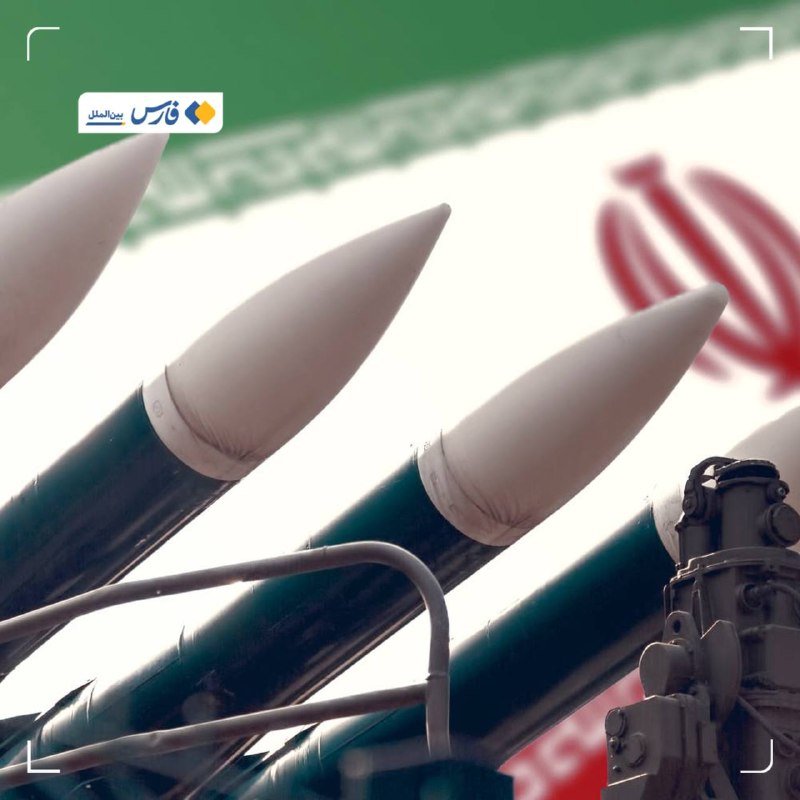
On the evening of 19 June 2026, Iran's state-aligned outlets cleared their front pages for a single message: the Islamic Republic is the steady hand in a neighbourhood that is sliding. Fars News opened a "newspaper stall" round-up under the Persian date of Saturday, 30 Khordad 1405 — Tehran's calendar running roughly 618 years ahead of the Gregorian — and the same frame propagated minutes later across Mehr News's two photo posts, which simply re-published the Mehr front pages under the #Peeshkhan_Mehr banner. The duplication is itself the story. When two of the country's biggest state-aligned outlets move in lockstep on the same hour, the question worth asking is not what they say about the world, but what they have decided their readers need to hear about it.
The pattern is the editorial line. Both Fars and Mehr treat the regional chessboard as legible, manageable, and tilted in Iran's favour — a posture that requires constant maintenance. Read together, the front pages function less as news and more as a daily briefing on the official worldview, distributed through the country's most-read channels. Anyone scanning Iranian state media on a Saturday in late Khordad is not reading for facts; they are reading to learn which facts are currently considered load-bearing.
What the front pages actually emphasised
The Persian-language mastheads collected by Fars and the photo front-pages re-circulated by Mehr between 20:26 and 21:30 UTC on 19 June shared a consistent set of subjects: a posture of regional stewardship, an emphasis on continuity with prior negotiating positions, and a defensive framing of Western pressure as both predictable and containable. Both outlets flagged the same diplomatic tempo — talks framed as proceeding on Iranian terms, sanctions framed as a tool that has run out of teeth, and regional security framed as something Tehran is helping to stabilise rather than destabilise.
This is the operating logic of state-aligned press in a sanctioned economy. The newspaper is not a neutral bulletin; it is a coordination mechanism. By repeating the same framing across two outlets within an hour, the state reduces the surface area for alternative narratives and signals to its own institutions — the Foreign Ministry, the negotiating team, the bazaar networks — which line is the safe one to repeat in public.
The counter-read: what's missing tells you as much as what's there
The line Iranian state press does not push is often more revealing than the one it does. The 19 June cycle contained no extended coverage of the domestic economic squeeze, no sustained engagement with the currency's recent moves, and no real scrutiny of the negotiating team's trade-offs. Those omissions are themselves an editorial choice. Coverage routinely defers to the language of official spokespeople; dissenting analysis gets less column-inches — not because editors are ordered to suppress it, but because the institutional incentive is to keep readers focused on the foreign-policy stage where the regime claims competence.
The structural problem with that choice is simple. A press that defines itself by the strength of its diplomacy cannot afford a week in which the diplomacy visibly wobbles. When the front pages say "we are winning," they are pre-emptively closing off the narrative space needed to discuss what happens if the talks stall. That makes the press a hostage to its own framing.
The bigger picture: press as diplomatic instrument
State-aligned outlets in Iran function as part of the negotiating apparatus, not as a check on it. The wire services, the dailies, and the photo channels all operate inside the same information environment, and the borders between journalism, propaganda, and statecraft are deliberately porous. This is not a uniquely Iranian phenomenon — Saudi, Egyptian, and Turkish state-aligned outlets operate on similar logic — but Iran's version is unusually centralised, and unusually dependent on a small number of editorially aligned outlets to set the day's frame.
For outside readers, the practical takeaway is to read Iranian state media the way one reads a central-bank statement: for posture, not for information. What Fars and Mehr decide to lead with tells you which files the regime considers active. What they leave out tells you which files the regime considers too fragile for daylight. Both Fars and Mehr cleared their schedules on 19 June 2026 for a coordinated display of the former — a steady-hand frame meant to project confidence ahead of a week in which confidence may not be cheap to maintain.
Desk note: Monexus treats Fars and Mehr as official-adjacent sources for Iranian state positioning — useful for what they reveal about Tehran's preferred framing, less useful as stand-alone factual reporting on diplomatic substance. Where their version of events diverges from Western wires, we cite both and flag the divergence.
Wire provenance
This editorial synthesis draws on the following public wire/social posts:
- https://t.me/farsna
- https://t.me/mehrnews
- https://t.me/mehrnews