The Strait That Holds the World Hostage: Iran's Hormuz Gambit and the Fragile Arithmetic of Global Energy
An IRGC Navy radio message declaring the Strait of Hormuz closed turned a volatile week of Israeli strikes on Lebanon into a global energy crisis. The arithmetic of deterrence — and the politics of who actually depends on the chokepoint — is about to be tested in real time.
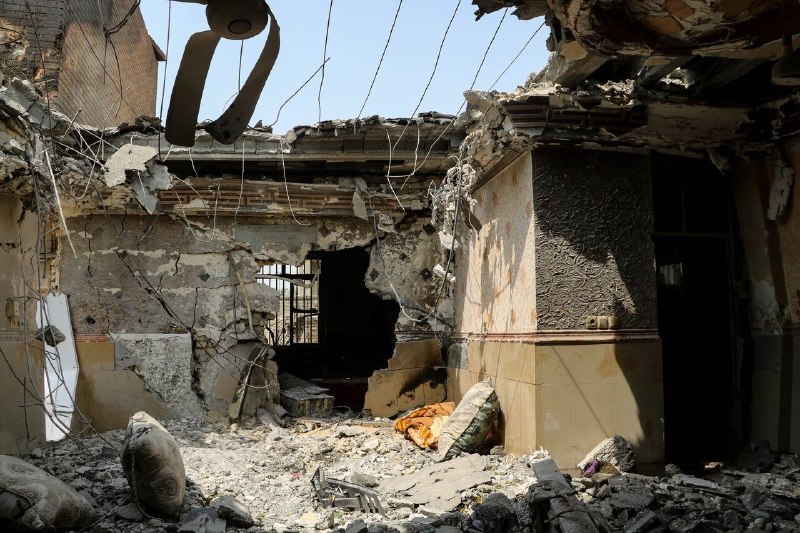
At 11:52 UTC on 19 June 2026, a four-line notice crackled across VHF Channel 16 — the international maritime distress and safety frequency, the one every captain on every ocean listens to by default. According to Telegram channels Middle East Spectator, Intel Slava and RN Intel, which cited the broadcast, the IRGC Navy announced that the Strait of Hormuz was closed until further notice. The framing on the Iranian side was explicit: the closure came in response to what Iranian accounts described as large-scale Israeli attacks across Lebanon. Within minutes, the message had ricocheted through every trading floor in London, New York, Singapore and Dubai.
What is unfolding, on the available evidence, is a single coordinated decision by Tehran to weaponise the most consequential energy chokepoint on the planet against an Israeli campaign that has spilled across the northern border. The Strait of Hormuz is not a metaphor. It is a 21-mile-wide corridor between Iran and Oman through which roughly a fifth of globally traded oil, and a comparable share of liquefied natural gas, normally transits every day. A genuine Iranian closure — not the semi-permanent tail risk the market has been pricing for years, but a real one — would force a global inventory drawdown on a scale not seen since 1973. The first question is not whether Tehran has the means to threaten shipping. It clearly does. The first question is whether the notice on Channel 16 is what it appears to be, or whether something more ambiguous is in fact underway.
What the radio message actually said
According to the Telegram channels that broke the broadcast, the IRGC Navy announced the closure on VHF Channel 16, the universal maritime hailing and distress frequency, and gave no end-state. The message did not, on the initial readouts circulated by Middle East Spectator, Intel Slava and RN Intel, specify whether the closure was total, partial, or time-limited. It did not specify whether commercial tankers would be turned back, escorted, or simply warned. The framing on Iranian-aligned channels tied the decision directly to Israeli strikes on Lebanon in the preceding 24 to 48 hours.
That ambiguity is itself the point. A formal Iranian declaration of full closure would, in international law, constitute a breach of the United Nations Convention on the Law of the Sea, which guarantees transit passage through straits used for international navigation. It would also almost certainly trigger a multilateral naval response, because the chokepoint's consumers include China, India, Japan, South Korea and the European Union — none of whom have any interest in a closure regardless of what Washington thinks about it. By issuing a radio warning rather than a treaty-violating blockade declaration, Iran leaves itself room to claim, if challenged, that it is exercising legitimate countermeasures against an aggressor state. The legal cover is thin, but it is not zero. It is the kind of move a regime that has spent four decades building a doctrine of strategic ambiguity makes deliberately.
The broadcast also illustrates a recurring problem in how this story reaches a global audience. Telegram channels with large followings — Middle East Spectator is among the more widely cited in English-language Telegram geopolitics — are not official Iranian sources, but they routinely translate and re-publish IRGC-affiliated messaging with low latency. The on-the-record statements from Iranian state media (IRNA, PressTV, Tasnim) had not, as of the times listed in the thread context, been carried in English wire copy. That gap matters. The radio broadcast is real; its strategic meaning is contested.
The Israeli trigger
The closure notice does not arrive in a vacuum. The thread context situates it explicitly inside an Israeli escalation against Lebanon, with Iranian-aligned channels describing those operations as "large-scale." On any honest read of the regional picture, the catalyst is not the existence of the Israeli–Hezbollah confrontation, which has run in lower or higher intensities for decades, but a discrete decision in the preceding days to widen the target set inside Lebanon. Whatever the operational justification offered by the IDF — and Israeli security concerns about Hezbollah rocket capabilities, precision-guided munitions, and the post-October 2023 threat environment are legitimate and must be conveyed on their own terms — the strategic consequence is to push Tehran into a posture in which the cost of responding below the threshold of direct Iran–Israel war, but above the threshold of symbolic protest, is exactly this kind of move.
The Strait of Hormuz, in other words, is now functioning as Iran's preferred escalation rung. It is the only card Tehran holds that bites Washington and Brussels as hard as it bites Tel Aviv, and that does not require a direct missile exchange with Israel. It is also the card on which Tehran has, since the 2010s, made the most credible investment: a fleet of fast attack craft, anti-ship cruise missiles emplaced along the coastal littoral, naval mines, and the kind of swarm doctrine that any Western naval planner taking it seriously has to assume will be used. The IRGC Navy and the regular Iranian Navy are not the same service; the IRGC Navy is the actor named on the Channel 16 broadcast, and it has historically been the more aggressive of the two.
Why the chokepoint is not Iran's to close
This is the structural fact that the framing in Iranian-aligned channels tends to elide. Roughly 20 percent of the world's seaborne oil moves through the Strait of Hormuz. The single largest single customer is China, which imports the bulk of its crude by sea and has no domestic pipeline alternative at the relevant scale. India, Japan, South Korea, Singapore, and the European Union (via the Gulf producers) sit immediately behind Beijing in the queue. The United States is, comparatively, a marginal consumer of Gulf crude in 2026, but it remains a major exporter of refined product, and its naval posture in the Gulf is a function of an older guarantee to the region's monarchies and to Japan and South Korea.
The political geometry is therefore not bilateral. A closure ordered by Tehran in retaliation for Israeli action against Lebanon would impose costs on Beijing first, on New Delhi second, and on Tokyo and Seoul third. Each of those capitals has, at various times in the last five years, refused to join the maximalist US–Israeli line on Iran — most visibly China, which has continued to import sanctioned Iranian crude through intermediaries, and India, which has managed its own quiet dance between the US secondary-sanctions regime and its energy dependency. A closure does not, then, punish only the parties Tehran wants to punish. It punishes Iran's own largest customers. That mismatch is the reason a fully enforced closure has been a tail risk, not a baseline, for two decades.
There is, however, a counter-reading worth taking seriously. From Tehran's perspective, the structural fact is that Israel has, in the post-October 2023 environment, demonstrated a willingness to escalate inside Lebanon on a scale that Iran cannot match with the conventional tools at its disposal. The asymmetric Israeli air campaign, and the diplomatic cover Israel enjoys in Washington, leaves Tehran with a narrow menu. Direct missile strikes on Israel carry the risk of a much wider war. Proxies in Lebanon, Iraq and Yemen have been degraded. The chokepoint is the one move that is reversible, that does not commit Iranian regular forces to a fight they are likely to lose, and that forces the world's largest economies to pressure Washington to restrain its Israeli ally. The fact that it hurts China, too, is a feature of the weapon, not a bug, in this reading: the more it hurts, the more pressure on every capital that talks to both sides.
What the market is about to price
Brent and WTI had, on the available evidence, been pricing a slow drift toward this scenario for weeks as the Israeli campaign in Lebanon intensified. A confirmed and enforced closure would, in the first 72 hours, reprice the entire forward curve. The hard arithmetic is that there is roughly 1.5 billion barrels of commercial OECD inventory and another roughly 1 billion barrels of strategic petroleum reserve capacity that can be drawn down in a true emergency, against a daily flow through Hormuz of around 17 to 21 million barrels per day of crude and condensate. Strategic reserves buy time — roughly 60 to 90 days under a full closure, less under a partial one — but they do not replace flow. Beyond that horizon, the question is rationing.
The first-order beneficiaries, in a purely financial sense, are Gulf producers with pipeline capacity that bypasses Hormuz: the Abu Dhabi Crude Pipeline (Habshan–Fujairah) at roughly 1.8 million barrels per day, and Saudi Arabia's East–West Pipeline (Petroline) at roughly 5 million barrels per day of nameplate capacity. Both are operating below nameplate but can be ramped. The first-order losers are Iran itself, which exports roughly 1.5 to 2 million barrels per day, almost all of which transits Hormuz, and the broader Iranian economy under sanctions that would tighten the moment the closure is enforced. The political meaning of a regime accepting a domestic economic cost of that size in order to weaponise a chokepoint is not ambiguous: this is a decision taken because the alternative — appearing to do nothing while Lebanon burns — was judged worse.
What remains genuinely uncertain, on the evidence in the source items, is whether the Channel 16 broadcast represents a real, enforceable order to turn tankers around, or a more calibrated signal. The framing on Iranian-aligned channels, with the Lebanese trigger foregrounded, suggests a decision that is reversible if the Israeli campaign pauses. That is the most plausible read of the available material — and it is the read that should govern how policy planners in Beijing, New Delhi, Tokyo, Brussels and Washington price the next 72 hours. Iran has bought itself leverage. Whether the leverage is used, and for how long, is now a function of decisions made in Jerusalem and Washington as much as in Tehran.
The frame beneath the frame
What is being tested, beneath the immediate crisis, is the architecture of an older international order. The US naval presence in the Gulf has, since 1987, functioned as an implicit guarantee that the chokepoint remains open — Operation Earnest Will, the tanker wars, the quiet post-2003 settlement with the IRGC Navy about the rules of the road. That guarantee has eroded. It eroded because the customer base for Gulf energy diversified away from the United States, because US shale flattened the political cost of a temporary closure for American consumers, and because the customer base diversified toward a China that has, deliberately, refused to align its Middle East policy with Washington's. The result is a chokepoint that is no longer a US asset to defend so much as a global commons that no single power can guarantee alone — and that a regional power, on a bad day, can threaten to close.
The Iranian decision, on this read, is less a departure from the rules of the regional order than the visible cost of living inside the new one. The old arrangement — US guarantees in exchange for Gulf alignment, Iranian isolation in exchange for managed deterrence — does not work when the guarantor is distracted, when the Gulf's largest customer is not the guarantor's ally, and when the regional state under pressure has, on its own territory, the geography to make a credible threat. None of this excuses the move. It does, however, locate it.
What is not in the record
The available source material is thin in three places that a careful reader should mark. First, no major Western wire — Reuters, the Associated Press, the BBC, Bloomberg, the Financial Times — had, at the times in the thread context, run an English-language on-the-record confirmation of the closure. The story is, at this moment, carried primarily by Telegram channels that translate or paraphrase Iranian messaging. The radio broadcast is verifiable in principle; it has not, in the materials in hand, been independently confirmed by a Western wire or by AIS (Automatic Identification System) data showing tankers diverting. Second, Iranian state media's English-language outlets (IRNA, PressTV, Tasnim) had not, on the available thread context, been observed carrying the same announcement in official form. The translation chain — IRGC broadcast to Telegram to English-language Telegram — is real, but it is not a wire confirmation. Third, the Israeli government had not, in the materials available, publicly responded.
The honest position is that a major development appears to be in motion, that the immediate trigger appears to be the Israeli campaign in Lebanon, and that the world has roughly 24 to 72 hours to discover whether the closure is a tactical signal or a strategic decision. Monexus will update as wire confirmation arrives.
Desk note: The wire frame on this story is, as of publication, dominated by Telegram channels translating IRGC messaging, not by official Iranian or Western-wire confirmation. This article treats the broadcast as a real and consequential signal while flagging the translation chain rather than presenting the closure as a fait accompli. The geopolitical stakes are treated on their own terms — Iranian escalation logic taken seriously, Israeli security concerns acknowledged, and the chokepoint's multilateral customer base (China, India, Japan, South Korea, the EU) given structural weight rather than treated as a US-versus-Iran bilateral.
Wire provenance
This editorial synthesis draws on the following public wire/social posts:
- https://t.me/middle_east_spectator
- https://t.me/middle_east_spectator
- https://t.me/IntelSlava
- https://t.me/rnintel
Follow the event.
These dated source records provide context. They do not retrospectively verify this archive article.
Separate what the nuclear watchdog reported from what it could not determine after the June 2025 strikes.