Iran walks back from the table: the Lebanon clause and the geometry of the next negotiation
Tehran has reportedly suspended a 60-day framework with Washington after Israeli strikes in southern Lebanon, and is now demanding guarantees on Lebanese aggression before returning to Switzerland.
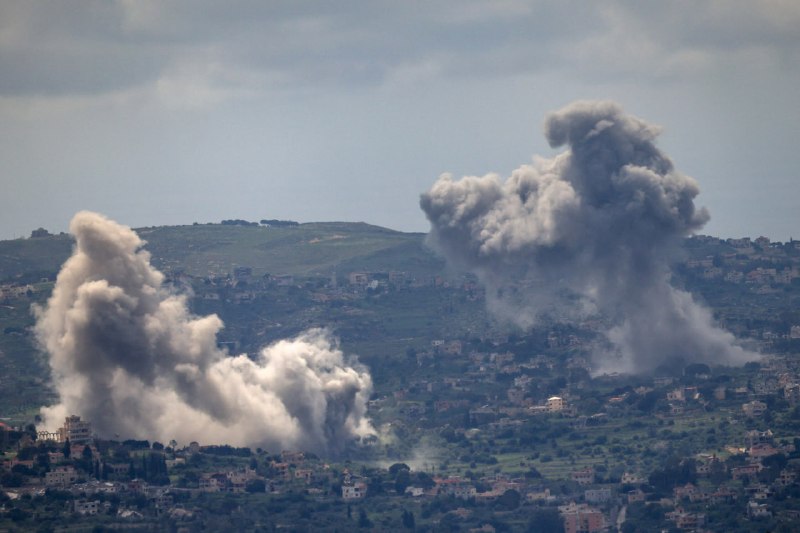
On 18 June 2026, in the late evening UTC, Cointelegraph's wire desk reported that Iran had suspended its 60-day negotiation process with the United States. The trigger, as Tehran framed it, was a violation of the first clause of the agreement following Israeli strikes in southern Lebanon. By 11:26 UTC the next morning, Fars — the Iranian state-affiliated outlet, citing an "informed diplomat" — was carrying the Iranian counter-position in its own words: Iran, before returning to negotiations with the US in Switzerland, has requested guarantees regarding the end of aggression in Lebanon. Tehran has emphasised, the Fars dispatch added, that the diplomatic track cannot be decoupled from the war on its regional doorstep.
The pattern is familiar from previous rounds of US–Iran diplomacy, but the sequencing is not. The negotiation has not collapsed; it has been paused, and the conditions of its restart have been re-priced upward. For Washington, the cost of a deal just went up. For Tehran, the cost of walking away got harder to hide.
What actually changed in the last 24 hours
Two messages, two outlets, one underlying story. The first, filed at 22:30 UTC on 18 June via Cointelegraph's Telegram channel, was framed in financial-press urgency: a 60-day process has been suspended; the trigger was Israeli action in southern Lebanon; the affected clause is the first of an agreement that, until Wednesday, was treated by the markets as the most concrete US–Iran diplomatic track in years. The second, filed the next morning through Fars and relayed by the FotrosResistancee channel at 11:26 UTC on 19 June, translated the suspension into an explicit precondition: guarantees on the end of aggression in Lebanon, before any return to Switzerland.
The Cointelegraph relay is itself a development. Crypto-and-markets desks do not normally break Iran–US negotiations; their doing so reflects how thoroughly the diplomatic track is now priced as a macro event. A 60-day window, once extended, signals that both sides had reason to keep the channel warm: a working track reduces tail risk on oil, on tanker insurance, on the Hezbollah-frontier in Syria and Lebanon, and on the political survival of a Lebanese state that has spent the post-2024 period suspended between IMF conditionality and partial state collapse. The pause, rather than a walk-away, suggests neither side wanted to be the party that closed the door.
The Israeli dimension is the variable the agreement was apparently not built to absorb. Southern Lebanon has been a recurring front since the 2023–2024 exchanges between Israel and Hezbollah, with strikes and counter-strikes continuing at varying tempo through 2025 and into 2026. If the agreement's first clause did not explicitly cover third-party strikes on Iranian-aligned territory, or did so with ambiguous language, then an Israeli sortie into southern Lebanon gives Tehran a procedurally clean reason to freeze the clock and demand textual repair. That is what the Fars sourcing describes: not a rupture, but a renegotiation of the perimeter.
The counter-narrative: why Tehran's framing has to be read carefully
The Fars dispatch, attributed to an "informed diplomat" and not to a named official, is an exercise in diplomatic signalling dressed as reporting. Three things are worth holding in mind.
First, the demand for guarantees on the end of aggression in Lebanon is, in substance, a request for something no US administration can credibly deliver. The United States does not control Israeli operational decisions in southern Lebanon. It can influence, warn, request, and at times defer — but it does not, and has never publicly claimed to, command Israeli targeting authority. A US guarantee on Israeli behaviour in Lebanon would be, on its face, unenforceable; if honoured, it would represent an unprecedented concession of Israeli operational autonomy. Tehran either knows this — in which case the demand is a price tag for continued talks rather than a sincere condition — or it is signalling to a domestic and regional audience that it is asking for the maximum, in order to settle for the achievable.
Second, the sequencing benefits the Iranian side politically. By suspending rather than withdrawing, Tehran retains the negotiating track while performing toughness at home. The reform-aligned press in Tehran, the conservative press, and the IRGC-aligned outlets can all read the pause as a stand; the foreign minister's office can keep the channel open; and the negotiating team in Muscat, Doha, or Geneva can resume work without having to rejustify the whole enterprise.
Third, the framing in Fars — "end of aggression" — is a deliberate echo of the language Iran has used around its own retaliation cycles in 2024 and 2025. It positions Iran as the party seeking de-escalation, the aggrieved respondent, the actor willing to negotiate provided the basic conditions of sovereignty are met. Whether or not that framing is the dominant one in Western reporting is a different question; in the regional press of the Levant and the Gulf, it lands.
The structural frame: a regional negotiation with extra-regional constraints
The deeper story is the geometry of the table. The US–Iran track that opened in 2025 — under whatever configuration of envoy, channel, and back-channel — was always going to be tested by events on the Israeli–Lebanese and Israeli–Iranian axes. A nuclear-adjacent agreement is, in practice, a regional security arrangement: it constrains enrichment, missile development, and proxy entanglements in exchange for sanctions relief and de-freezing of assets. The 60-day framework's first clause, whatever its exact text, almost certainly dealt with one of these pillars — most plausibly the enrichment-and-sanctions linkage, less plausibly the regional-acts-of-aggression linkage. Israeli action in southern Lebanon now forces a question the architects of the deal preferred to leave for later: which clauses govern events that are not strictly US–Iranian?
This is where the structural pressure sits. The United States enters a negotiation with a single counterpart and a set of constraints; Iran enters with a single counterpart and a network of allies and partners; Israel acts with a degree of operational independence that the agreement did not formally bind. When a strike happens that none of the three principals at the table in Switzerland ordered, the negotiation has to absorb the shock. It can do so in one of three ways: the agreement is amended, the agreement is paused pending amendment, or the agreement is abandoned. The 18–19 June events represent the second path, and the Fars-side conditions are the first draft of the amendment.
The plain-language point, free of theorist scaffolding: a diplomatic process designed to manage one set of risks is now being asked to manage a wider set, and the wider set is the one that has actually been producing headlines for the past two years. The original architecture was always too narrow.
What the other side says: the Israeli and Western wires
The thread inputs do not include a direct Israeli readout, and the Western wires have not, in the material available, published a leading statement on the suspension. What can be reconstructed from the Iranian-side framing is the gap the agreement will have to close: Israel has, at minimum, an interest in preserving operational freedom against Hezbollah infrastructure in southern Lebanon; the United States has an interest in preventing the Iranian nuclear file from drifting back to the crisis-pricing that marked 2019–2023; Iran has an interest in a deal that does not require it to disown its regional alignment.
Any agreement that survives the next 60 days will have to address, implicitly or explicitly, the question of how Israeli action in Lebanon is sequenced against Iranian restraint in nuclear escalation. The Cointelegraph-style framing — a financial-press lens on a diplomatic event — suggests the markets have been reading the track as a tail-risk reducer on oil and shipping. The Fars-style framing — a sovereigntist, regional-security lens — suggests the Iranian side has been reading the track as a sovereigntist compact, in which the US implicitly underwrites regional stability. These are different deals, and the next two weeks of diplomacy will, in practice, decide which reading governs.
Stakes: who wins, who loses, on what clock
The short clock belongs to the negotiating teams. A 60-day window is not a deadline but a horizon, and the suspension burns from that horizon without resetting it. If a revised text is on the table in two to three weeks, the architecture survives. If the pause drifts into a month, financial markets will reprice — insurance, freight, Brent, and the more exotic instruments that price a Hormuz disruption scenario. The medium clock belongs to the Lebanese state, which has been operating in the gap between an IMF programme and a partial sovereign default; a working US–Iran track removes one of the variables that has been depressing the Lebanese reconstruction case. The long clock belongs to the regional balance, in which a deal that fails to absorb Israeli action in Lebanon is, in effect, a deal that has agreed to ignore the conflict that has shaped the last two years.
The Iranian side calculates that asking for the maximum — an enforceable end to aggression in Lebanon — gives it the most negotiating room, even if it knows the maximum is not deliverable. The US side calculates that a live process, even a paused one, is preferable to a public collapse, both for the oil market and for the political economy of any future Middle East crisis. The Israeli side, not formally at the table, retains the operational independence that has been the structural problem all along. That is the geometry of the next round, and it is the geometry the original agreement was apparently not designed to solve.
What remains uncertain
The source inputs are two Telegram relays — one from Cointelegraph, one from Fars via FotrosResistancee — and the underlying text of the agreement's first clause is not in the public material. The names of the US and Iranian principals currently at the channel are not specified in the source items. The location of the next round — described as Switzerland, without further specification — is consistent with Geneva or Lausanne, but not confirmed. Whether the Israeli strikes referenced in the Cointelegraph relay are the same strikes that triggered the Fars-side precondition is a reasonable inference but not a stated fact in the available material. And whether the 60-day process is suspended, extended, or quietly restarted in a parallel channel is the single most consequential unknown, on which every other reading turns.
What can be said with confidence is narrower than the headlines suggest. A diplomatic track that was, as of 17 June 2026, considered the most concrete US–Iran channel in years is, as of 19 June, paused on Iranian-initiated conditions, with a stated demand for guarantees on Lebanon that no US administration has historically been willing to give. The architecture will be tested in the next two to three weeks. If it survives in amended form, the regional balance shifts. If it does not, the financial-press framing of the past 18 months — that a deal was close — will look, in retrospect, like a category error about which deal was being negotiated.
Desk note: Monexus has framed this story through the Iranian-side precondition and the financial-press relay rather than through a Western-wire lead, on the principle that the negotiating state sets the terms of the pause and that the markets have already priced the event. The structural reading — that the original architecture was too narrow for the regional environment it had to govern — is this publication's, not the wire's.
Wire provenance
This editorial synthesis draws on the following public wire/social posts:
- https://t.me/FotrosResistancee
- https://t.me/cointelegraph
- https://t.me/cointelegraph
Follow the event.
These dated source records provide context. They do not retrospectively verify this archive article.
Separate what the nuclear watchdog reported from what it could not determine after the June 2025 strikes.