Diplomacy on hold: how Israeli strikes in Lebanon forced Iran to walk back from the table
An Iranian negotiating delegation cancelled its trip to Geneva on 19 June 2026 after Israeli strikes on southern Lebanon, exposing the fragility of the track and the limits of US leverage over its regional partner.
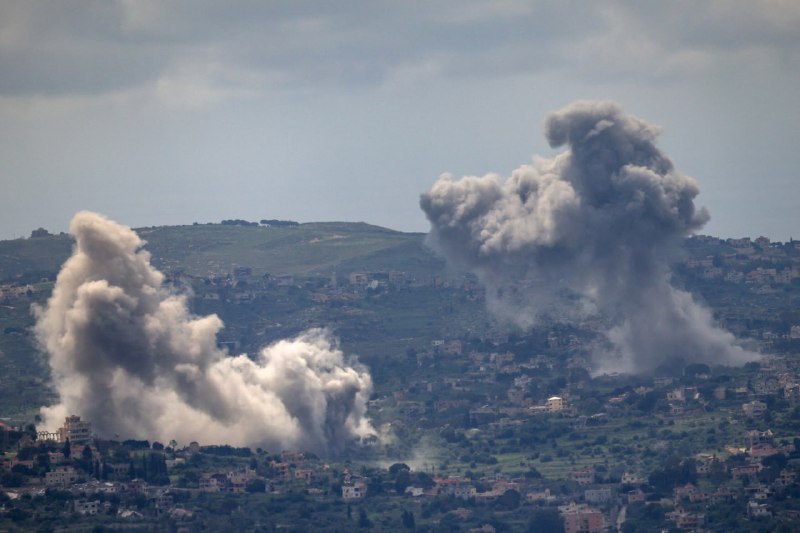
When the Iranian delegation's flight to Switzerland was scratched in the small hours of 19 June 2026, it was not a bureaucratic hiccup. It was a confirmation of a pattern that has governed the Iran file for months: every time a diplomatic track appears to be opening, an Israeli kinetic action in Lebanon — or near it — reasserts the primacy of the battlefield over the bargaining table. According to Israeli journalist Amit Segal, the postponement was directly attributed to "IDF attacks in Lebanon," with Iran's BRICS-aligned press channels carrying the same line within an hour.
The episode lays bare something that Western commentary has tended to soften. The Iran–United States channel exists, and at points produces deliverables. But the channel does not run on its own clock. It runs on whatever the Israeli security cabinet decides is tolerable on its northern frontier on any given morning — and on whether Tehran judges that the cost of engagement has just gone up. On 19 June, both judgments moved in the same direction, and the Swiss track paid the price.
A live, dated sequence
The news broke in Telegram channels operated by Israeli and BRICS-affiliated outlets before it reached mainstream wires. Middle East Eye's rolling live blog for what it labels "War on Iran | Day 112," updated at 04:18 UTC on 19 June, listed three moving pieces: the US lifting its blockade on Iranian ports; the death toll in Gaza since the ceasefire passing 1,000; and the Iranian delegation postponing its Switzerland trip in response to Israeli strikes in southern Lebanon. The framing — a single live block covering port access, Gaza casualty counts and a stalled Iran–US channel — captures the connective tissue that conventional diplomatic coverage tends to keep in separate silos.
Segal's channel posted the postponement at 03:52 UTC. The BRICS News channel repeated the substance at 03:02 UTC with explicit attribution to "ongoing Israeli attacks on Lebanon." The sequence is small but unambiguous: a track that was bookable on Tuesday is no longer bookable on Thursday, and the proximate cause named by both Israeli and non-Western observers is the same Israeli operation in southern Lebanon.
That southern-frontier geography matters. Lebanon is not Iran, and the strikes are not directed at Iranian soil. But the Iranian negotiation position on its nuclear file, on sanctions relief, and on the regional security architecture is not constructed in a vacuum. The status of the Iran-aligned axis in Lebanon — Hezbollah's posture, the viability of any ceasefire arrangement on the Litani, the question of who governs south of the Awali — is treated in Tehran as a load-bearing variable in any deal struck in Geneva or Muscat or Vienna. When that variable shifts under Israeli bombs, the delegation that was about to board a plane is told to stand down.
The wider ceasefire ledger
The most under-reported number in the Middle East Eye summary is the second: more than 1,000 dead in Gaza since the ceasefire took hold. That figure, even if it includes both civilian and combatant deaths and is contested in its precise composition, sits at the centre of any honest accounting of how the region is governed between headline diplomatic events. A ceasefire that continues to register a four-digit fatality count is not functioning as ceasefires are normally understood to function. It is functioning as an interval between campaigns.
For Iran, that interval has a particular shape. Tehran's strategic argument for engaging the United States has long rested on the proposition that the costs of non-engagement — sanctions, isolation, the slow corrosion of state capacity — exceed the costs of giving ground on the nuclear file and the missile file. A ceasefire in Gaza that still produces mass casualties, paired with an active Israeli air campaign on the Lebanese border, raises the costs of engagement and the costs of non-engagement simultaneously. The Iranian negotiating position does not simply deteriorate; it bifurcates.
The internal argument in Tehran now has to square two claims. The first is that the United States is the only external actor with the leverage to restrain Israeli operations in Lebanon and the flow of weapons and intelligence that sustain them. The second is that the United States has chosen, repeatedly, not to use that leverage in real time. The decision to postpone the Swiss trip rather than travel and negotiate under fire is the operational expression of a delegation that has decided the second claim is the more reliable guide to behaviour on this particular morning.
The structural frame: a channel that does not own its own timetable
Coverage of the Iran–US channel routinely treats it as if it were a bilateral negotiation between two sovereign governments with a defined agenda. That framing is incomplete. The agenda is bilateral. The timetable is not. The timetable is set by events on a third country's border, by a fourth country's security cabinet, and by a fifth country's domestic political calendar. Under those conditions, the channel is best understood not as a negotiation in the conventional sense but as a permission structure — a sequence of moments at which one party judges the other party has paid enough, in the currency of restraint, to allow the conversation to continue.
That structural reading has two implications that the standard diplomatic coverage does not surface. The first is that any deliverable from this channel — a sanctions package, a nuclear cap, a regional security annex — is, in effect, a transaction in which the United States is brokering between Iran and Israeli tolerance of a given deal. The second is that when Israeli tolerance drops, the deal drops, regardless of what the US and Iranian principals have agreed in principle. The Geneva postponement is a routine expression of that dependency rather than an aberration.
It also clarifies the meaning of the US lifting its blockade on Iranian ports, listed first in the Middle East Eye bullet. A blockade lift is normally reported as a confidence-building measure on the negotiating track. In the structural reading, it functions as permission granted under conditions that the granting party can revoke. The lift, the talks, and the postponement are not three separate stories; they are three settings on a single dial that the United States and Israel share operational control over.
Counter-narrative: why the dominant framing deserves its skeptics
The dominant Western framing of the postponement — to the extent it has appeared in the small hours of 19 June — is that Iran is the actor walking away, that Tehran's calculation has shifted toward maximalism, and that the episode demonstrates the limits of engagement. The framing is not baseless. Iran has a documented record of using diplomatic tracks to manage sanctions exposure while reserving the right to advance its nuclear and missile programmes.
But the framing also conceals as much as it reveals. It treats the Swiss track as if it were an Iranian prerogative to attend or skip. The reporting assembled here suggests the opposite: the Iranian delegation was prepared to travel, the trip was postponed in response to a specific named Israeli military operation, and the postponement was reported in near-real-time by Israeli and BRICS-adjacent channels with the same explanation. The actor that walked away from the table on this occasion was not Iranian in the first instance. It was the security environment that the Iranian delegation was being asked to negotiate inside of, and that environment was reshaped overnight by Israeli strikes on southern Lebanon.
There is a further counter-narrative worth taking seriously. The Geneva track has, at points, produced movement that the broader region has judged valuable — including the temporary opening of the Strait and the partial lifting of the US naval blockade. If the channel is treated as permanently hostage to events in Lebanon, the structural cost falls on the regional populations most exposed to the absence of a deal: Lebanese civilians on the border, Iranian civilians under sanctions, and Gazans under a ceasefire that is, by the figures cited above, still lethal. That is the human calculation behind the choice to negotiate under difficult conditions rather than postpone — and it is the calculation that the postponement overrides.
Stakes and forward view
The practical question for the next ten to fourteen days is whether the Swiss track reopens at all, and on whose terms. Three scenarios are plausible. The first is a quick reset: the Israeli operation in southern Lebanon concludes on a defined timeline, the Iranian delegation rebooks within a week, and the Geneva process resumes from roughly where it left off. The second is a longer pause: the Israeli campaign expands, the Iranian delegation waits out a phase, and the sanctions regime tightens around Tehran's residual oil exports while the blockade lift is partially or quietly reversed. The third is a managed breakdown: the track is allowed to lapse formally, both sides revert to pressure-and-counter-pressure, and the question of Iranian nuclear advancement re-enters the open-ended posture it occupied before the current channel opened.
Which of these prevails will be determined less in Geneva than in the Israeli security cabinet's morning briefings and in the Iranian supreme body that authorises delegations to travel. The structural pattern observable on 19 June — an Israeli kinetic action resetting an Iran–US diplomatic clock — suggests the second scenario is the more probable outcome unless the Israeli operation is bounded in a way the public reporting has not yet specified. A bounded operation with a named endpoint would allow the Iranian delegation to argue, internally, that the cost of engagement has stabilised rather than risen. An unbounded operation forecloses that argument.
What remains uncertain
The sources available at the time of writing leave several questions open. The first is the precise scale and targeting of the Israeli strikes in southern Lebanon that Segal and the BRICS channels named as the trigger for the postponement. The second is whether the United States was consulted, or informed, before the Israeli operation that produced the postponement, or whether the operation was a unilateral Israeli decision with consequences the US was obliged to absorb. The third is whether the ceasefire in Gaza — under which, per Middle East Eye, more than 1,000 have died since it took hold — is being treated by Israeli planners as a constraint on operations in Lebanon, or as an unrelated track. Each of these questions will shape the regional trajectory over the coming weeks; each is, on the evidence assembled here, unsettled.
What can be said with the evidence at hand is that the Iran–US channel on 19 June 2026 functioned exactly as it has functioned for the past several months: as a permission structure in which the timetable of negotiation is set not at the negotiating table but in the air over a third country's territory. The Swiss trip was postponed because the air over southern Lebanon did not, on the morning of 19 June, permit it.
This article treats the Israeli, Iranian and BRICS-affiliated reporting on the postponement as a single coherent account pending independent corroboration of the specific strikes named; the live thread context available at the time of writing does not include a Western-wire confirmation of the precise operational scope of those strikes.
Wire provenance
This editorial synthesis draws on the following public wire/social posts:
- https://t.me/amitsegal
- https://t.me/bricsnews
Follow the event.
These dated source records provide context. They do not retrospectively verify this archive article.
Separate what the nuclear watchdog reported from what it could not determine after the June 2025 strikes.