The 4 p.m. Arrangement: How a Narrow Lebanon Ceasefire Reshapes the Region’s Long Game
A ceasefire between Israel and Hezbollah, announced for 4 p.m. local time on 19 June 2026, buys time but does not settle the deeper contest over Lebanon’s south and Iran’s northern frontier.
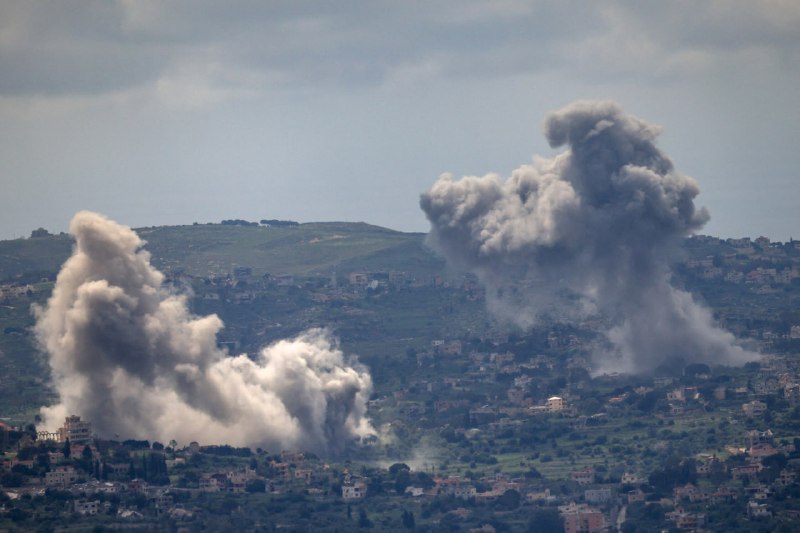
At 12:54 UTC on 19 June 2026, Reuters broke the news that Israel and Hezbollah had agreed to a ceasefire to take effect at 4 p.m. local time the same day. The wire said a senior U.S. official had confirmed the arrangement, and within minutes the same headline was being relayed by Telegram channels tracking the file — rnintel, Clash Report, and wfwitness all posting the Reuters line in near real time [rnintel 2026-06-19T12:54; Clash Report 2026-06-19T12:53; wfwitness 2026-06-19T12:52]. The corridor of information was narrow but consistent: an American-brokered halt to the cross-border fight, timed inside a single news cycle.
What is actually on paper, and what remains deliberately vague, is the more consequential question — and the one that will determine whether this is a peace or a pause.
What the announcement says, and what it does not
The Reuters report, as relayed across the three Telegram channels, names the parties, the timing, and the U.S. role — and almost nothing else. No terms are quoted. No map is attached. There is no description of the buffer zone, no list of withdrawal stages, no mention of verification, no reference to UNSCR 1701, no statement from Beirut or from Hezbollah’s political leadership. The substance of the deal, in other words, lives downstream of the headline. That asymmetry is the story.
A senior U.S. official is the on-the-record source of the ceasefire’s existence, not of its content. That tells a reader two things at once. First, Washington is comfortable owning the announcement — it is a deliverable the administration wants visibly credited to American diplomacy. Second, the opacity of the terms suggests they were negotiated in a tight channel where neither Israeli nor Lebanese political cover is strong enough to brief the public line by line. Israeli governments have, since the 2024 escalation, treated any arrangement on the northern border as a domestic vulnerability; Lebanese leaders have their own confessional arithmetic to manage. The Americanised launch spares both from having to be the first to defend the text.
For all the talk of ceasefires in this part of the Levant, the framework that has actually governed the Israel’ezbollah frontier since 2006 — UN Security Council Resolution 1701 — is not the reference point the three wire forwards mention. Whether the new arrangement rests on 1701, supersedes it, or quietly borrows from it is the kind of detail that usually emerges days later, when monitoring arrangements surface and the first violations get recorded.
Why this is happening now
The timing is the second tell. A 4 p.m. local time ceasefire on a Friday sits inside a specific diplomatic window. Friday closures in the Arab-Israeli information cycle compress the news cycle and give both governments a weekend to manage the political fallout before Monday coverage sets the narrative. That is not cynicism; it is standard crisis choreography.
The U.S. role is the more substantive driver. The senior official on the record is the same kind of source that anchored the Gaza ceasefire architecture in 2025 — a channel that allows the White House to claim ownership while leaving room for Israeli or Lebanese disavowal if the deal frays. The pattern is now familiar enough to name: Washington underwrites a halt, takes the credit, and retains the leverage to mediate the next escalation. It is the operating model of the regional file since late 2024, and this announcement extends it rather than departs from it.
For Israel, the northern front has been a sustained drain — rocket and drone interceptions, evacuation of border communities that have been displaced for the better part of two years, and a Hezbollah arsenal that, while degraded, retains significant short-range capability. For Hezbollah, the calculus shifted as its patron’s regional posture changed and as Lebanese public patience with a fight that produced little at high cost thinned. A ceasefire that lets both sides claim they held the line and stopped the bleeding is, in those terms, politically survivable for both.
The structural frame: a managed border, not a settled one
What is being constructed here is not a peace. It is a managed escalation boundary. The Lebanon–Israel frontier has functioned for most of the past two decades as a contested space held below the threshold of full war through a combination of UNIFIL deployment, bilateral back-channels, and the deterrent logic that both sides would lose more than they would gain from reopening the front. The current ceasefire, on the available evidence, restores that equilibrium — with an explicit American underwriting that did not exist in quite this form in 2006.
That has three structural consequences worth flagging.
The first is that the ceasefire’s stability depends on Washington’s willingness to enforce it. The arrangement, as announced, has no internal enforcement mechanism the public can see. UNIFIL’s role is not specified in the wire reports; the U.S. monitoring architecture that made the Gaza ceasefire partially stick is not named. When the guarantor is a foreign capital rather than an institution on the ground, the deal’s half-life is roughly equal to the guarantor’s attention span.
The second is that this is, in effect, a northern-front settlement without a political horizon for Lebanon. The deeper contest — Hezbollah’s arsenal, its position inside the Lebanese state, the disarmament question that has bedevilled Beirut since 1990 — is not addressed in any visible clause. A ceasefire that freezes a battlefield without altering the balance that produced it is a pause, not a settlement. The same can be said of Gaza: the underlying dispute is not resolved by stopping the shooting, and the next round of fighting is typically sketched in the gaps that the last ceasefire left open.
The third is that the announcement shifts Iran’s regional problem set rather than solves it. Tehran’s forward defence on the Lebanese border has been one of its more expensive commitments. A ceasefire, even a fragile one, reduces that line-item without requiring Tehran to formally concede anything. The Israeli position gains a quieter northern frontier. The American position gains a deliverable. Hezbollah’s leadership gains time to reconstitute. None of these gains is durable on its own, and the sum of them is less than a settlement would be — but each side has reason to accept the floor.
What could go wrong — and what the sources are not telling us
The most plausible failure modes are the obvious ones. A localised incident on the border, an over-eager commander on either side, or a deliberate provocation to test the new line — these are the failure patterns of every Lebanon ceasefire since 1996. The 4 p.m. start is a single point in time; the agreement’s character will be set by what happens on the first afternoon when a rocket is fired or a strike is launched after the deadline. The wire reports contain no mechanism for adjudicating such incidents, and that absence is itself the central risk.
There are also things the three Telegram forwards do not tell us, and a reader should hold them loosely. The geographic scope of the ceasefire — whether it covers only south Lebanon, or extends to the Bekaa and the Syrian supply lines that have historically moved weapons north — is unspecified. The status of Israeli airstrikes inside Lebanese airspace, which have continued periodically even during the de-escalation phase, is unspecified. The position of the Lebanese army, which has historically been a third actor on its own soil, is unspecified. The political reaction inside Israel, where any deal that can be read as leaving Hezbollah’s rocket capability intact is domestically contentious, is not yet in the record.
For all of those reasons, the Reuters-led announcement reads as a framework launch rather than a finished document. The next forty-eight hours will tell us whether the parties are describing the same thing.
Stakes: who gains, who absorbs the cost
If the ceasefire holds into next week, the immediate beneficiaries are the Israeli communities evacuated from the northern border since late 2023, who gain a credible — if conditional — basis to begin returning; the Lebanese state, which absorbs a halt to a war its economy cannot afford; and the U.S. administration, which adds a foreign-policy deliverable at a moment when the region’s other files are visibly unresolved. The costs fall disproportionately on the populations of south Lebanon, where reconstruction will again be the slowest-moving line-item, and on the longer-horizon problem of how Hezbollah’s position inside Lebanon is to be addressed at all.
The deeper structural point is that the Middle East’s ceasefire economy — the pattern of American-brokered halts that stop the shooting without settling the dispute — has become a regional institution in its own right. Each round of it produces a quieter news cycle and a more entrenched set of unresolved grievances. The 4 p.m. arrangement, on the evidence now in hand, belongs to that pattern. It is a serious achievement of crisis management. It is not, by any reasonable reading, the resolution of the contest it suspends.
Desk note: Monexus framed this from the wire (Reuters via three Telegram channels) and did not extrapolate beyond it. Where the announcement is silent — on monitoring, on scope, on enforcement — the silence is itself the reporting.
Wire provenance
This editorial synthesis draws on the following public wire/social posts:
- https://t.me/rnintel
- https://t.me/ClashReport
- https://t.me/wfwitness
- https://en.wikipedia.org/wiki/United_Nations_Security_Council_resolution_1701
- https://en.wikipedia.org/wiki/Israel%E2%80%93Hezbollah_conflict_(2023%E2%80%93present)
- https://en.wikipedia.org/wiki/United_Nations_Interim_Force_in_Lebanon
- https://en.wikipedia.org/wiki/Lebanon
- https://en.wikipedia.org/wiki/Israel
Follow the event.
These dated source records provide context. They do not retrospectively verify this archive article.
Separate what the nuclear watchdog reported from what it could not determine after the June 2025 strikes.
- https://t.me/rnintel
- https://t.me/ClashReport
- https://t.me/wfwitness
- https://en.wikipedia.org/wiki/United_Nations_Security_Council_resolution_1701
- https://en.wikipedia.org/wiki/Israel%E2%80%93Hezbollah_conflict_(2023%E2%80%93present
- https://en.wikipedia.org/wiki/United_Nations_Interim_Force_in_Lebanon
- https://en.wikipedia.org/wiki/Lebanon
- https://en.wikipedia.org/wiki/Israel