A ceasefire that arrives while the bombs are still falling
A truce takes effect at 4pm local time in southern Lebanon on 19 June 2026, even as Israeli jets bomb Nabatieh and an unnamed Israeli official tells N12 there will be no renewal.
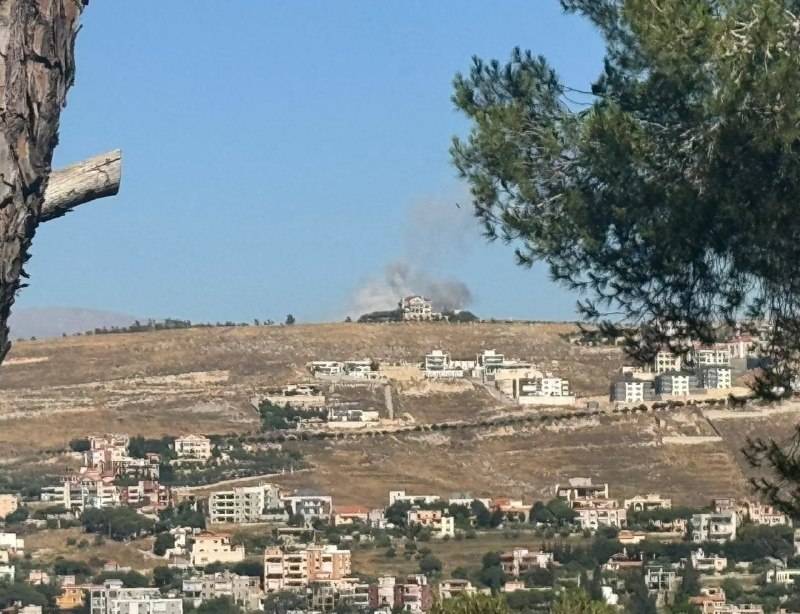
At 13:00 UTC on 19 June 2026, Reuters reported that Israel and Hezbollah had agreed to a ceasefire set to take effect at 4:00 PM local time the same day. Within minutes, Israeli fighter jets were still over southern Lebanon. PressTV carried a Reuters-pool photograph showing Israeli aircraft bombing the city of Al-Nabatieh in the minutes leading up to the announcement. By 13:52 UTC, an Israeli official had told N12, in Hebrew, that there would be no ceasefire renewal, that the IDF would continue destroying infrastructure, and that operations would carry on as planned. The contradiction — a truce declared and disowned in the same news cycle — is the story.
A truce is meant to be a threshold: a moment when one side stops and the other side stops, and both sides know it. What is instead unfolding along the Israel-Lebanon border is the threshold happening in real time. A senior US official confirmed the 4pm local-time start to Reuters; the IDF, on its own channels, is still describing fresh strikes against more than 100 Hezbollah targets "last night and today." The announced ceasefire is real. So is the bombing. The gap between the two is where the next forty-eight hours will be decided.
What was actually agreed
Reuters, citing a senior US official, reported at 13:00 UTC that Israel and Hezbollah had agreed to a ceasefire beginning at 4:00 PM local time on Friday 19 June 2026. The terms as relayed by the US official were not detailed in the immediate wire. Within the hour, the Israeli side, via N12, was striking a different note: an unnamed official said the ceasefire would not be renewed, that the IDF would continue destroying Hezbollah infrastructure, and that operations against the group were ongoing. The N12 framing — partial, attributed, not on the record — sits awkwardly next to the official US-mediated announcement, but both messages originated within the same Israeli system on the same day.
What the sources agree on is narrow: the hour, 4:00 PM local time; the parties, Israel and Hezbollah; and the broker, the United States. What they disagree on is whether the announcement marks an end to fighting or a pause inside it. The Israeli official's line — no renewal, infrastructure destruction continues — is consistent with a position that the announced arrangement is tactical, not strategic.
The last hours before the clock ran out
The ceasefire was declared while Israeli jets were still airborne. Telegram-channel monitoring by GeoPWatch, RN Intel, and PressTV showed Israeli air activity over southern Lebanese towns through the late morning and into early afternoon local time. The PressTV image pool from Reuters documented bombardment of Al-Nabatieh in the immediate run-up to the 4pm deadline. RN Intel quoted Israeli military framing describing strikes on more than 100 Hezbollah targets overnight and into 19 June. The pattern is consistent with both sides using the final hours to fix facts on the ground before the clock stopped them.
Ceasefires negotiated under bombardment are rarely clean. The 4pm start time gives both sides a deadline to consolidate: Israel to degrade what it calls Hezbollah infrastructure in the south, and Hezbollah to reposition rocket and command assets before observers, journalists, and any third-party verification teams arrive. Whether the announcement holds will depend less on the text of the deal than on what each side has already done to prepare for the deal's failure.
What the Israeli "no renewal" line really signals
The N12 leak, attributed but on background, does three things at once. It prepares the Israeli public for continued strikes if the arrangement collapses. It signals to Hezbollah, and to the Lebanese state, that the Israeli government does not regard this as the start of a longer process. And it gives Washington a useful ambiguity: the US can claim credit for brokering a halt while leaving the Israeli government room to resume operations without publicly breaking with the White House. None of that requires the N12 official to be lying. Officials who brief anonymously are usually telling the truth about their institution's mood — the institutional mood, in this case, is that this ceasefire is being treated as provisional.
Counter-reads
Two alternative interpretations deserve air. The first is that the Israeli "no renewal" line is bureaucratic throat-clearing — a routine message to Israeli audiences that the IDF does not consider itself bound beyond the announced window, which is how most Israeli governments have framed short-term arrangements with Hezbollah since 2006. The second is the opposite: that the announcement is itself the Israeli off-ramp, and that the bombs falling at 3:55pm are the cost of negotiating while bombing. Both readings can be true. The available reporting does not yet let a reader choose between them.
Stakes, and what remains contested
If the ceasefire holds past its first weekend, the immediate winners are the civilians of south Lebanon and northern Israel, who have absorbed the worst of the exchange, and the Biden-era — and now successor-administration — diplomatic architecture that prefers managed pauses to open-ended escalation. The losers are any Israeli political constituency betting on a longer campaign, and any Hezbollah constituency betting that the group could outlast sustained Israeli air superiority. If the ceasefire collapses within seventy-two hours — the period Israeli officials have historically used to test the limits of an arrangement — both readings converge on the same outcome, and the N12 line turns out to have been the honest one.
What the sources do not specify is the text of the arrangement, the verification mechanism, the role of UNIFIL, and the position of the Lebanese government. Each of those will become visible — or contested — in the next forty-eight hours.
This article leans on Reuters wire reporting carried by multiple Telegram channels; Monexus frames the ceasefire as a contested threshold, not a settlement.
Wire provenance
This editorial synthesis draws on the following public wire/social posts:
- https://t.me/GeoPWatch
- https://t.me/presstv
- https://t.me/rnintel