Israel and Hezbollah announce ceasefire as fifth such agreement this month tests the diplomatic track
A US-brokered 4 p.m. local-time ceasefire between Israel and Hezbollah is the fifth such announcement in recent weeks, underscoring how thin the hold of any single agreement has become on the ground along the Blue Line.
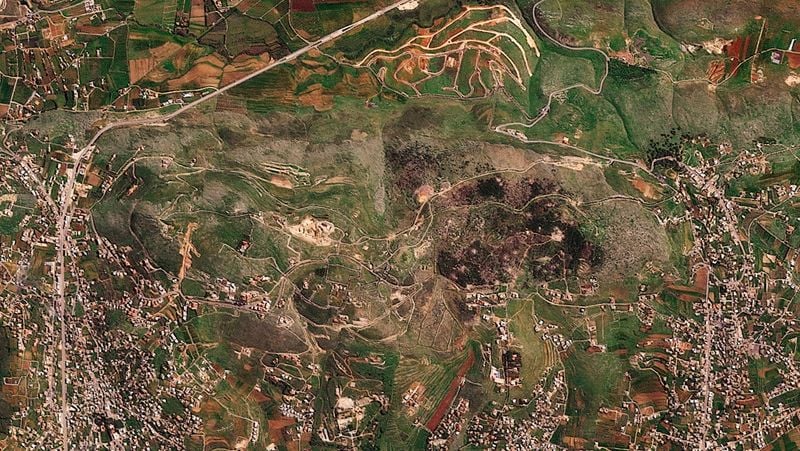
At 12:58 UTC on 19 June 2026, Reuters, citing a senior US official, reported that Israel and Hezbollah had agreed to a ceasefire set to take effect at 4 p.m. local time. The wire's account was carried within minutes by regional monitoring channels including The Cradle, WFWITNESS, RNIntel and GeoPolitical Watch, all of which reposted the Reuters line almost verbatim and noted that the announcement came on a familiar cadence: it is, by the count kept on those channels, the fifth ceasefire announced between the two sides in recent months.
The pattern is now the story. A single agreement, even one delivered with the weight of a US senior official, no longer settles the question of whether fighting will resume. The news flow itself has become a metronome of pause-and-resume, and each restart narrows the space in which the next announcement is treated as durable.
What was actually announced, and what was not
The Reuters report, as relayed by the regional channels, contains a single concrete element: a start time. The ceasefire is to take effect at 4 p.m. local time on 19 June 2026. A senior US official is the named source, which is consistent with Washington's role as the principal external backer of the diplomatic track and as the government that has historically underwritten Israel's air and intelligence campaign against Hezbollah. No Israeli or Hezbollah spokesperson is cited in the wire, and the channels carrying the report do not add bilateral confirmation. The headline figure is timing; the substantive terms are not in the public reporting.
That asymmetry is itself worth pausing on. In earlier Israel-Hezbollah arrangements — the 2006 cessation of hostilities, the understandings brokered in 2024 — the architecture was visible: monitoring mechanisms, mutual undertakings on a defined front along the Blue Line, third-party guarantors. None of that vocabulary appears in the current cycle of announcements. What appears, instead, is a tempo: announce, hold for hours or days, restart, announce again. The local-time notation ("4 p.m.") is itself a tell — it points to a tactical pause calibrated to a particular day's geography, not to a structural settlement.
The five-announcements-in-months count, repeated across the Telegram channels that aggregated the Reuters line, is the kind of detail that wire reporting rarely emphasises and regional monitors routinely surface. It does not, on its own, prove that the latest agreement will fail. It does establish that the burden of proof has shifted: the next hours are now the relevant dataset, not the announcement itself.
The diplomatic track in plain context
Israel's confrontation with Hezbollah, the Iran-aligned Shia movement based in southern Lebanon, has run in parallel with the war in Gaza and the broader regional escalation that followed the events of October 2023. For more than two years the two sides have exchanged fire across the border, with Israeli airstrikes reaching deep into Lebanese territory and Hezbollah rocket and drone fire reaching northern Israeli communities. The humanitarian toll on the Lebanese side has been severe; the displacement of communities on the Israeli side has been smaller in absolute terms but politically consequential inside Israel.
The United States has been the principal external actor, both as Israel's chief diplomatic and military backer and as the government with the standing to mediate with Lebanese state and non-state interlocutors. A US-brokered arrangement in November 2024 produced the longest sustained pause in the fighting. Since then, the diplomatic effort has continued in shorter cycles, with the US, France and (in more limited roles) other actors pressing for arrangements that can survive contact with events on the ground.
Against that backdrop, a single-day ceasefire announced in mid-June reads less as a turning point and more as a beat in a continuing rhythm. The Reuters line, as carried by the regional channels, is a frame: the US remains the convener, Israel and Hezbollah remain the named parties, and the four-hour countdown from announcement to start time is the only fully specified variable in the public record.
Why the tempo matters more than the announcement
The arithmetic of the recent months is, by any honest reading, the most important fact in the reporting. Five ceasefires announced in the space of weeks implies, at minimum, four prior resumption events. Each restart has, in turn, hardened positions on both sides and narrowed the set of options available for the next round of diplomacy. Israeli commanders have, in past cycles, used pause periods to reposition forces and intelligence assets; Lebanese and Hezbollah-aligned political actors have, in past cycles, used the same pauses to press diplomatic claims and to manage the optics of reconstruction. Neither side is entering the announced 4 p.m. window as a passive recipient of an agreement they had no role in shaping — and that, too, is part of the structural problem.
A further pressure point sits one level up the chain. The current cycle of Israel-Hezbollah fighting is conditioned by the wider regional contest, including the relationship between the United States and Iran, the question of reconstruction aid to Lebanon, and the unresolved status of disputed positions along the Blue Line. None of these is solved by a single 4 p.m. cut-off. Each is the kind of item that tends to surface in the days after a ceasefire is meant to hold, as the political economy of the pause reveals itself in factional bargaining, in reconstruction contracting, and in the security incidents that have, in previous cycles, preceded the next round of escalation.
For diplomatic observers, the relevant test is therefore narrow and concrete. Does the announced 4 p.m. ceasefire hold through the first 24 hours? Through the first week? Does the arrangement produce a verifiable reduction in cross-border fire, or does the early reporting after the start time look like the early reporting of the four prior announcements? Those are the questions the next days' wire copy will answer, and they are the questions a serious reader should carry forward from this morning's headlines.
Stakes, and what remains genuinely uncertain
If the announced ceasefire holds for any sustained period, the immediate beneficiaries are the civilian populations on both sides of the border: communities in northern Israel that have lived under rocket and drone threat, and Lebanese communities in the south and in the southern suburbs of Beirut and the Beqaa Valley that have absorbed Israeli strikes, displacement, and the slow compounding damage of an interrupted economy. The political beneficiaries, at the level of framing, are those who can plausibly claim credit — the White House for the convener role, the parties inside both Israel and Lebanon who have argued for a negotiated track over a maximalist one.
The costs of a short cycle are more diffuse but no less real. A diplomatic track that produces repeated announcements and repeated breakdowns trains every audience — Israeli voters, Lebanese communities, foreign investors, humanitarian agencies — to discount each new round. Reconstruction contracts become harder to sign. Insurance and shipping premia along the Levantine coast do not reset. The longer the rhythm of announce-and-resume continues, the harder it becomes to convert any single pause into something durable.
What the public reporting does not yet establish is the substantive content of the arrangement. A 4 p.m. start time is a clock; it is not a clause. The channels carrying the Reuters line do not specify whether the agreement includes monitoring, whether it covers both cross-border fire and the air activities that have been a feature of the recent fighting, what its duration is, or what mechanisms are in place for the inevitable incident that will test the arrangement in its first hours. Senior US officials, in past cycles, have spoken in general terms about "understanding" and "de-escalation" without publishing text. There is no public indication, in the reporting available at the time of writing, that this cycle is different on that score.
The honest summary is therefore narrow. Israel and Hezbollah, by way of a US official and Reuters, have agreed to a ceasefire beginning at 4 p.m. local time on 19 June 2026. It is the fifth such announcement in recent months. The next data points — the first hours, the first incident, the first public comment from Israeli and Hezbollah spokespeople — will determine whether this announcement is read as a pause in a longer pattern or as the pause that finally held.
This publication frames the announcement as a tempo signal, not a settlement. The wire's value in the next 24 hours lies less in the headline and more in what the headline does not yet specify.
Wire provenance
This editorial synthesis draws on the following public wire/social posts:
- https://t.me/wfwitness
- https://t.me/thecradlemedia
- https://t.me/rnintel
- https://t.me/GeoPWatch
- https://t.me/wfwitness
- https://en.wikipedia.org/wiki/Israel%E2%80%93Hezbollah_conflict_(2023%E2%80%93present)
- https://en.wikipedia.org/wiki/2024_Israel%E2%80%93Lebanon_ceasefire
- https://en.wikipedia.org/wiki/Blue_Line_(Lebanon)
- https://t.me/wfwitness
- https://t.me/thecradlemedia
- https://t.me/rnintel
- https://t.me/GeoPWatch
- https://t.me/wfwitness
- https://en.wikipedia.org/wiki/Israel%E2%80%93Hezbollah_conflict_(2023%E2%80%93present
- https://en.wikipedia.org/wiki/2024_Israel%E2%80%93Lebanon_ceasefire
- https://en.wikipedia.org/wiki/Blue_Line_(Lebanon