Israel and Hezbollah agree to ceasefire as US-Iran deal reshapes the northern front
Hours after the United States and Iran signed a regional accord, Israel and Hezbollah announced a ceasefire mediated by Washington and Doha — a sequence that recasts the northern front as a diplomatic artefact rather than a military one.
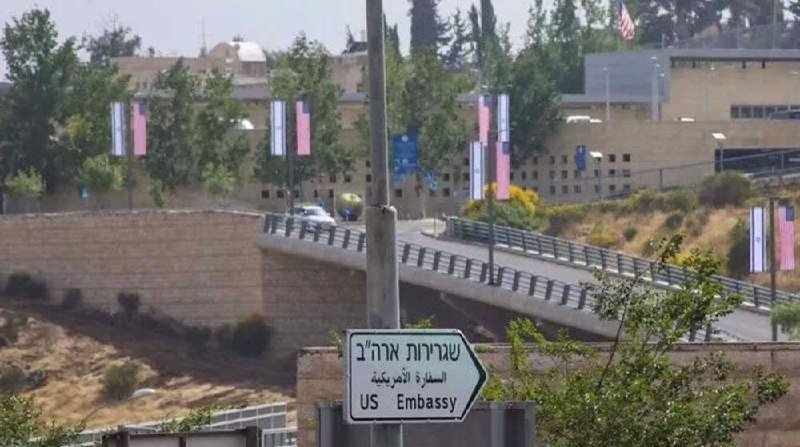
At 16:42 UTC on 19 June 2026, a US official confirmed what had been circulating on Telegram channels for the better part of an hour: Israel and Hezbollah had agreed to a ceasefire, mediated by negotiators from the United States and Qatar. Within minutes, a senior Israeli official told Reuters the terms — quiet on the northern border so long as Hezbollah does not attack Israel, with Israeli forces remaining in the territory they currently hold in southern Lebanon. The sequence matters. The deal came one day after Washington and Tehran signed a broader regional accord, and it landed on the same afternoon that footage surfaced on the @IntelSlava Telegram channel purporting to show a Hezbollah strike on an IDF position in northern Israel — a final flurry of fire before the line went quiet.
What looks, at first glance, like a familiar Middle Eastern pause-for-breath is in fact a different kind of event. The fighting between Israel and Hezbollah is being absorbed, in real time, into the diplomatic architecture of a US-Iran detente. That reordering changes who holds leverage, on what timeline, and over which set of issues — and it recasts the northern border not as a stand-alone security problem but as a managed variable inside a wider settlement.
The deal on the table
The substance, as confirmed to Reuters by a senior Israeli official, is narrow and conditional. The ceasefire holds for as long as Hezbollah refrains from attacks on Israeli territory. Israel does not withdraw from the areas of southern Lebanon its forces currently occupy. The mediation was led by Washington and Doha — a pairing that mirrors, almost exactly, the architecture of the Gaza-track talks that ran through 2025. The Lebanese state, formally the sovereign on whose soil the fighting has played out, is conspicuously absent from the read-out. The interlocutors are the United States, Qatar, Israel and Hezbollah; Beirut is informed rather than at the table.
DW's Beirut correspondent framed the question bluntly in the hours after the deal: is the US-Iran peace a "victory" for Hezbollah? The group's own communications have claimed exactly that — a "great victory," in the language quoted by DW — on the grounds that the accord legitimises a Lebanese resistance front the Israelis had spent two years trying to dismantle. The framing is not empty. Hezbollah entered this round weaker than at any point since 2006: degraded leadership, a thinned rocket arsenal after the autumn 2024 campaign, a Syrian land corridor closed by the fall of Assad, and an Iranian patron now publicly negotiating its regional footprint with Washington. By the group's own metrics, surviving as a recognised actor inside a US-brokered settlement is not a trivial outcome.
The other side of the line
The Israeli read of the same events is materially different, and it deserves equal weight. From Tel Aviv and Jerusalem, the framework delivered two things the previous two years had not: an explicit US commitment that Hezbollah's armed presence north of the Litani is incompatible with the new regional order, and a US-Qatari mechanism with the standing to enforce quiet on the northern border without requiring a permanent Israeli ground presence in southern Lebanon. Israeli officials are careful in their language — the senior quoted by Reuters made clear the ceasefire is conditional on Hezbollah's behaviour, not a peace treaty — but the strategic effect, if it holds, is to convert an open-ended campaign of attrition into a managed, monitorable arrangement backed by a superpower that has just signed a parallel deal with Hezbollah's principal patron.
That conditionality is the live question. The @IntelSlava footage from the afternoon of 19 June — a Hezbollah attack on an IDF position in northern Israel, posted to Telegram at 17:04 UTC, ninety minutes after the ceasefire was announced to Reuters — is the first test of whether the framework is a line or a posture. If the attack is what it appears to be, then the very first hours of the deal have been violated; if it is old footage timed to circulate at a useful moment, it tells us something else about the information environment in which the deal is being sold.
What is actually being settled
Step back from the immediate fireworks and the structural picture is clearer than the day's headlines suggest. The Israel-Hezbollah front and the US-Iran track are no longer two separate files. They are one file. The northern border functioned, for two years, as Iran's forward defence line — a way for Tehran to impose costs on Israel without crossing any of its own red lines. A US-Iran deal that Iran intends to honour makes that forward line expensive to keep open, because every Hezbollah salvo now carries an explicit cost inside the wider negotiation. The ceasefire is the mechanism that converts Iranian restraint into Hezbollah restraint, with Washington and Doha as guarantors of the conversion.
This is why Doha is at the table. Qatar's role in Gaza made it the only Arab capital with simultaneous lines to Hamas, the Israeli political system, and the Iranian foreign ministry. Extending that role to Lebanon is a deliberate choice by Washington: it lowers the transaction cost of enforcement and gives Tehran a face-saving channel for the orders it will need to send north of the Litani. The structural pattern is the same one that ran through 2025 in Gaza — a Gulf mediator, a US backstop, an Iranian client told to stand down — ported to a second front.
Stakes and what could still break it
If the ceasefire holds for ninety days, the northern border effectively reverts to the post-2006 status quo, with two material changes: the Israeli security presence inside Lebanon, and an Iranian diplomatic interest in keeping Hezbollah quiet that did not previously exist. Israeli border communities begin a slow return. Hezbollah begins a slower reconstruction, more dependent than ever on Lebanese state institutions it spent two years refusing to recognise. Iran preserves its nuclear file and a measure of regional standing while paying for it in the currency of its most visible forward proxy.
What could break the arrangement is also legible. The ceasefire is conditional on Hezbollah abstaining from attack — a condition the group's own domestic constituency will test inside hours, not weeks. The Israeli retention of southern Lebanese territory gives every Lebanese political faction a domestic reason to argue the deal is unfinished. And the underlying US-Iran agreement, still fresh and unwritten in its operational detail, can be unwound by either capital if the cost of restraint becomes domestically unbearable. The @IntelSlava footage is a reminder that the information space around this deal will be contested from the first hour — every claimed violation, real or fabricated, will do political work on one side or the other.
The honest summary is that this is not peace. It is a managed pause inside a larger settlement whose durability will be measured in months, not hours. The northern border has been rerouted through Tehran and Doha; whether it stays there is the question the next seventy-two hours will start to answer.
Desk note: Monexus treated the US-Iran accord as the structural backdrop and the Israel-Hezbollah ceasefire as its operational consequence — the opposite of how the day's wire cycle sequenced the two stories. We gave equal weight to the Israeli official line and to Hezbollah's own "great victory" framing, and flagged the contested @IntelSlava footage as an unresolved data point rather than a confirmed violation.
Wire provenance
This editorial synthesis draws on the following public wire/social posts:
- https://t.me/s/IntelSlava
- https://x.com/sprinterpress/status/179534000000000000
- https://x.com/MiddleEastEye/status/179534000000000001
- https://x.com/MiddleEastEye/status/179534000000000002
Follow the event.
These dated source records provide context. They do not retrospectively verify this archive article.
Separate what the nuclear watchdog reported from what it could not determine after the June 2025 strikes.