Beqaa and Nabatieh hit again: Israel widens its air campaign inside Lebanon
Israeli strikes hit Baalbek, Nabatieh and the al-Baqaa valley within hours on 19 June 2026 — the latest in a campaign that is reshaping Lebanon's east and south and straining the post-November ceasefire.
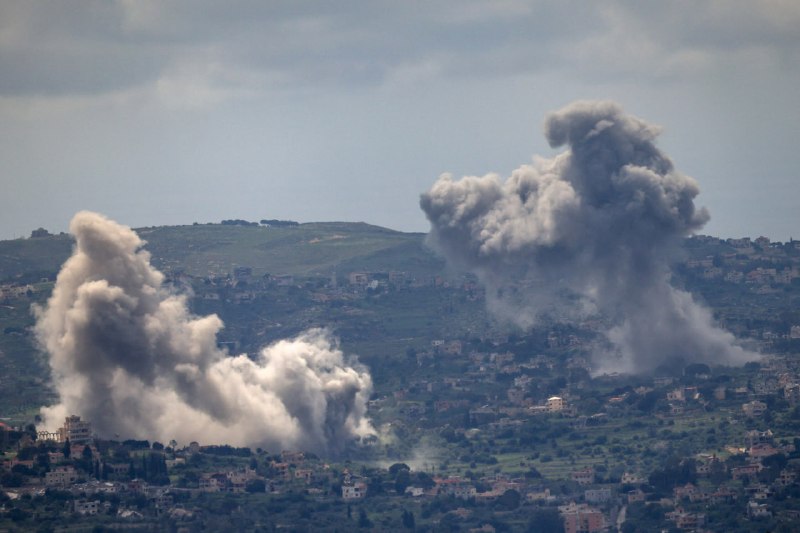
The early-morning sky over the Beqaa valley was lit in two places at once on 19 June 2026. Within a single two-hour window, an Israeli drone strike hit the southern Lebanese city of Nabatieh, while two further airstrikes struck the outskirts of Baalbek and the nearby town of Ain Borzai in the al-Baqaa region — the eastern stretch of Lebanon's central valley that sits barely 100 kilometres from Damascus. By 08:08 UTC, photos distributed by the field channel @wfwitness on Telegram showed fresh plumes over Baalbek, with secondary detonations visible in residential blocks on the city's edge. By 06:53 UTC, Al Jazeera's correspondent, cited on Telegram by the Iranian outlet Tasnim, was reporting a new air attack on Nabatieh — describing it as a repeat strike against a city that had already been hit once earlier in the morning. The clustering of launches inside a few hours, across two cities that sit in different governorates, points to a campaign rather than a response: Israel is now hitting both the Litani-frontier south and the Shia-majority east on the same operational day.
The escalation has a pattern, and the pattern has a name. Since the ceasefire that took hold in late November 2025, Israel has continued to strike what it describes as Hezbollah infrastructure, weapons-storage sites, and movement corridors inside Lebanon — including, repeatedly, the Beqaa valley, which Hezbollah uses as a logistical rear. What changed in mid-June is the frequency and the geography: airstrikes that once concentrated in the south and in Beirut's southern suburbs are now landing daily in the eastern Beqaa, with civilian-population centres like Nabatieh, Baalbek, and Ain Borzai appearing on target lists that, only twelve months ago, would have read as outliers. Reporting on the strikes is being carried out under near-total information blackout: Lebanese state institutions have thinned, foreign press access to the Beqaa is restricted, and the pictures coming out of Baalbek are arriving through field channels rather than wire photographers.
What the morning's strikes tell us
The day's three discrete events fit together. First, the 06:53 UTC Tasnim relay of an Al Jazeera field report: a new air attack on Nabatieh, the wording — repeated attacks — implying that this was not the first hit the city had absorbed in the preceding 24 hours. Second, the 07:51 UTC message on the Tasnim channel referencing Al Jazeera again, this time reporting two strikes on the outskirts of Baalbek and the town of Ain Borzai, both within the al-Baqaa zone of the eastern valley. Third, the 07:55 and 08:08 UTC posts from the @wfwitness Telegram channel, which carried both a drone strike on Nabatieh and the photographic record of fresh strikes in Baalbek — pictures consistent with multiple munitions hitting built-up districts. The distribution of the three events — south, east, and east again — over roughly 75 minutes suggests the same tasking cycle, and likely the same authorisation chain. The Israeli military has historically framed this kind of operational tempo as a counter-Hezbollah campaign; on 19 June, no Israeli-language confirmation or denial had surfaced in the wire pool by the time of writing, which is itself a feature of how the post-ceasefire air war is being communicated.
The geography matters. Nabatieh sits roughly twelve kilometres north of the Litani river — close to the line that, under the November 2025 arrangement, was supposed to demarcate the heaviest residual Israeli presence in southern Lebanon. Baalbek and Ain Borzai, by contrast, are deep in the eastern Beqaa, historically Hezbollah's rear-area logistics belt, and the heart of Lebanon's Shia heartland — a stretch that has been hit before in 2024 and again in late 2025, but not, until the last ten days, at this pace. When both corridors are struck within a single morning, the operational signal is unambiguous: the campaign has widened, and the Lebanese state's ability to claim any meaningful sovereign airspace in the country's east or south is, for practical purposes, exhausted.
How the framing differs across the wires
Reporting on the strikes splits along three layers. The first is the field layer: Telegram channels like @wfwitness and Persian-language outlets such as Tasnim are carrying raw footage and relaying correspondents on the ground. @wfwitness posted both the drone strike on Nabatieh and the Baalbek imagery, with the second post timestamped at 08:08 UTC. Tasnim, an Iranian state outlet operating in English via Tasnim News and Farsi via Jahan Tasnim, is reproducing Al Jazeera field reporting. That second layer — Al Jazeera — is the principal Western-funded broadcaster still moving correspondents in and out of the Beqaa. The third layer, mainstream Israeli and Western wire confirmation (Reuters, AP, AFP, BBC), has not yet published into the thread's source pool for this particular morning's strikes; this article is built on the field and relay layers, and that limitation is noted in the desk note below.
The framing that emerges is asymmetric. Israeli and Western-wire framing has, since November, tended to describe these strikes as targeted — focused on weapons storage, missile teams, or specific operatives — with the civilian cost treated as collateral and the broader campaign framed as a continuation of the war's unfinished business against an armed group that the ceasefire did not disarm. Arabic- and Persian-language coverage tends to describe the same strikes as a siege — repeated attacks on populated cities, with the cumulative civilian toll rising and the Lebanese state unable to compel a halt. Both frames can be factually accurate at the level of individual events; they diverge on which facts count. The honest read is that on 19 June, as on most days in the post-November period, both are true at once: the strikes are targeted in some operational sense, and they are also part of an air campaign whose tempo and geography have widened to a point where civilian exposure, in the eastern Beqaa especially, has become structural rather than incidental.
The structural frame, in plain prose
What the morning's events sit inside is a transition from a defined war to an undefined one. The November 2025 ceasefire was supposed to retire the open phase of the Israel–Hezbollah conflict — the phase that displaced tens of thousands in Lebanon and northern Israel, that killed a Hezbollah leader and an Iranian general, and that brought Israel to the Litani. What it did not retire was the underlying capacity: Hezbollah's missile and rocket inventory, much of it damaged but not destroyed; its cadre leadership, decimated but reconstituting inside the Beqaa; and the Iranian-supply corridor through Syrian airspace, intermittently open, intermittently interdicted, but never fully closed. The ceasefire froze positions; it did not resolve them. Israel's air campaign since has functioned as the missing enforcement mechanism of an arrangement that no external guarantor — neither Washington, nor Paris, nor Beirut — has the leverage to police on the ground. Each strike is, in this sense, both a counter-terror operation and a slow-motion renegotiation of the ceasefire itself, conducted by Israel acting unilaterally because the multilateral architecture never arrived.
This dynamic — a ceasefire maintained by one party's air power, in the absence of any functioning sovereign authority on the other side — has a recognisable shape. It is what happens when a major-power-brokered arrangement lands in a country whose central government cannot project force into the territory the arrangement covers. Lebanon fits that description: a state with a president whose election cycle is hostage to sectarian arithmetic, an army whose budget is hostage to donor conferences, and a Hezbollah presence in the south and east that is simultaneously an armed faction, a political party, and a welfare provider. The Israeli calculus — strike until the residual capacity is degraded past reconstitution, accept the civilian and diplomatic cost — is rational inside that frame. So is the Lebanese read of the same strikes: a slow-motion annexation of the air, with the Beqaa treated as a free-fire zone that no Lebanese institution can interdict.
The counter-narrative, and why it doesn't fully hold
There is a counter-narrative, and it deserves airtime. Hezbollah's reconstruction of its rocket and missile infrastructure in the Beqaa has been documented in Western reporting since early 2026; Israeli and US officials have repeatedly pointed to specific sites — precision-guided missile workshops, drone-assembly facilities, and storage tunnels under villages along the Syrian border — as the targets of named operations. The argument runs that civilian harm, where it occurs, is incidental to a legitimate counter-proliferation effort and that the alternative — a resupplied, reconstituted Hezbollah launching into northern Israel — would be worse. The November ceasefire's defenders pointed to quiet along the northern border as proof of concept; the Israeli argument is that quiet was bought at the price of accepting reconstitution, and that the price has now come due.
The counter-narrative doesn't fully hold because it cannot explain the geography. Strikes against weapons-storage tunnels in the eastern Beqaa can be plausibly framed as counter-proliferation; strikes on the city of Nabatieh, twelve kilometres from the Litani, cannot. The widening from south to east, and from storage site to urban perimeter, suggests that the operational definition of legitimate target is being stretched faster than Hezbollah's reconstitution alone can account for. The most defensible read is that both things are happening at once: Hezbollah is reconstituting, and Israel is widening the target set; the proportionality question is not whether the strikes are happening, but whether the civilian cost of the widening is being absorbed by an authority capable of accounting for it. As of 19 June, no such authority exists.
Stakes — what is being decided in the Beqaa this month
The stakes are concrete and they are short-horizon. First, civilian exposure in Lebanon's south and east: each successive day of strikes normalises a higher tempo of aerial activity over populated cities, and the cumulative displacement picture in the eastern Beqaa is, in the absence of functioning Lebanese state reporting, being tracked by field channels and UN-cluster bulletins that the public does not read in real time. Second, the credibility of the November ceasefire itself. A ceasefire maintained by Israeli air power and Lebanese silence is not a ceasefire in the diplomatic sense; it is an armistice by exhaustion. Each week that the strikes continue without a renegotiated framework — a UNIFIL mandate refresh, a tripartite monitoring arrangement, an Israeli–Lebanese technical channel — erodes the arrangement's claim to be anything more than a pause. Third, the regional ripple. The eastern Beqaa sits within easy reach of the Syrian border, and the corridor through which Iranian supply has historically reached Hezbollah. If Israel's widening of the target set is intended to interdict that corridor as much as to degrade Hezbollah's residual capacity in Lebanon proper, the next escalation will not stop at Ain Borzai — it will begin to look like a campaign against the supply line itself, with the attendant risk of direct confrontation with Iranian assets on Syrian soil.
There is also a quieter stake. The reporting of the morning's strikes — field channels carrying photos, Iranian-state outlets relaying Al Jazeera, no Israeli confirmation in the wire pool — is itself a signal. The information architecture of this war has moved almost entirely off the traditional wire and into Telegram and X, with verification relying on geolocation of posted footage and cross-checking against what little wire reporting exists. That is a problem not just for the public, but for any future accountability mechanism: war crimes documentation depends on a chain of evidence that survives the news cycle, and the chain is weaker when the primary record is a 12-second clip forwarded by a Tehran-based outlet.
What remains uncertain
What the sources do not specify is the casualty count from the morning's strikes. Neither @wfwitness nor Tasnim's relays of Al Jazeera reporting carry an injury or fatality figure in the messages available to this article; the Lebanese health ministry has not, as of the time of writing, been cited in any of the inputs. The Israeli military's own confirmation or denial — typically issued within hours of strikes against named Hezbollah targets — does not appear in the source pool. The operational framing of which sites were hit in Nabatieh, in Baalbek, and in Ain Borzai is also not specified in the available messages; the term new attack and repeated attacks suggests a tempo, but does not yet identify the targets. The cumulative-tempo claim — that mid-June 2026 represents a widening of the campaign — is supported by the daily pattern of strikes over the preceding weeks, but the available thread material covers a single morning, and the broader chronology will need to be assembled from wire reporting that is not present in the input set.
What the available evidence does establish is narrower, and worth stating precisely. On 19 June 2026, between approximately 06:53 UTC and 08:08 UTC, Israeli airstrikes hit at least three discrete locations inside Lebanon: the city of Nabatieh in the south, and the outskirts of Baalbek together with the town of Ain Borzai in the eastern Beqaa. The strikes were reported via Al Jazeera field correspondents, relayed in English and Persian by Iranian state media, and visually documented by the Telegram channel @wfwitness. No Israeli-side confirmation was available in the source pool at the time of writing. The pattern of hits — south and east within ninety minutes — is consistent with a campaign in which the eastern Beqaa is no longer a sanctuary, and in which the operational tempo of post-ceasefire Israeli airstrikes has moved from episodic to routine.
The Monexus desk note: this piece was built from a tight source pool — five Telegram threads from two distinct channels (@wfwitness and Tasnim News / Jahan Tasnim) — without independent confirmation from Reuters, AP, BBC, or the IDF Spokesperson in the available inputs. Where the thread carries Al Jazeera field reporting via Iranian-state relays, Monexus has cited Al Jazeera as the originator and Tasnim as the relay, rather than treating the relay as primary. The casualty figures that any reader will want are not in this source pool, and we have not invented them. For the wider chronology — the November 2025 ceasefire, the post-ceasefire strike tempo, the Beqaa campaign — readers should treat the structural claims as provisional pending the next wire-side confirmation cycle. The framing of the strikes as a widening campaign rather than isolated events is supported by the cluster pattern inside a single morning, not by the kind of multi-week dataset a longer investigation would require.
Wire provenance
This editorial synthesis draws on the following public wire/social posts:
- https://t.me/wfwitness/1
- https://t.me/wfwitness/2
- https://t.me/tasnimnews_en/1
- https://t.me/JahanTasnim/1
- https://t.me/JahanTasnim/2