Israel pounds southern Lebanon as ceasefire understanding frays within hours
Hours into a reported ceasefire understanding, Israeli warplanes hit Nabatieh and Choukine in southern Lebanon. Local and regional outlets report a barrage of more than 100 strikes since dawn, with at least 30 killed.
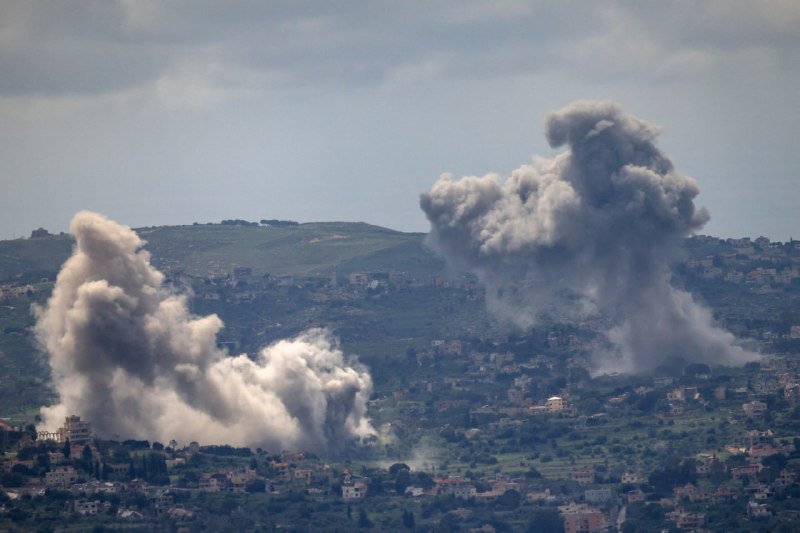
Israeli warplanes struck the city of Nabatieh and the adjacent village of Choukine in southern Lebanon on the afternoon of 19 June 2026, hours after a separate reported understanding that was meant to halt cross-border fire. According to field correspondents in south Lebanon, the barrage began before dawn and had reached more than 100 airstrikes, artillery rounds and drone attacks by early afternoon, hitting dozens of towns and villages and killing at least 30 people.
The pattern, not the headline number, is what makes the day significant. A "new ceasefire understanding" was being described as in force on the morning of 19 June 2026; by 13:38 UTC, multiple Lebanon-based channels were broadcasting footage of fresh strikes, and by 13:45 UTC the regional intelligence channel @rnintel was logging another round of airstrikes on Choukine, just southwest of Nabatieh. If the holding period collapsed within hours, the question is no longer whether the fighting will resume but whether there was ever a deal to begin with.
The morning the ceasefire was supposed to hold
Nabatieh is the largest city in south Lebanon's Nabatieh Governorate and has been a recurring target since the war between Israel and Hezbollah widened in late 2023. Choukine sits a few kilometres to its southwest, on the road running toward the Litani River. The two locations are not symbolic. They are administrative and transport hubs for the surrounding villages, and strikes there reach civilian infrastructure that the IDF's own communiqués have, in past operations, identified as used by Hezbollah units operating under civilian cover.
The Israeli framing, where it has been articulated in English-language wire copy, treats the renewed strikes as a continuation of a target-by-target campaign against Hezbollah reconstitution, not a violation of any single agreement. The Lebanese framing, as carried by Lebanon-based field correspondents and Beirut outlets, treats the day as a documented breach of a publicly announced arrangement — language that matters because it sets up a downstream diplomatic claim.
The two readings are not equivalent. A campaign of selective strikes against an adversary that is reconstituting itself in a war zone is one kind of military operation. A breach of a publicly announced ceasefire understanding is another, with different legal, political and humanitarian consequences for the civilians caught in between. The Israeli and Lebanese readings, taken together, amount to a dispute over which category this day belongs to.
What the field reporting actually shows
Two field channels — @wfwitness and @TheCradleMedia — have been the most active publishers of strike footage in the 13:00 to 14:00 UTC window. @wfwitness framed the early-afternoon strike on Nabatieh as an "Israeli violation of the 'new ceasefire' understanding," a phrase that signals the channel believes an arrangement was in place. The Cradle's video thread, posted at 13:38 UTC, used different language: a "massive Israeli bombardment has struck southern Lebanon since dawn, with over 100 airstrikes, artillery barrages, and drone attacks hitting dozens of towns and villages," with at least 30 killed. The two descriptions are compatible — the bombardment can be both "since dawn" and a "violation of the new understanding" if the understanding took effect mid-morning — but the sourcing posture is different.
@rnintel, the regional intelligence channel, logged the Choukine strike at 13:45 UTC as a standalone data point, with the geographical context ("just southwest of Nabatieh, southern Lebanon") and no interpretive language. The use of the word "violation" by @wfwitness is itself a piece of news: it indicates that some kind of cessation was understood to be operative. The Israeli military has not, in the materials available to this publication at 14:00 UTC, confirmed the existence of such an understanding, and the IDF spokesperson's office has, in previous rounds of fighting, declined to characterise tactical pauses as ceasefires.
The 100-strike figure and the 30-casualty figure both originate with @TheCradleMedia. They are not yet corroborated by Reuters, AFP, AP or the Lebanese health ministry in the public reporting window available at 14:00 UTC. The 30-killed number, in particular, is the kind of figure that tends to be revised upward in the first 24 to 48 hours after a barrage of this scale. Readers should treat it as a lower bound, not a final count.
What remains genuinely contested
Three things are not yet clear, and the sources do not resolve them.
First, was a ceasefire understanding actually in force? The Lebanese-side field reporting asserts one. Israeli military communiqués from the relevant window do not, in the material available to this publication, confirm one. The most plausible reading is that some kind of de-escalation channel — possibly mediated by a third-party government — was operative, that it was understood in Beirut as binding, and that it was either not in place, not binding, or already fraying in Tel Aviv by the time the morning barrage began. Until the Israeli side publishes its operational timeline, the answer is not knowable from open sources.
Second, what is the civilian-military composition of the casualties? "At least 30 people" is a number; it is not a breakdown. Hezbollah presence in Nabatieh Governorate is not in dispute; the operational question is whether the strikes hit military infrastructure with proximate civilian presence, or civilian infrastructure with alleged military use, or both across different target packages. Each reading carries different legal weight under the laws of armed conflict, and the public reporting does not yet distinguish between them.
Third, what is the trajectory? A single day of strikes after a single day of declared understanding could be the end of the holding period — a clean collapse. It could also be a deliberate stress test by one side to see what the other side's response is. The pattern in 2024 and 2025, before the November 2024 ceasefire, was that a few days of intensified strikes preceded each breakdown. One day of data is not a pattern.
The structural frame, in plain language
What is happening in southern Lebanon is not a one-off. It is the steady-state of a border that has not had a durable political settlement since the November 2024 arrangement paused the open war. A pause is not a peace. When the underlying dispute is unresolved, the equilibrium between the two sides is whatever the more determined party is willing to enforce on any given day, and the civilians in the strike zone live inside that variance.
The bigger shift to watch is not the daily count. It is whether the diplomatic channel that produced the November 2024 arrangement — US-mediated, with Qatari and French back-channels — still has a working surface. If a publicly announced understanding can be struck and visibly collapse inside the same news cycle, the channel has lost its deterrent value for at least one of the parties. When that happens, the next round of fighting is set by the side that concludes the channel is no longer worth the paper it is not signed on.
This publication framed the strike as a contested event inside a still-unresolved diplomatic channel, rather than as either a clean Israeli operation or a clean ceasefire breach, because the publicly available sources do not yet support either clean reading. The 30-casualty and 100-strike figures originate with a single Lebanon-based outlet and should be treated as preliminary until corroborated by the Lebanese health ministry or a wire service.
Desk note: Monexus treats the Israeli and Lebanese framings as live but not symmetric at this hour. The Lebanese-side field reporting has named an understanding the Israeli side has not confirmed; we have carried that asymmetry rather than smoothing it over. As always, our frame is the open sources, not the framing of any one party.
Wire provenance
This editorial synthesis draws on the following public wire/social posts:
- https://t.me/rnintel
- https://t.me/wfwitness
- https://t.me/thecradlemedia
- https://t.me/s/wfwitness