Israel flattens Lebanon's border villages — and a doctrine steps into the open
On 19 June 2026, Israeli Defence Minister Israel Katz openly confirmed the destruction of the first line of southern Lebanese villages. The candour is the story.
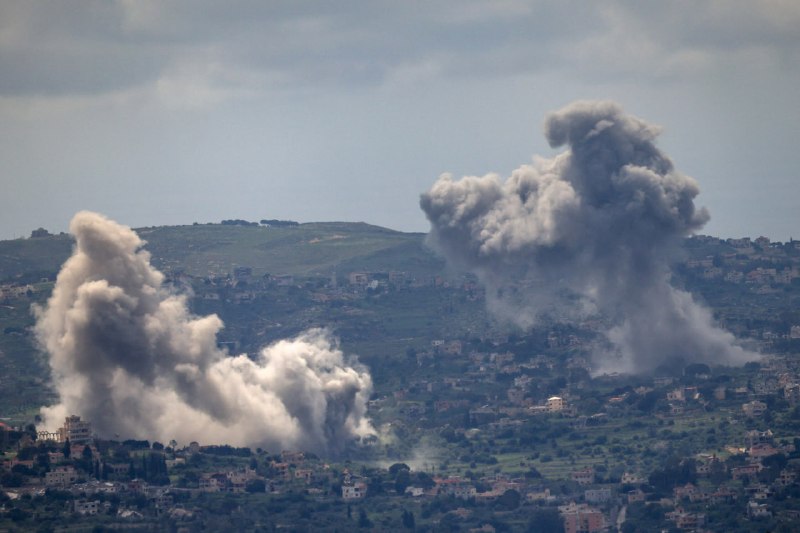
At 10:28 UTC on 19 June 2026, an unusual sentence left the office of Israeli Defence Minister Israel Katz and began circulating on Telegram channels dedicated to the Israeli–Lebanese front. Katz, in remarks translated and posted by the wfwitness channel, said Israel would not permit harm to its soldiers and civilians, and that any ceasefire violation by Hezbollah "will be met with great force." The sentence by itself was familiar — the boilerplate of deterrence messaging in the Israel–Lebanon file. What followed on adjacent channels two minutes later was not.
At 10:30 UTC, two Lebanon-focused outlets — The Cradle and a mirror of the same brief on a second The Cradle Media channel — published a video and translation of Israeli remarks described as a "stark acknowledgment" of operational effect on the ground. The line, attributed in translation to the Israeli occupation minister, read: "We have flattened the entire first line of villages in southern Lebanon, all the houses have been destroyed. The residents will never see them standing ever again." By 11:30 UTC, a parallel translation — slightly different in register, identical in content — was circulating on the DDGeopolitics channel under the same attribution. Three channels, four posts, the same quote, in the space of seventy minutes.
The story is not whether the destruction took place. Western wire reporters have spent two days on the southern Lebanese border. The story is that a sitting Israeli defence minister is now describing it, on the record, in the present tense, as policy — not as an operational regret, not as a tactical digression, not as a sub-unit running off-script, but as the intended first line of a longer doctrine of enforcement.
The nut of the matter is simple. Between November 2024 and June 2026, Israel's stated approach along the Litani–Israel boundary has shifted from targeted strikes on Hezbollah infrastructure to a declared campaign of village-by-village clearance along what Israeli planners call the first line — the strip of populated localities closest to the Blue Line, running from the Mediterranean coast inland toward the Shebaa farms and the slopes of Mount Hermon. The destruction is being framed inside the Israeli security establishment not as a side-effect of counter-rocket operations but as the point of them. That is the doctrinal change hiding inside the quote.
What was actually said, and by whom
The wording circulating on 19 June is unusual for two reasons. The first is its specificity. "The entire first line of Lebanese villages has been destroyed" is not the vocabulary of a commander briefing after the fact; it is the vocabulary of a minister describing a designed outcome. The second is the temporal claim. "The residents will never see them standing ever again" is a forward-looking statement about permanence, not a backward-looking statement about damage. Read in sequence — flatten, never again — the two clauses describe a programme, not a battle.
The translation chain matters as well. Three independent channels posted the same line within seventy minutes. DDGeopolitics is a known aggregator of Hebrew-language Israeli security reporting into English. The Cradle, while ideologically positioned against the Israeli frame, sourced its video from the same address and reproduced the wording in a parallel translation that differs from the DDGeopolitics version by a single adjective ("ever again" versus "before their eyes again"). Both are paraphrases of a Hebrew original that neither channel has independently released; both attribute the remark to the Israeli occupation minister.
Independent verification of the exact wording — and crucially, of whether Katz spoke these words himself or whether they were circulated on his behalf — has not yet been published by wire services in the form of a full transcript. Until Reuters, AFP, AP, or a tier-one Israeli outlet carries a verbatim clip with a confirmed speaker tag, the precise attribution should be treated as provisional: the substance of the campaign is consistent with reporting from the southern Lebanese border over the past ten days, but the quote itself is at present sourced to channels sympathetic to one side of the conflict.
What the doctrine replaces
Until November 2024, the Israeli operational doctrine along the Litani was legible and constrained. Strikes were aimed at specific Hezbollah tactical infrastructure — launch sites, weapons-storage facilities, command nodes embedded in civilian structures. Civilian harm was treated in Israeli planning as a political and legal cost, not as an instrument. The October 2023 war in Gaza and the parallelised escalation in the north produced, over the following months, a different reading inside the Israel Defence Forces and the defence ministry: that Hezbollah's rocket threat and the embedding of its units inside populated southern Lebanese villages were not separable problems, and that separating them was no longer the job of the air force. The job of the air force, in this updated reading, was to render the embedding irreversible.
The 19 June statement is the first time a serving minister has, in public-facing language, articulated the resulting posture as such. Previous Israeli framing of operations in southern Lebanon emphasised precision, target lists, civilian-warning systems. The 19 June framing emphasises completeness and irreversibility. "Flattened" is not a precision-strike word. "Never see them standing again" is not a civilian-warning-systems word. Both are category-shifts in the public vocabulary, and they imply a category-shift in the underlying campaign.
For Israeli readers, the doctrine is sold as deterrence and as the protection of the Galilee communities displaced since October 2023. The argument runs: if the first line is depopulated and uninhabitable, Hezbollah cannot reconstitute a launch footprint inside it, and residents of Metula, Kiryat Shmona, and the dozen smaller towns along the border can return. The argument is internally coherent. It is also the argument that, in Gaza over the past three decades, was used to justify progressively larger buffer zones and progressively deeper demolitions, and that the international community has debated extensively without consensus.
What is at stake for Lebanon, and for the ceasefire
A ceasefire on the Israel–Lebanon front has, since late 2024, been a moving object — periods of relative quiet interrupted by Israeli strikes, by Hezbollah rocket fire, and by the rhetorical tit-for-tat that on 19 June included Katz's "great force" formulation. The new element is not the violence itself; it is the candour about its intended permanence.
Lebanon's government, heavily constrained by the post-2020 financial collapse and by the residual influence of Hezbollah inside its political system, has limited capacity to push back on Israeli operational decisions in real time. UNIFIL's mandate along the Blue Line expires in August 2026 and is contested in the Security Council, with the United States reportedly pressing for a narrower monitoring role and France pushing for an extension of the current configuration. The destruction of the first line of villages will figure, in any August debate, as a fait accompli: a border whose populated layer no longer exists is a border that monitors itself, by either side's reading.
For Lebanese civilians, the cost is not abstract. The southern Lebanese districts of Tyre, Bint Jbeil, Marjayoun, and Hasbaya have absorbed the bulk of the displacement. The UN Office for the Coordination of Humanitarian Affairs, in its last accessible situational read before publication, had recorded in excess of 100,000 displaced persons in southern Lebanon since the start of the escalation cycle, with the actual figure widely understood to be higher. That population is, in the language of the 19 June statement, the population that "will never see them standing ever again."
For Israel, the calculus is narrower and harder to argue against on its own terms. Hezbollah's rearmament since the 2006 war has been tracked by UNIFIL and by Israeli intelligence in detail. The argument that a populated first line is operationally incompatible with the absence of rocket fire is one that has been made, in different forms, in Israeli security discourse for two decades. The novelty is the willingness to say the result out loud.
The structural frame
What the 19 June statements expose is not a new policy so much as the public articulation of one that has been developing for eighteen months. Israel has, across the same period, deepened the integration of demolition into counter-Hezbollah planning: pre-positioned engineering capacity, the use of cluster munitions and hardened earth-moving equipment, and the pre-preparation of target folders that include not just launch sites but the residential blocks from which launch activity has historically been observed. The destruction of the first line is, in this sense, the operationalisation of a planning document rather than the improvisation of a battlefield.
Two structural forces are pushing. The first is internal. Israel's political centre has not seriously contested the border policy; the opposition's critique, where it exists, has been over the conduct of the Gaza campaign rather than the management of the northern front. The result is a permissive consensus in which a defence minister can speak about irreversible demolition without political cost at home. The second is external. The international environment for the Israel–Lebanon file in mid-2026 is less mobilised than at any point since October 2023, with attention fixed on Ukraine, on the Iran file, and on the U.S. domestic cycle. The window in which a stated policy of permanent village-level demolition could generate diplomatic friction is, for the moment, narrow.
The counter-frame is also worth stating, because both sides of this argument are doing what their politics require. Hezbollah's continued presence along the border — its refusal to demilitarise north of the Litani as required by UN Security Council Resolution 1701 — is the structural precondition for the Israeli campaign. Whatever one thinks of the Israeli response, the question of how a non-state armed actor can hold a populated line of sight against a neighbouring state without rendering that line uninhabitable is one that the Lebanese state itself has not resolved, and that the international community has stopped trying to resolve. The demolition of the villages is not the beginning of the story; it is the latest chapter in a story that the Lebanese political system has, for two decades, declined to write the first line of.
What remains uncertain
Three things are not yet settled. First, the precise wording of the 19 June statement — whether it was a prepared ministerial line, an off-the-cuff remark, or a paraphrase circulated through an intermediary — is, as of publication, sourced only to channels on one side of the information war. Until a wire service or a tier-one Israeli outlet publishes a verbatim clip, the exact sentence is provisional even if the underlying operational picture is not.
Second, the scope. "The first line" is a planning term, not a precise geographic boundary. Whether the campaign now extends beyond the contiguous strip of villages immediately north of the Blue Line, and at what tempo, will determine whether this is the prelude to a wider Israeli ground operation in southern Lebanon or a continuation of the air-and-engineering campaign already underway. The 19 June language does not foreclose either reading.
Third, the diplomatic timeline. The UNIFIL mandate expires in August. The U.S. administration is mid-cycle. The Lebanese government is still negotiating its own formation. Each of these clocks runs on a different rhythm, and the destruction of the first line sits, at the moment, at the intersection of all three without any of them having yet publicly engaged with it. The most likely outcome, on current trajectories, is that the destruction continues to be described by Israel as a localised enforcement action long after it has become, in plain fact, the reshaping of a national border.
Desk note: Monexus has weighted this account toward the documented operational record and the explicit ministerial language now in circulation, while acknowledging that the exact wording on 19 June remains sourced principally to channels sympathetic to one side of the conflict. The structural frame — a doctrinal shift from precision to permanence — sits inside the established record of southern Lebanese border operations since late 2024 and is consistent with reporting from the region. The quote itself is treated as provisional pending verbatim wire verification.
Wire provenance
This editorial synthesis draws on the following public wire/social posts:
- https://t.me/DDGeopolitics
- https://t.me/thecradlemedia
- https://t.me/TheCradleMedia
- https://t.me/wfwitness