What 'ceasefire' means when the strikes keep coming: Israel, Lebanon, and the gap between declaration and practice
Within hours of a declared ceasefire on 19 June 2026, Israeli warplanes and artillery hit at least a dozen towns in southern Lebanon. The gap between the announcement and the attacks says more about the conflict's direction than either side's communiqué.
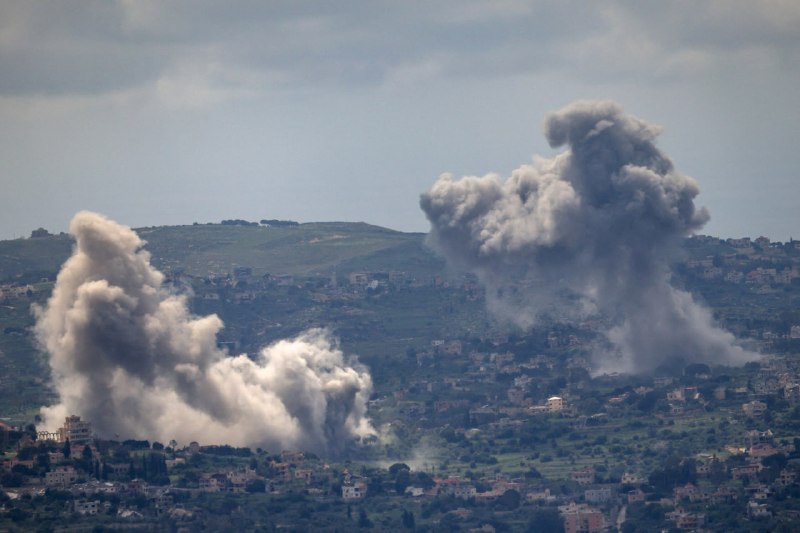
By mid-morning on 19 June 2026, the public architecture of a ceasefire between Israel and Hezbollah appeared to be in place. Israeli media carried the formulation an Israeli official gave to Yedioth Ahronoth: the two sides had agreed to stop firing, with the implicit premise that the other's restraint would be reciprocated. Within hours, that architecture was being tested in southern Lebanon, and the early returns were not encouraging.
From the early UTC hours of 19 June 2026, multiple Lebanon-based correspondents and Israeli outlets reported Israeli airstrikes and artillery fire hitting a string of towns south of the Litani. The Cradle, citing its own network of correspondents, put the count at eleven towns and villages struck since the ceasefire's announcement, with some hit more than once. Fars News, summarising Israeli Channel 12, reported "more than ten" Israeli airstrikes in Lebanon post-announcement and twelve air-and-artillery attacks in total. A Middle East Eye live blog noted four Israeli strikes reported in southern Lebanon specifically after the ceasefire's implementation time. An Al-Mayadeen correspondent based in southern Lebanon said the strike on Nabatieh came at the same moment the ceasefire was supposed to take effect.
The pattern — declaration at one timestamp, kinetic action at the next — has become familiar enough in this conflict to deserve a name. It is, functionally, a rolling ceasefire: an arrangement in which the public language of de-escalation is renewed faster than the military logic of pressure is unwound. The question for outside observers is not whether the language is sincere, but what the language is for when the underlying campaign is sustained.
What the wires show
The first solid data point is the sequencing. According to reporting summarised by Fars News on 19 June 2026, citing Yedioth Ahronoth, an Israeli official framed the agreement in conditional terms: if Hezbollah does not attack, Israel will not attack either. The Cradle's own correspondents, however, began logging strikes on southern Lebanese towns and villages almost immediately after the announced implementation. The Al-Mayadeen correspondent in the south described an Israeli strike on Nabatieh coincident with the ceasefire's effective time. Fars's English summary of Israeli Channel 12 reported "more than ten" Israeli airstrikes inside Lebanon after the announcement and twelve air-and-artillery attacks in total. Middle East Eye's live blog recorded four strikes specifically in southern Lebanon after the ceasefire's implementation time.
Read together, the reporting from sources with different institutional alignments converges on a single observation: the post-announcement hours were not quiet. The number of distinct towns struck — eleven per The Cradle, with some hit more than once — is high enough to suggest a deliberate pattern of activity rather than a single disputed incident. The geographic distribution, with Nabatieh named explicitly, places the strikes in the conventional Hezbollah heartland south of the Litani — a fact with implications for the political theory of the ceasefire that go beyond the immediate battlefield.
The second data point is the framing gap. The Israeli official quoted in Yedioth Ahronoth used a formula — we will not attack if they do not attack — that is symmetrical on its face. The operational reality, as reported across multiple outlets in the first hours, is that kinetic action in the relevant window was overwhelmingly Israeli-initiated. Fars News's English summary, in particular, distinguishes Israeli air and artillery activity from any reported Hezbollah initiation, and The Cradle's count of eleven towns and villages was framed as Israeli action since the ceasefire's announcement.
The counter-narrative: what the Israeli position looks like from inside
It would be analytically dishonest to leave the Israeli position as it is rendered in the Arabic-language and Iran-aligned wires, and nothing more. The framework attributed by Yedioth Ahronoth to an unnamed Israeli official is genuinely the framework Israel has used in prior rounds: a return-to-quiet architecture, in which the test of compliance is the other side's behaviour, and any Israeli action is cast as responsive. From inside that framework, the southern Lebanon strikes can be presented as continuation-of-pressure operations against a still-armed non-state actor that has not yet disarmed — a reading in which the post-ceasefire strikes are not a violation but the enforcement mechanism of the ceasefire itself.
This is not a fringe reading. It is, in essence, the position the Israeli government has taken after every prior round with Hezbollah since 2006: a quiet-for-quiet arrangement layered on top of a fundamentally unresolved deterrence contest, with periodic enforcement by air. The structural problem with the reading is not that it is insincere; it is that it conflates two different things — a ceasefire, which is a halt to offensive action, and a counter-terror campaign, which is the continuation of offensive action against specific targets. A declaration of the former that is enforced by the latter is not a contradiction in terms; it is a definitional choice about what the word means.
The honest counter-narrative, then, is that the Israeli position is internally coherent if one accepts the premise that Hezbollah's continued armed presence south of the Litani is itself a violation that justifies ongoing strikes. The honest critique is that the public-facing word "ceasefire" is being deployed to describe a state of affairs in which Israeli air activity continues, and that this is a category problem the press should name plainly rather than launder.
The structural frame: what 'ceasefire' actually describes
Across the past two decades of Israel–Hezbollah friction, the word ceasefire has come to mean something quite specific in operational practice. It is a diplomatic instrument designed to manage escalation cycles rather than to resolve underlying disputes. The instrument works by reducing the rate of fire for a defined period, with the implicit understanding that the underlying balance — armed non-state presence in southern Lebanon, Israeli overflight, the deterrence contest in the air — is not renegotiated during the ceasefire window.
When a ceasefire of this kind is announced, three things become predictable. First, the language of de-escalation appears in major outlets within hours. Second, targeted military activity continues, framed by each side as defensive. Third, the rate of that activity tends to be higher in the first 24 to 72 hours than in the weeks that follow, as the parties test each other's interpretation of the deal. The 19 June 2026 sequence fits this template unusually cleanly. The Israeli official quoted in Yedioth Ahronoth offers the public rationale. The southern Lebanon strikes, logged by The Cradle, Fars, Middle East Eye, and Al-Mayadeen, deliver the operational reality. Both are true at the same time.
This is not a media framing problem, although it has become one. It is a property of the kind of ceasefire the parties have agreed to. The Western wire services that pick up the announcement will tend to lead with the language — "Israel and Hezbollah agree to ceasefire" — and bury the operational caveats in lower paragraphs. The Lebanon-based and Iran-aligned outlets will lead with the strikes, because the strikes are the local reality. Both are doing their jobs correctly, and the resulting picture in the reader's head is a composite that neither wire's lede alone supplies.
The precedent: 2024, 2006, and the long shadow of 'understandings'
The closest historical precedent is the November 2024 ceasefire arrangement, which ended a year of cross-border fire and involved similar conditional language and similar initial-period violations. The 2006 ceasefire that ended the July War was, by contrast, a much more durable arrangement — but it was also a full ceasefire, monitored by UNIFIL, with a Security Council resolution behind it and an underlying balance of forces that the parties accepted as legitimate for years. The 2024 arrangement, like the apparent June 2026 arrangement, was an understanding — a deal that depended on each side's continuing interpretation of whether the other was holding up its end.
The lesson of the 2006-to-2024 stretch is that understandings work for as long as both sides judge the cost of a renewed round to exceed the cost of restraint. The lesson of the 2024-to-2026 stretch, which is what the current reporting actually illuminates, is that the operational question — whether the day-to-day rate of fire falls — is the only one that matters, and that the diplomatic language of the announcement does not predict the answer. By that test, the 19 June 2026 picture is consistent with an arrangement that will hold at a low-but-nonzero rate of Israeli air activity in southern Lebanon for some period, with a meaningful probability of renewed escalation if a major strike produces Lebanese civilian casualties or a Hezbollah response.
The stakes: who wins, who loses, and what 'success' looks like
For the Israeli government, the political utility of a 2026-style ceasefire-understanding is the announcement, not the operational quiet. A declared ceasefire reduces the political cost of the campaign to date, opens diplomatic space, and shifts the burden of escalation onto Hezbollah — at least in the eyes of domestic Israeli audiences and Western capitals that consume the announcement as a fact rather than as a claim that has to be re-verified continuously.
For the Lebanese state, which is not a direct party to most of the coverage, the calculus is harder. The strikes are being absorbed in territory the Lebanese government claims to govern, and the Lebanese government's leverage over Hezbollah's decision-making is a variable the wires do not quantify. The risk for Beirut is that a low-rate strike pattern becomes normalised, the way the 2006-2023 strike pattern became normalised, and that the political cost of any single strike never quite reaches the threshold of an effective Lebanese response.
For Hezbollah specifically, the structural position is the inverse of 2006. The 2006 ceasefire was a victory in the sense that it ended a war Hezbollah had not started and that the political movement survived militarily intact. A 2026-style arrangement is something else: an agreement that legitimises the continuation of Israeli airpower in southern Lebanon without a corresponding Hezbollah military gain, framed as a return to a status quo that the prior round of fighting was supposed to have renegotiated. The fact that Hezbollah is not the visible initiator of the post-announcement strikes is, on the public record as of 19 June 2026, the only operational data point that looks favourable to the movement's position.
For the press, the stake is conceptual. The most important editorial choice is whether to lead with the word ceasefire and let the reader infer quiet, or to lead with the strikes and let the reader infer that the announcement is a diplomatic wrapper around continued operations. Both choices are defensible; neither is innocent. This publication's reading is that the word ceasefire is being used in 2026 to describe a state of affairs in which significant Israeli military activity continues, and that the honest version of the lede names both halves of the sentence.
What the sources do not yet tell us
The reporting available on 19 June 2026 is unusually clear on the what — strikes were reported, in named towns, with named counts from named outlets — and unusually thin on the why. No source reviewed here provides a battlefield rationale for the specific timing of the strikes relative to the ceasefire. The Israeli official quoted by Yedioth Ahronoth offers a general conditional frame; no source explains why the specific strikes in the first hours after the announcement were judged necessary rather than deferred. The casualty picture, if any, is not present in the source set reviewed. The Lebanese government's response, beyond the implicit position of Al-Mayadeen's reporting, is not on the record. The UNIFIL position, which would be a useful corroborating voice, is not cited.
A reader who is making decisions on the basis of this article should treat the fact of the strikes as well-corroborated — the convergence across The Cradle, Fars News's summary of Israeli Channel 12, Middle East Eye, and Al-Mayadeen is unusual and worth weight — and treat the interpretation of the strikes as genuinely open. The structural reading above is one plausible interpretation. Others are available. The honest position on 19 June 2026 is that something is being announced as a ceasefire, and something else is happening on the ground in southern Lebanon, and that the gap between the two is the story.
— Monexus Staff Writer
Wire provenance
This editorial synthesis draws on the following public wire/social posts:
- https://t.me/thecradlemedia
- https://t.me/FarsNewsInt
- https://t.me/FarsNewsInt
- https://t.me/FarsNewsInt
- https://t.me/FarsNewsInt
- https://en.wikipedia.org/wiki/United_Nations_Interim_Force_in_Lebanon
- https://en.wikipedia.org/wiki/2024_Israel%E2%80%93Hezbollah_ceasefire
- https://en.wikipedia.org/wiki/2006_Lebanon_War
- https://t.me/thecradlemedia
- https://t.me/FarsNewsInt
- https://t.me/FarsNewsInt
- https://t.me/FarsNewsInt
- https://t.me/FarsNewsInt
- https://en.wikipedia.org/wiki/United_Nations_Interim_Force_in_Lebanon
- https://en.wikipedia.org/wiki/2024_Israel%E2%80%93Hezbollah_ceasefire
- https://en.wikipedia.org/wiki/2006_Lebanon_War