A ceasefire that does not cease: what Israeli officials' own words reveal about the Lebanon arrangement
Senior Israeli officials told domestic broadcasters on 19 June 2026 that a 'ceasefire' permits continued strikes in southern Lebanon — language that erases the distinction between a pause in hostilities and an end to them.
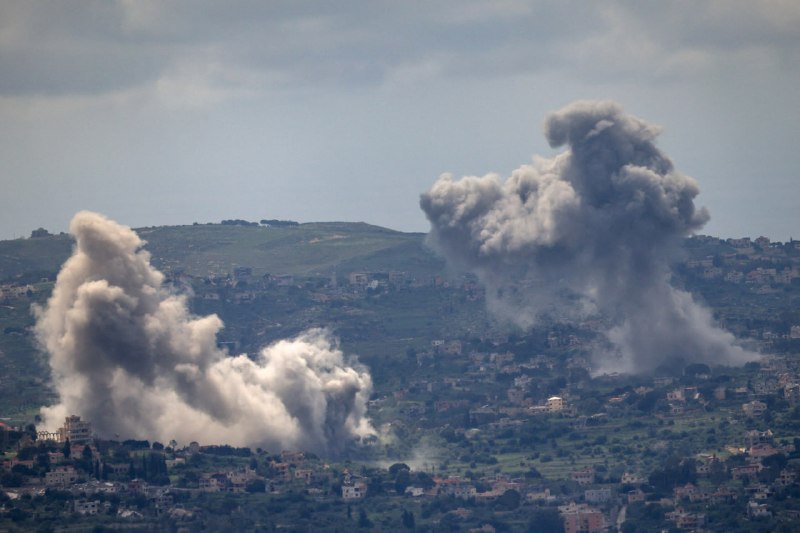
The phrase the Israeli public heard most on the morning of 19 June 2026 was a contradiction. Within the space of an hour, two of the country's main domestic broadcasters carried the same message from senior officials: that the arrangement holding along the northern border is, in the words of a senior official quoted by Channel 13, "a ceasefire" — but one that permits Israel "freedom of action against threats" and leaves its forces in southern Lebanon. Channel 12, minutes earlier, had already framed the point more plainly. A ceasefire, the network said a senior official had told it, "does not mean ceasing fire. It means not escalating the attacks." [Middle East Spectator, 19 June 2026, 13:31 UTC and 13:32 UTC]
That single sentence is the most honest description of the diplomatic arrangement on the Israel–Lebanon border that has been broadcast on Israeli television in weeks. It is also, in its quiet way, a repudiation of the diplomatic vocabulary surrounding that arrangement. A ceasefire, in the working language of the United Nations, the International Committee of the Red Cross, and the long history of mediated conflicts, denotes the cessation of hostilities by the parties. The Channel 12 formulation denotes the opposite: a managed, conditional permission to continue them, with the bar for action set at "escalation" rather than at fire itself.
This is not an interpretive quibble. It is the difference between a diplomatic instrument and a posture. And the posture is now being articulated, on the record, by officials speaking to Israeli audiences, not as a one-off clarification but as the operative doctrine of the moment.
What the officials actually said
The reporting cycle that produced this contradiction unfolded in roughly half an hour on the morning of 19 June 2026, with the same message arriving through three different channels and the same operational point — that Israeli forces will keep striking in southern Lebanon under cover of the existing arrangement — repeated in each.
At 13:06 UTC, the Telegram channel War on the Wire (Witness), which aggregates Israeli broadcast clips, posted that a senior Israeli official had told Channel 13: "We are currently in a ceasefire — if Hezbollah does not attack us, for us it is not wartime. IDF forces remain in southern Lebanon and we have the freedom [of action]." [War on the Wire, 19 June 2026, 13:06 UTC] Six minutes later, Iran's Mehr News Agency carried an amplified version of the same Channel 13 quote, with the explicit Israeli-language gloss that "our forces will remain in southern Lebanon and we have freedom of action against threats." [Mehr News, 19 June 2026, 13:12 UTC]
By 13:27 UTC, Channel 12 was on the air with the sharpest formulation yet. "A ceasefire being in effect does not prevent us from continuing operations," an Israeli official told the network, according to the Middle East Spectator Telegram channel. Five minutes after that, the same channel carried a further Channel 12 quotation framing the point as a definitional matter — that a ceasefire "does not mean ceasing fire" but rather "not escalating the attacks." [Middle East Spectator, 19 June 2026, 13:27 UTC and 13:32 UTC; AMK Mapping, 19 June 2026, 13:32 UTC]
The Iranian state-aligned outlet Tasnim, reporting the Channel 12 material in its own English feed, added the operational predicate: that the arrangement, in the senior official's telling, "allows us to continue destroying infrastructure and taking action against threats." [Tasnim Plus, 19 June 2026, 13:26 UTC] Tasnim's own separate dispatch at 13:13 UTC reported a fatality in the town of Harif, in southern Lebanon, in what it described as an Israeli strike on a residential house. A further Tasnim item at 13:06 UTC named two southern Lebanese localities — "Shokin" and "Zabdin" — as having been targeted by Israeli airstrikes. The strikes, in other words, were not a hypothetical. They were unfolding while the doctrinal language about them was being prepared for the evening news.
The diplomatic vocabulary, and what is being done to it
The conventional purpose of a ceasefire is to end kinetic activity, or at minimum to compress it, in order to give mediation a chance. The framework broadcast by Israeli officials on 19 June 2026 does neither. It preserves kinetic activity on the Israeli side, conditions any further reduction on the behaviour of the other party, and reserves to the Israeli side the unilateral definition of what counts as "escalation." Under that reading, escalation becomes a category in which every Israeli strike is implicitly non-escalatory by definition, and any Hezbollah response, however proportionate, is by definition an escalation that would authorise further Israeli action.
The asymmetry is the point. A bilateral ceasefire in which both parties renounce strikes is, in this framework, a constraint. A "ceasefire" in which only one party's strikes count as ceasefire violations is an authorisation.
This is not to suggest that Israel invented the practice of conditional arrangements. The contemporary literature on "ceasefires of convenience," written by mediators and conflict-resolution practitioners over the last two decades, is full of them: arrangements in which one party effectively converts a temporary halt into a permanent permission to act. What is unusual here is the candour. Most governments in such a position prefer the diplomatic register, and tell the public one thing while telling the troops another. The Israeli officials speaking to Channel 12 and Channel 13 on 19 June 2026 appear to have decided that the domestic audience is owed the honest version — a ceasefire that does not, in fact, cease.
The structural frame: why this language, why now
The reason for the candour is structural. Israel has spent the better part of two years engaged in a multi-front war that has, by its own intermittent admissions, not produced the strategic outcomes originally announced. The October 2023 operation against Hamas, the subsequent campaign in Lebanon, the exchanges with Iran, the strikes on Yemen, and the long attritional engagement in Gaza have all been sold to Israeli and allied audiences in the language of decisive, finite action. A border arrangement that openly contemplates indefinite continued operations is, in that context, an admission that the war aims, as originally defined, are not achievable on the original timetable.
The way governments metabolise that gap is to redefine the war aim. "Eliminate Hamas" becomes "degrade Hamas." "Disarm Hezbollah" becomes "prevent rearmament." And "ceasefire" becomes "non-escalation by the other side, with our own operations continuing." This is the standard rhetorical move in any war that lasts long enough to outlive its original justification. It does not in itself determine whether the policy is right or wrong, but it does mean that the diplomatic vocabulary is doing political work, not descriptive work.
The Israeli officials speaking to Channel 12 and Channel 13 are not, in other words, breaking news about the operational reality on the northern border. The strikes on Harif, on Shokin, on Zabdin, are the news. What the officials are doing is updating the public language in real time, so that the next strike does not have to be justified against a baseline of "ceasefire" but against the redefined baseline of "non-escalation." It is an exercise in making the next operation easier to explain.
The counter-narratives
Two readings compete with the framing above, and they are worth taking seriously because they are held in good faith by serious people.
The first is that the language is a deterrent, not a description. Under this reading, the point of telling Hezbollah, via the Israeli press, that the arrangement is conditional and that "freedom of action" will be exercised, is to discourage Hezbollah from probing the border, rearming, or rebuilding infrastructure near the frontier. The terminology is, on this account, closer to nuclear-era strategic vocabulary: defining thresholds publicly so that no one can claim surprise when they are crossed. The presence of Israeli forces in southern Lebanon, in this framing, is not an occupying posture but a tripwire.
The second is that the diplomatic arrangement on the border is, in fact, holding. Cross-border fire into Israel from Lebanon has been at a low level for some weeks. Hezbollah, the argument runs, understands the rules of the new game. The Israeli strikes on southern Lebanese targets are framed as "destroying infrastructure and taking action against threats" — that is, against the residual Hezbollah military presence that the arrangement was negotiated to suppress. On this reading, the Channel 12 formulation is a restatement of the same conditional arrangement that has been in place since late 2025, expressed bluntly because the officialdom has stopped pretending it is something else.
Both counter-readings are plausible. The first — deterrence — is consistent with the explicit Channel 12 invocation of "escalation" as the operative threshold, and it is the reading most likely to be favoured in Western wire reporting, where Israeli security concerns are taken as the baseline. The second — that the arrangement is broadly holding — is harder to sustain against a single concrete data point in the source material: the Tasnim dispatch at 13:13 UTC on 19 June 2026 reporting a fatality in an Israeli strike on a residential house in Harif. Deterrent or not, tripwire or not, a continuing strike tempo that produces civilian deaths on the Lebanese side is not, by any standard definition, a ceasefire.
The stakes
The Lebanese side of the border is paying the price of the redefinition in real time. The households in Harif, in Shokin, in Zabdin — and, on the Israeli side, the communities in the Galilee that live under the assumption that the next round of escalation is a decision away, not a contingency — are the parties to an arrangement that has been redefined, in their name, by officials speaking off-the-cuff to evening news. The diplomatic mediators who put their names to the original ceasefire framework now face a choice: either renegotiate it to reflect the actual Israeli doctrine of conditional non-escalation, or stand by the original language and accept that the word "ceasefire" has been emptied of its conventional content.
For the wider region, the precedent matters. Iran's regional positioning, Hezbollah's posture, the Turkish and Gulf state calculations about the durability of any Israeli-mediated arrangement — all of these are downstream of whether the operative document on the northern border is what was signed or what Channel 12 said on 19 June 2026. A framework in which the stronger party reserves the right to define the threshold of escalation is not a ceasefire. It is a permission slip.
What remains uncertain
The reporting cycle of 19 June 2026 leaves several questions open. The senior officials quoted by Channel 12 and Channel 13 are not named in the source material, and the broadcasts are aggregated via Telegram channels — Middle East Spectator, War on the Wire, AMK Mapping, Tasnim, and Mehr — rather than from primary Israeli-network feeds. The Iranian state-aligned outlets, Tasnim and Mehr, have an editorial interest in framing Israeli statements in the starkest possible terms, and Channel 12 / Channel 13 themselves have not, in the materials available, been independently verified for the precise wording. The operational reality on the ground — the strike on Harif, the airstrikes on Shokin and Zabdin — is sourced exclusively to Tasnim, whose reporting on Israeli strikes in Lebanon has been broadly directionally accurate in past cycles but is not independently corroborated in this dispatch.
What is not in dispute is the diplomatic content of the Israeli officials' own statements, as carried in Israeli broadcast clips aggregated through the channels cited. Whether the word "ceasefire" on the northern border from this point forward means what the United Nations thinks it means, or what Channel 12 told the Israeli public it means on the morning of 19 June 2026, is now a question the mediators — not the spokespeople — will have to answer.
Desk note: Monexus framed this piece around the Israeli officials' own on-the-record statements, as carried in Israeli broadcast clips and aggregated via Middle East Spectator, AMK Mapping, and War on the Wire, with the Iranian state-aligned Tasnim and Mehr sources used as parallel reporting and for the operational record of strikes in southern Lebanon. The piece treats Israeli security framing as a legitimate first-order concern, names the diplomatic contradiction explicitly, and gives weight to the alternative readings (deterrence; arrangement broadly holding) before landing on the structural conclusion that the language itself has been redefined. The wire services have, in the main, reported the Israeli officials' statements without interrogating the definitional shift from "ceasefire" to "non-escalation." That is the gap Monexus is filling here.
Wire provenance
This editorial synthesis draws on the following public wire/social posts:
- https://t.me/Middle_East_Spectator/
- https://t.me/AMK_Mapping/
- https://t.me/Middle_East_Spectator/
- https://t.me/tasnimplus/
- https://t.me/tasnimplus/
- https://t.me/mehrnews/
- https://t.me/wfwitness/
- https://t.me/tasnimplus/