Off-ramp, or just a longer on-ramp? Israel’s Lebanon calculus and the Iran shadow
After more than 100 Israeli airstrikes on Lebanon and the deaths of four Israeli soldiers, Washington is signalling an Israeli ceiling on escalation — while Tehran weighs its own next move.
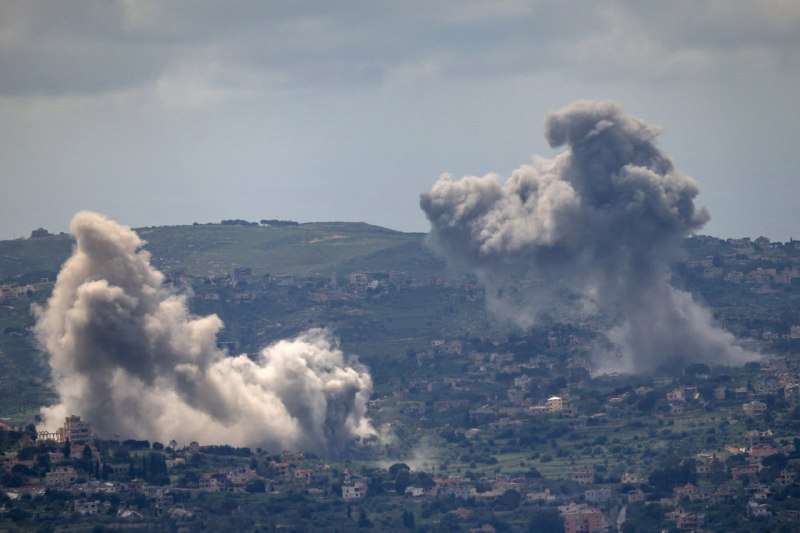
On the afternoon of 19 June 2026, three separate dispatches from the Israel–Lebanon front converged into a single, uneasy picture. Israel had flown more than 100 airstrikes against targets in Lebanon, retaliation for a Hezbollah attack that killed four Israeli soldiers. Through an American back-channel, Jerusalem had then signalled to Tehran — via Washington — that it would not escalate further. And, in parallel, intelligence shared inside the region suggested Iran was preparing a possible preemptive strike against Israel while the Lebanon pressure campaign continued.
The sequence matters more than any single headline. It captures the architecture of an exchange that, for the moment, is being managed by intermediaries rather than resolved by force — a de-confliction track that is at once an off-ramp from full-scale war and, depending on which set of inputs one weights, a precursor to the next round. The day’s events sit inside a structural pattern that has governed the Israel–Iran–adjacent confrontation for the better part of two years: each tactical move is calibrated against a ceiling set in Washington and a floor set in Tehran, with Lebanon as the principal battleground and Israel as the principal instrument. The risk is that the architecture holds — or that, at the first miscalculation, it collapses.
The day’s battlefield
Reporting from Middle East–focused outlets on the morning of 19 June described an unusually dense Israeli air operation across Lebanon. The Middle East Spectator channel, summarising wire reporting, framed the more-than-100-strike figure as the response to a Hezbollah attack that left four Israeli soldiers dead; the wfwitness channel carried a parallel account citing CNN, saying Washington had told Tehran that Israel had agreed not to further escalate in Lebanon after those strikes. Both accounts surfaced within a six-minute window of each other, the latter dated 11:51 UTC and the former 11:57 UTC, a pattern consistent with a single underlying briefing being redistributed.
What the public material does not specify — and what the open-source record cannot independently verify — is the target distribution of those strikes: which Lebanese towns, which Hezbollah infrastructure nodes, whether civilian casualties were reported, and whether UNIFIL or Lebanese state forces were affected. Initial Telegram reporting of this kind typically outruns the more cautious language of the wire services, and the more careful framing will follow in the next 24 to 48 hours through wire desks at Reuters, the AP, and the AFP.
The message Washington carried
The structural news of the day is not the strike count. It is the message. According to the CNN-sourced line carried by wfwitness on 19 June, the United States has told Iran that Israel has agreed not to further escalate in Lebanon following strikes that responded to a Hezbollah attack that killed four Israeli soldiers. That phrasing — “agreed not to further escalate” — is diplomatic, not declaratory. It commits Israel to a ceiling rather than to a withdrawal, and it commits Iran to a reciprocal reading rather than to a guarantee. It is the language of de-escalation management, not of de-escalation itself.
The signal reads in two directions. To Tehran, it is an attempt to make the cost of entry legible: yes, Hezbollah can be struck hard, but the political ceiling in Washington — and, by extension, in Jerusalem — is calibrated against a wider regional war that the United States is not yet prepared to absorb. To Beirut and to the Lebanese Shia armed-political ecosystem, it is a message that the rules of the fight have not been revoked, but they have been raised. The relevant precedents — the spring 2024 exchanges, the September 2024 pager operation, and the November 2024 ceasefire arrangement — all involved American brokering of an Israeli ceiling in exchange for Iranian forbearance, and all of them unravelled in stages. The present exchange should be read against that ledger.
The Iranian shadow
The third input of the morning is the most volatile. According to intelslava, citing intelligence shared inside regional channels, Iran may be preparing a preemptive strike on Israel while Israeli attacks on Lebanon continue, with those attacks described in the source as a necessary condition for any signing of an arrangement the source did not name. The phrasing — “may be preparing” — is the right epistemic register. It does not assert a decision; it asserts preparation. The same source, which operates inside the Iran-aligned information ecosystem, frames continued Israeli action in Lebanon as foreclosing the diplomatic track, which is consistent with how Tehran has historically positioned itself: maximalist in posture, conditional in execution.
Iran’s interest in a preemptive strike, were one to be authorised, is not primarily to inflict military damage on Israel — Israel’s air-defence architecture, layered across Arrow, David’s Sling and Iron Dome, has proven robust against massed Iranian salvos in prior rounds — but to set a precedent: that an Israeli operation of a certain density, on a certain front, will be answered directly. The October 2023 and April 2024 exchanges established that template. The risk is the same one those rounds illustrated: a single misrouted salvo, a single miscalculated target package, and the ceiling the United States is now brokering falls. De-escalation management of this kind is held together by signalling, and signalling degrades.
The structural frame
What this day’s reporting illustrates, in plain editorial terms, is a familiar pattern of an incumbent order ceding tactical ground to a successor arrangement while trying to manage the tempo of the transition. The United States is operating from a position of relative — but not absolute — regional primacy: it can broker ceilings, but it cannot impose them. Israel is operating from a position of structural military superiority on the Lebanon front but political exposure at home and abroad. Iran is operating from a position of diminished deterrence after the losses of late 2024 and 2025, but with the asymmetric advantage of being able to choose the timing and the theatre of any next round.
Lebanon, as ever, is the surface on which this geometry is drawn. The more-than-100-strike figure is not just a tactical data point; it is a statement that Israel is willing to spend airframes, standoff munitions and political capital in pursuit of a Hezbollah reconfiguration that the 27 November 2024 arrangement has not produced. The 4-Israeli-soldier toll is the trigger; the strike count is the message; the American-mediated ceiling is the guardrail. Each is intelligible only in the presence of the other two.
Stakes and the road ahead
The forward question is not whether the present exchange ends in a wider war. It is whether the architecture of managed escalation holds long enough for the underlying dispute — the disposition of Hezbollah’s armed presence north of the Litani, the terms of any prisoner exchanges, the policing of the Iranian resupply corridor — to be renegotiated rather than re-fought. The honest answer is that the public material does not permit a confident call. The signals out of Washington read as ceiling-brokering, not as breakthrough diplomacy; the signals out of Tehran read as preparation, not as decision; the signals out of Jerusalem read as calibrated pressure, not as closure.
Two things are worth naming plainly. First, the more-than-100-strike figure, and the four-soldier toll, should both be treated as first-order human facts with weight on each side: the Lebanese civilian and the Israeli combatant carry equal moral standing in the reporting, and the framing of the day’s reporting reflects that. Second, the information environment around this story is unusually crowded — three Telegram-channel inputs in 41 minutes — and the prudent reader should expect significant revision of the headline numbers in the next 24 to 48 hours as wire desks catch up to the social-media frame. The shape of the day will hold. The exact contours will not.
Desk note: Monexus is publishing this as a long-read rather than a flash piece because the day’s three Telegram inputs — the strike count, the American-mediated ceiling, and the Iranian preparation signal — only become legible when read together. Wire coverage in the next 24 hours will resolve the casualty and target-detail questions; the structural read here is offered as scaffolding for that follow-on reporting.
Wire provenance
This editorial synthesis draws on the following public wire/social posts:
- https://t.me/Middle_East_Spectator
- https://t.me/wfwitness
- https://t.me/intelslava
- https://en.wikipedia.org/wiki/2024_Israel%E2%80%93Lebanon_ceasefire
Follow the event.
These dated source records provide context. They do not retrospectively verify this archive article.
Separate what the nuclear watchdog reported from what it could not determine after the June 2025 strikes.