Israel pounds eastern and southern Lebanon as IDF confirms four troop deaths in 24 hours
Israeli warplanes and drones struck multiple towns in the Bekaa and south Lebanon on 19 June 2026, hours after the military said four of its soldiers had been killed.
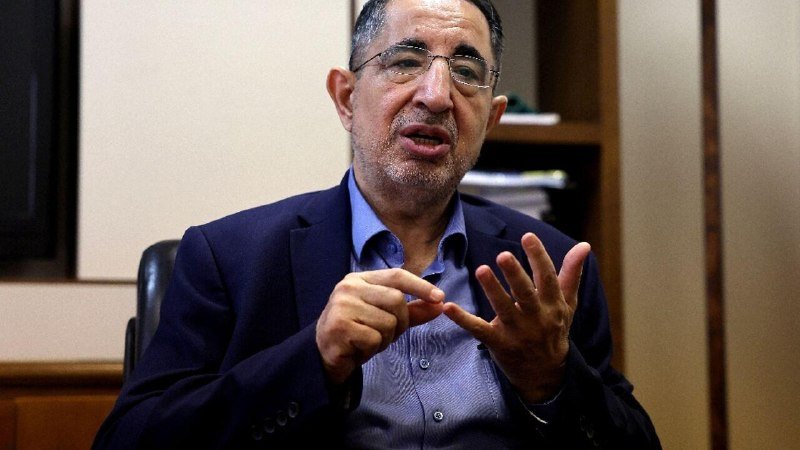
Israeli aircraft and drones hit a string of towns across eastern and southern Lebanon in the early hours of 19 June 2026, including at least four raids on the Nabatieh district and strikes on the city of Nabatieh itself and on Ain Bourday in the eastern Bekaa, according to field accounts and regional channels reviewed by Monexus. The bombardment followed an Israeli military announcement that four of its soldiers had been killed in 24 hours, a rare public toll that points to a heavier than usual day of combat along the border corridor.
The pattern is the most significant single-day escalation on the Israel–Lebanon front in several weeks and lands at a moment when the international focus is split between the war in Gaza and the slow, contested diplomacy over the country's airspace and southern front. Both layers — the strikes themselves, and the political ceiling above them — are now in play.
A Bekaa-and-south barrage, hour by hour
Reporting from the field, filtered through two Lebanon-based Telegram channels, shows a coordinated multi-axis attack pattern. The AMK_Mapping account, which tracks Israeli air activity over Lebanon, said at 08:09 UTC on 19 June that "Israeli airstrikes and drone strikes have targeted numerous towns and cities across eastern and southern Lebanon over the last couple of hours." That summary sat alongside more granular posts: a drone strike on the city of Nabatieh at 07:55 UTC from @wfwitness; footage of an airstrike on the town of Ain Bourday, in the eastern Bekaa, at 07:50 UTC; and, at 07:27 UTC, the Beirut-headquartered Al-Alam Arabic channel reporting "4 Israeli raids on Nabatieh district, south of #Lebanon."
The geography matters. Nabatieh is the principal town of south Lebanon's Nabatieh governorate, the area from which Hezbollah has historically projected firepower into northern Israel; Ain Bourday sits deeper inside the Bekaa valley, traditionally a logistics and rocket-storage belt rather than a frontline launch zone. Striking there suggests Israeli targeting has migrated, again, away from the border. A Reuters dispatch timed to the same window — 08:10 UTC on 19 June — confirmed the broad shape of the operation and added the troop-loss element, reporting that Israel had announced four of its soldiers killed in the previous 24 hours.
The Israeli toll, and what is being said about it
A single-day loss of four soldiers is not routine. The Israeli military, which has grown increasingly careful with casualty disclosures since operations expanded into Lebanon in late 2024, generally waits to confirm names, units, and circumstances before publishing. The fact that a figure of four was being reported in the morning of 19 June — bundled into the same news cycle as the new strikes — is itself a signal. It tells a reader that the ground-and-border segment of the campaign, not just the air segment, is generating casualties.
The Reuters item in the thread context does not specify the circumstances of the four deaths. The source does not, in the material Monexus has reviewed, detail whether the soldiers were killed by anti-tank fire, by a drone, by a missile strike, or by a roadside device; nor does it name units. The framing is the headline and the lead: four dead, in one day, on the northern front. A reader trying to reconstruct the specific incident will, for now, have to wait for the IDF's own release.
The Lebanese picture, and the sourcing problem
The Lebanese side of the story is harder to pin down. The Nabatieh and Ain Bourday strikes are documented through on-the-ground video and short written dispatches — useful as time-stamped evidence that something struck where it is claimed to have struck, but not a count of dead or wounded. Al-Alam Arabic, which broke the "four raids on Nabatieh district" line, is a Beirut-based outlet with a Hezbollah-aligned editorial line. It is not, in Monexus's reading, a stand-alone factual authority on Hezbollah losses or civilian casualties; it is, however, a legitimate and often first-on-the-scene source for the fact of a strike, because its correspondents are physically present in the affected areas.
That distinction matters. When Al-Alam reports four raids in one district, that is news. When the same ecosystem asserts a Hezbollah claim about battlefield outcomes inside Israel, it requires corroboration. The sources Monexus has read for this article do not include a Lebanese casualty count, a Hezbollah statement, or a UN/IFRC figure. The honest framing is that the strike pattern is well attested; the human cost on the Lebanese side, for this news cycle, is not.
What we verified / what we could not
Verified from the source items in the Monexus thread:
- That Israeli drones and aircraft hit Nabatieh, Ain Bourday, and other locations in eastern and southern Lebanon in the window from roughly 07:27 UTC to 08:10 UTC on 19 June 2026, with at least four raids recorded on Nabatieh district alone.
- That Reuters, in a wire dispatched at 08:10 UTC on 19 June 2026, reported both the Lebanese strikes and the Israeli announcement of four soldiers killed in 24 hours.
- That the Israeli military's announcement of four troop deaths in a single day is, in this campaign, an unusually high number, although the source items do not let Monexus compare it to a specific prior day.
- That the geographic spread of the strikes — south Lebanon (Nabatieh) and the eastern Bekaa (Ain Bourday) — is wider than the immediate borderlands.
Not verified from these sources, and therefore not asserted in this article:
- The identity, unit, rank, or precise circumstances of the four Israeli soldiers killed.
- The number of Lebanese civilian or combatant casualties from the 19 June strikes.
- A Hezbollah statement on the strikes, whether claiming success, denying loss, or framing the operation politically.
- A casualty or damage figure for any specific town (Nabatieh, Ain Bourday, or others).
- A claim about which specific target each strike hit.
- An official Lebanese state, LAF, or UNIFIL response.
A reader who wants the next layer of detail — the names, the unit affiliations, the civilian toll, the political reaction in Beirut — will need to wait for the IDF Spokesperson's full release, a wire follow-up, and on-the-ground reporting from established outlets with staff in south Lebanon and the Bekaa.
Structural frame: a wider target set, a quieter diplomatic lane
The deeper pattern is a familiar one in the air campaign over Lebanon. When Israeli planners choose to strike the eastern Bekaa as well as the south, they are signalling that the target list is not bounded by the immediate front line with Israel. That is consistent with an Israeli operational view, articulated by Israeli security sources over the past year, that Hezbollah's strategic depth — its storage, its production, its command nodes — sits in the Bekaa, and that degrading it requires reaching into the valley rather than confining strikes to the blue-line-adjacent districts.
The diplomatic ceiling, in turn, has not produced a ceasefire in months. The United States and France have, at various points, brokered short-lived arrangements, and UNIFIL maintains a presence in the south, but a binding end to the exchange of fire is not on the table. Within that vacuum, Israel retains operational latitude to widen the geographic envelope of its strikes, and Hezbollah retains the ability, on any given day, to inflict the kind of losses that produced the four-troop toll on 18–19 June. The escalation risk is not theoretical; it is the operating environment.
The counter-reading — worth airing — is that this kind of day is not a deliberate escalation but the noise floor of a low-intensity campaign: the routine price of an ongoing fight, in which most days produce one or two Israeli deaths and a handful of Lebanese ones, with the Bekaa strikes reflecting target availability rather than policy. That reading is plausible. It is also hard to reconcile with a public four-troop announcement in a single 24-hour window, which suggests the day's events rose above routine.
Stakes
If the trajectory continues, the plausible outcomes are three. First, the air campaign widens further into the Bekaa and the Litani corridor, with mounting Lebanese civilian displacement and a thickening Israeli casualty list, and no political off-ramp. Second, a single dramatic event — a high-profile Israeli strike that produces mass Lebanese civilian casualties, or a Hezbollah strike that kills a larger Israeli formation, or a successful intercept-and-retaliation cycle around Haifa or Tel Aviv — forces a political crisis in either Jerusalem or Beirut, or both. Third, and least likely on current evidence, a US- or France-brokered arrangement takes hold and the strikes stop.
The most likely near-term outcome, on the evidence of 19 June alone, is the first: more strikes, more dead on both sides, and the diplomatic track continuing to move at a pace that, for civilians on the ground, is indistinguishable from standing still.
— Monexus will keep the casualty ledger and the strike map under review as the IDF's full release, Lebanese and UN reporting, and additional wire coverage become available.
Desk note: Monexus has led with the wire-corroborated strike pattern and the Israeli troop-loss headline, and has deliberately withheld any Lebanese casualty figure, Hezbollah claim, or named-target assertion that the reviewed sources do not support. The Bekaa-vs-south geographic spread is reported as a fact, not as a strategic-judgment headline. The structural frame is offered as one reading of the pattern, not the only one — the counter-reading that this is the noise floor of a long campaign is given equal airtime and judged, on the available evidence, less convincing than the escalation reading.
Wire provenance
This editorial synthesis draws on the following public wire/social posts:
- http://reut.rs/4vXG578
- https://t.me/AMK_Mapping
- https://t.me/wfwitness
- https://t.me/wfwitness
- https://t.me/wfwitness
- https://t.me/alalamarabic