Israel strikes southern Lebanon hours after US-Iran deal, casting doubt on the ceasefire architecture
Israeli airstrikes hit southern Lebanon overnight, killing at least 18 people and prompting Iran to suspend talks aimed at cementing the US-brokered understanding. The episode exposes how little authority the diplomatic track actually carries on the ground.
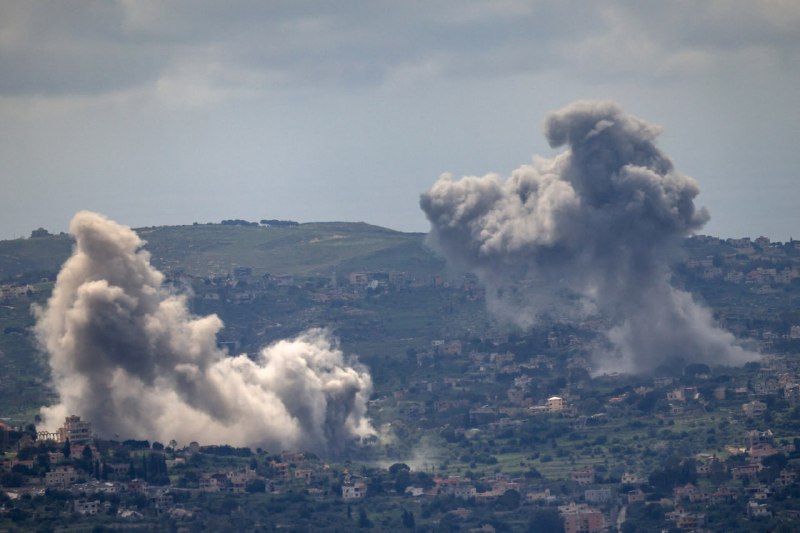
In the small hours of Friday 19 June 2026, the Israeli Air Force carried out a series of airstrikes across southern Lebanon, killing at least 18 people and reopening a confrontation that a US-brokered understanding with Iran had been designed, in public at least, to close. The strikes landed despite a ceasefire clause in the memorandum signed between Washington and Tehran, and within hours Iranian negotiators had postponed follow-up talks scheduled to consolidate the arrangement. The pattern is familiar: a regional deal is announced in capitals, then tested in the airspace above villages whose names rarely make the briefings that produced it.
The sequence matters more than the casualty count. What the overnight episode reveals is the gap between a diplomatic document and the operational reality on the ground — between a memorandum's clauses and the flight plans of aircraft. The ceasefire that was supposed to anchor a wider US-Iran détente now sits, in effect, on probation, with Iran holding back from the talks that would have locked it in.
The strikes, as reported
The reporting that surfaced through the morning of 19 June was unusually consistent across otherwise divergent feeds. According to Middle East Eye, Israeli forces carried out a number of attacks across southern Lebanon early on Friday despite a recent agreement between the United States and Iran, killing at least 18 people. An account relayed through the Sprinter Press wire on X placed the action in southern Lebanon and described it as Israeli Air Force strikes, explicitly noting that they proceeded "despite the ceasefire clause in the memorandum signed between the US and Iran." Al Jazeera's breaking-news feed framed the political fallout rather than the tactical detail: US-Iran talks had been postponed, with Tehran holding back from negotiations to cement the ceasefire on account of the ongoing Israeli attacks.
The geography is the geography of every previous round: villages in the south, the operational backyard of Hezbollah, the airspace that has been the most heavily surveilled strip in the eastern Mediterranean for the better part of two years. The reporting does not specify which targets were struck, nor does it break down the 18 deaths by combatant versus civilian status — a distinction that, in southern Lebanon, is rarely as clean as official communiqués prefer. The sources do agree on the headline number and on the political fact that mattered most: the talks were postponed, not abandoned, but postponed by a party that had publicly staked credibility on the deal it had signed.
Why Iran is treating this as a deal-breaker
The Iranian reading is straightforward. A ceasefire clause is a clause or it is nothing. If the airspace over southern Lebanon is contested hours after the ink dries, the document is a press release, not an agreement — and Iran's decision to postpone the consolidation talks is the diplomatic equivalent of putting the pen down and waiting to see whether the next round of flight plans respects the page.
That posture is not without its own logic. Tehran's leverage in any US-Iran arrangement rests on the assumption that the regional architecture — the network of partners, proxies, and forward positions on which Iranian regional influence depends — is something the other side has an interest in stabilising. The strikes in southern Lebanon tested that assumption in the most direct way possible: by acting in a space where Iran has historically been willing to push back, and where the costs of not pushing back are paid not in Tehran but in Lebanese villages. Iran's response, holding back from talks, is calibrated — it preserves the option of returning to the table without conceding the principle, but it also puts a clock on the arrangement. Memorandums that are not enforced do not stay memorandums for long.
The structural frame: who actually owns a ceasefire
A ceasefire clause in a memorandum between two states is, in plain terms, an instruction to other actors. It is not a no-fly zone, it is not a monitoring regime, and it carries no enforcement mechanism of its own. What it does carry is the political weight of the two signatories — and the assumption, which is the load-bearing assumption, that the third parties whose behaviour the document is meant to constrain will treat the document as binding on them too. That assumption is, in this part of the world, regularly wrong.
The pattern is not new. Ceasefires announced in capitals and signed in hotel ballrooms have, across the past two decades, repeatedly been honoured in the breach by the militaries they were meant to constrain. The interesting question is not whether Israel is bound by a US-Iran memorandum to which it is not a signatory — clearly, in the legal sense, it is not — but whether the United States is willing or able to enforce the clauses of an agreement it has just signed against a close ally whose operational tempo the agreement was supposed to slow. That is the question Iran's postponement is asking, and the question to which the next 72 hours will produce an answer.
The stakes, and what the next week tests
If the talks resume on a near-term horizon and the strikes are treated, in the diplomatic language of capitals, as a misunderstanding, the architecture holds. The memorandum survives, perhaps with an annexed understanding, perhaps with a quiet Israeli commitment to deconfliction, and the regional order that the deal was designed to stabilise continues to take shape. If the talks do not resume, or resume in a form that visibly downgrades the deal, then the overnight strikes will be read, retrospectively, as the moment the understanding stopped being one. Israel will have demonstrated, in operational terms, that its threat picture in the north takes precedence over US-led diplomatic architecture. Iran will have demonstrated that it is willing to let a deal lapse rather than be seen to absorb a violation. And Washington will be left holding a piece of paper whose clauses its closest partner in the region does not observe.
The human stakes are paid in the south of Lebanon, as they have been paid in each previous round. The 18 people reported killed in the overnight strikes are not abstractions in this accounting — they are the price the diplomatic ledger extracts when the entries above the line do not balance. The reporting in circulation does not name them. That, too, is part of the pattern.
This publication approached the overnight strikes as a stress test of the US-Iran memorandum rather than as a stand-alone tactical event. Where mainstream wires lead with the Israeli framing of the strikes as a response to specific threats, Monexus foregrounds the diplomatic fact that matters: a signatory has paused the consolidation of a deal it signed, and the question of who enforces the clauses is now live.
Wire provenance
This editorial synthesis draws on the following public wire/social posts:
- https://t.me/sprinterpress
Follow the event.
These dated source records provide context. They do not retrospectively verify this archive article.
Separate what the nuclear watchdog reported from what it could not determine after the June 2025 strikes.