Jacob Misiorowski and the mechanics of a fastball that got faster
The Brewers' 23-year-old ace has not just added command — he has found velocity, and a baseball establishment now has to take him seriously as a frontline starter.
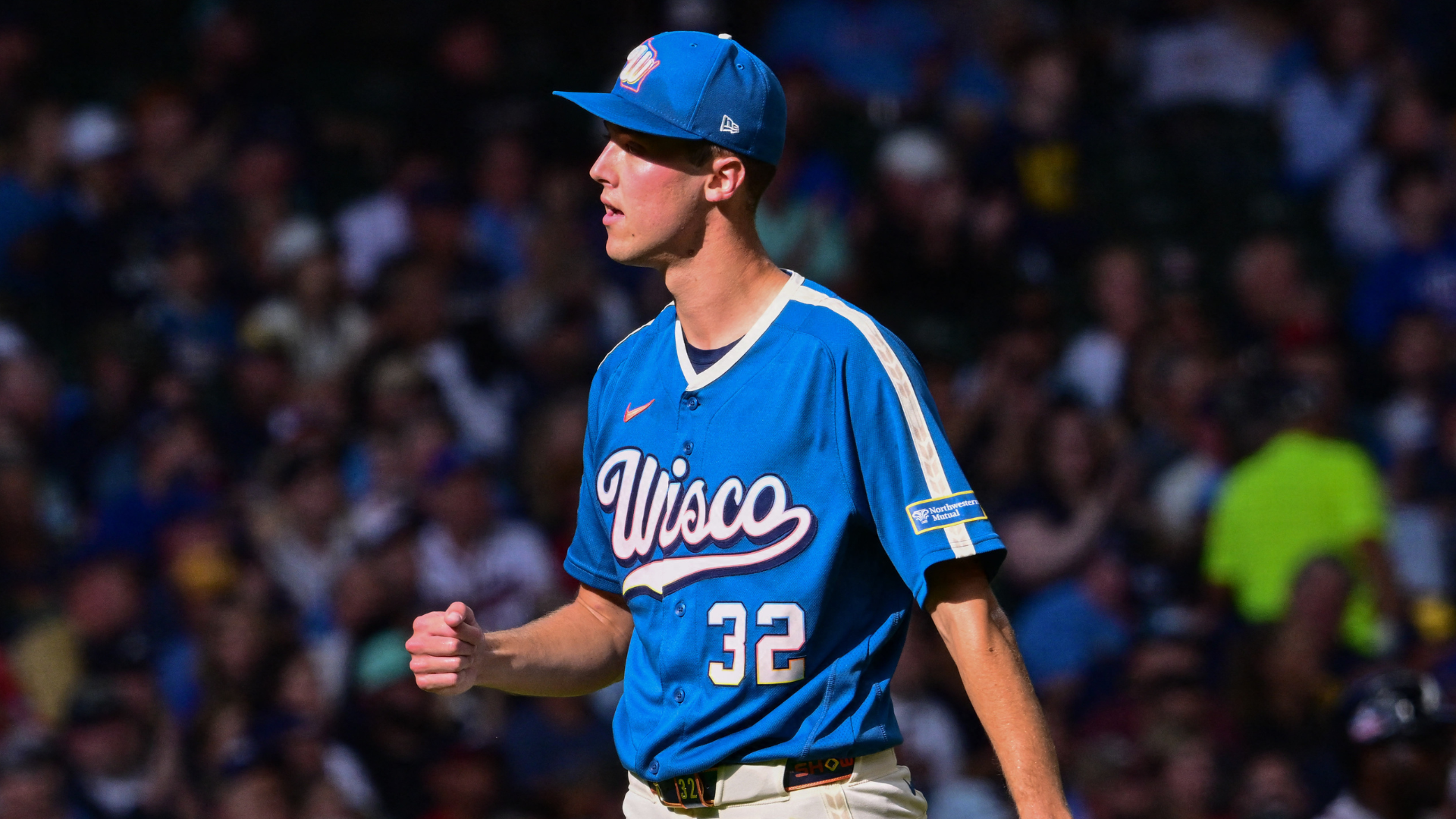
On 16 June 2026, in Atlanta, a 23-year-old right-hander from the Milwaukee Brewers did something that does not usually happen to pitchers his age: he got meaningfully better at the thing he was already best at. Jacob Misiorowski, already operating in the upper register of major-league velocity, threw his four-seam fastball with both more zip and more conviction than he had a year earlier, and the Braves' offence had no answer for it. The outing was the most visible data point in a season that has, by mid-June, started to look less like a hot streak and more like an arrival.
This publication has watched a lot of young arms turn into brief sensations. Misiorowski's case is worth pausing on because the upgrade is not the usual one. He has not rediscovered a lost pitch, nor reinvented his mechanics after injury. He has simply become a more complete version of the pitcher he already was — and in doing so, he has redrawn the ceiling on what the Brewers' rotation can be in 2026 and what his own arbitration clock could look like a year from now.
What changed
Through his first full major-league exposure, Misiorowski's calling card was the same one scouts had been writing about since his draft year: a fastball that plays in the upper third of the league's velocity distribution, delivered from a frame that suggests even more is coming. The problem, as is often the case with high-octane arms, was everything else. Secondary pitches were inconsistent. The fastball itself wandered — devastating when it lived at the top of the zone, hitttable when it did not. Pitching coaches in the Brewers' system spent 2025 trying to solve for the gap between stuff and results.
The early returns in 2026, as documented in a long-form feature published by CBS Sports on 19 June 2026, suggest the gap is closing fast. Misiorowski has found repeatable command of the fastball — the ability to land it where he intends, on the count he intends, against the hitter he intends. He has also, against the run of play, added velocity. The combination of a faster fastball and better command is the rarest version of pitcher development, and the one that tends to translate against the best lineups in October.
The counter-narrative
A skeptic's read is fair. Mid-June samples are small. Atlanta is a workable matchup for a right-handed power pitcher, especially at home. The Brewers themselves have spent the better part of a decade building a pitching-development reputation that sometimes outruns the underlying outcomes — a pipeline that produces useful major-league arms at a rate worth respecting, and ace-level ones less often than the marketing suggests. It is therefore reasonable to ask whether Misiorowski's June is the leading edge of a generational run or a peak that the league will adjust to by August.
The honest answer is that the league adjusts to everyone. What is harder to fake is the combination of velocity gains with command gains. Most pitchers who fix their control do so by giving up a tick or two of fastball life. Misiorowski has gone the other direction, and the CBS Sports reporting makes clear that the Brewers' internal data — spin rate, release-point consistency, chase rates on the four-seamer above the zone — support the eye test.
Why the Brewers' ceiling moves
Milwaukee's 2026 season is, in structural terms, a referendum on whether a small-market club can keep an ace-calibre arm through the years he is most likely to be elite. The Brewers have a long history of trading pitchers a season or two before they hit free agency — a perfectly rational response to the economics of the Brewers' market, and one that has produced a streak of competitive rosters without ever producing a parade. Misiorowski's development complicates that arithmetic. If he is the pitcher his 2026 line suggests he is, his trade value peaks now, and so does the case for keeping him.
That is the structural frame worth keeping in mind when watching his next start. The baseball on the field and the ledger in the front office are not separate stories this summer. Every outing of the kind Misiorowski delivered in Atlanta is read in two places: by the batter trying to catch up to a 99 mph fastball at the letters, and by the GM trying to decide how much future production to monetise in July.
What remains uncertain
The public record is thin on a few questions this publication would like answered. The CBS Sports feature points to a fastball that has improved by a measurable but unspecified margin, and to command gains visible in the data the Brewers share with their own coaching staff; it does not, in the public version, disclose the exact velocity bump or chase-rate figure that would let an outside analyst verify the claim at the decimal level. Injury history on a pitcher this young and this powerful is also, by definition, an open variable. And the small-sample problem cuts both ways: a pitcher who looks unhittable in June can be solved by the third time a good lineup sees him.
What can be said is that, as of 19 June 2026, the Brewers have a starter whose trajectory the rest of the league's pitching coaches are now studying rather than dismissing. That is, by itself, a change in status. Whether it becomes a change in results — sustained through August, durable into October, valuable enough to keep in Milwaukee past the trade deadline — is the question the next twelve weeks will answer.
Desk note: The wire treatment of Misiorowski's June leans on the prospect-to-star framing, with a heavy emphasis on velocity. This publication has tried to give equal weight to the command side of the development, and to the structural question the Brewers' front office now faces on a pitcher whose trade value is rising in lockstep with his strikeout rate.