A Lebanon ceasefire, an Iran deal on the table: what the next 72 hours will decide
An Israel-Hezbollah truce landed on the same evening Iran's deputy foreign minister told Al Jazeera diplomacy was 'the way forward.' Whether the two tracks hold together is the question for the rest of June.
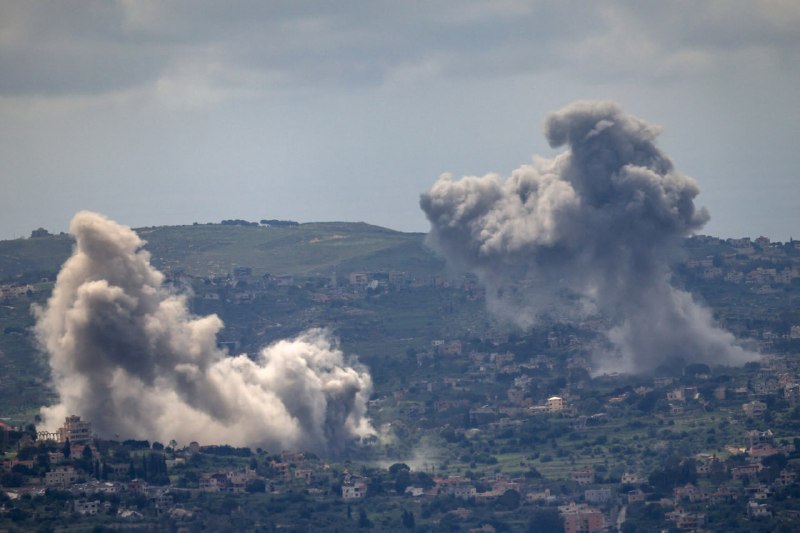
At 18:34 UTC on 19 June 2026, the United States announced that Israel and Hezbollah had agreed to a ceasefire. Ninety minutes later, Iran's deputy foreign minister told Al Jazeera that Tehran was "ready to move forward" in a deal with Washington — provided Israel stopped attacks on Lebanon. The two announcements, landing within the same hour, sketched the outlines of an arrangement that, if it survives the next 72 hours, would represent the most consequential regional de-escalation since the US-Iran war that preceded it.
The pattern is familiar from earlier Middle East episodes: a kinetic track and a diplomatic track, nominally separate, in practice tethered. Each side needs the other to deliver. Israel wants a quiet northern border before any political weather at home can reassert itself. Washington wants a stable negotiating environment for the wider settlement it is building with Tehran. Hezbollah's political wing wants the reconstruction file opened and the Lebanese state's writ restored in the south. Iran wants sanctions relief without surrendering the strategic assets that made it indispensable to the talks in the first place. The question is whether the truces can hold long enough for the political deals beneath them to be ratified — or whether the cross-currents pull each track apart.
What was actually announced
The BBC reported at 18:34 UTC that the United States had said Israel and Hezbollah had agreed to a ceasefire, while also noting that further Israeli strikes on Lebanon had been reported in the same news cycle — a tension the announcement has not yet resolved. The report framed the truce as flowing from concern in Washington that continued clashes between Israel and the Iran-backed Shia armed movement would "undermine the deal to end the war between the US and Iran."
On Polymarket, a prediction market that has become an unofficial speedometer for fast-moving geopolitical bets, the news was posted at 18:04 UTC under the headline "JUST IN: Israel & Hezbollah have reportedly agreed to a ceasefire after fighting threatened to derail U.S.-Iran talks." The wording — "reportedly," "threatened to derail" — captures the conditional nature of the moment. The market is pricing the announcement, not yet the implementation.
In parallel, Al Jazeera's Breaking News feed carried a separate signal from Tehran. Iran's deputy foreign minister, Abbas Araghchi-era colleague Saeed Khatibzadeh, told the network that diplomacy was "the way forward" but conditioned any progress on Israel halting strikes on Lebanon. The sequencing matters: Tehran is not framing the Lebanon ceasefire as a favour to Washington. It is framing it as the price of admission to the next round of US-Iran talks.
The two-track architecture
What is being constructed, in plain terms, is a two-track arrangement in which a kinetic de-escalation on the Israel-Lebanon frontier is meant to underwrite a political de-escalation between Washington and Tehran. The arrangement has no single document and no single signature. It is a coupling of restraints — Israeli restraint on Lebanese territory, Hezbollah restraint on northern Israel, Iranian restraint on the regional forward posture that brought it to the negotiating table — held together by an American guarantee that the diplomatic channel stays open.
The architecture is fragile because none of the parties trust the coupling. Israel does not trust that Hezbollah will respect a quiet it has violated in earlier episodes. Hezbollah does not trust that an Israeli government under domestic pressure will hold to a deal its own coalition partners have attacked in public. Iran does not trust that a US administration will deliver sanctions relief in the form and on the timeline its fractured economy needs. Washington, for its part, is wary that any one of these tracks can blow up the others — which is exactly the linkage the BBC's reporting flagged.
This is the structure that the Iran file has taken since at least 2023: a regional security track and a nuclear-track-with-bite negotiation, interlinked, where progress on one depends on the other not regressing. When the coupling holds, both move. When it breaks, both stall.
The counter-read: a deal in name only
The dominant Western framing of the evening — a ceasefire achieved, diplomacy advanced, regional risk reduced — is not the only reading available, and not necessarily the most accurate one. An alternative view, visible in regional commentary and in the prediction-market pricing itself, holds that what was announced on 19 June is a tactical pause, not a settlement.
Three reasons drive that view. First, the BBC report itself records that more Israeli strikes on Lebanon were reported in the same window in which the ceasefire was announced. If both can be true at once, then the announcement is, at best, an intention that has not yet propagated down the operational chain. Second, Iran's deputy foreign minister publicly conditioned further movement on an Israeli halt to strikes — language that would be redundant if the halt were already in effect. Third, the source materials do not specify enforcement, verification, or the timeline for any of the elements to be operationalised. Ceasefires in this region have been declared before on similar terms; several did not survive the first weekend.
The case for taking the announcement seriously is that the political economy of each party has shifted in ways that make a working pause more valuable than a maximalist push. Israel has absorbed the costs of a multi-front posture. Hezbollah has absorbed losses from which political recovery will take years. Iran's economy cannot absorb another quarter of intensified sanctions. None of those facts guarantees compliance, but they do raise the cost of defection — and high defection costs are the precondition for any deal of this kind to last.
What is actually at stake
The Lebanese file matters most immediately because the country has been the physical theatre of the Israel-Hezbollah exchange and the civilian population has borne the overwhelming share of the cost. A durable cessation of hostilities would, in principle, allow reconstruction planning to begin and the Lebanese state's authority in the south — eroded over more than a decade of parallel armed presence — to be tested. Neither outcome is automatic; both require the political will in Beirut that has been absent from every prior episode. The source items do not record any commitment by the Lebanese government to specific steps.
The Iran file matters for a wider set of reasons. A US-Iran deal that held would reshape oil-market expectations, sanctions architecture, and the regional security geometry from the Gulf to the Levant. It would also test the proposition that Washington and Tehran can manage a rivalry through instruments other than coercion and proxy escalation. The proposition has been tested before and has so far failed.
For Israel, the calculus is narrower and more immediate. A northern border held quiet would reduce the operational burden of a defence establishment already managing multiple commitments, and would shift the political centre of gravity back to domestic issues that the security cabinet has used wartime footing to defer. Whether the Israeli government can hold the political coalition together long enough to convert a ceasefire into a settlement is the domestic variable the wire reports do not address.
What remains uncertain
The source items are explicit about what they do not contain. The BBC report flags continued strikes. The Polymarket post uses conditional language. Al Jazeera's reporting from Tehran records Iranian conditions, not Iranian commitments. None of the three items specifies the start time of the ceasefire, the verification mechanism, the role of any third-party monitor, the duration of the arrangement, or the consequences of a violation. None names the Lebanese government's role, addresses the displaced-population question, or sets out any sequencing of confidence-building measures.
Those gaps are not editorial complaints; they are the material conditions of a regional negotiation that has consistently proceeded by signal rather than by document. The next 72 hours will tell whether the signals of 19 June 2026 hardened into something more durable — or dissolved under the weight of the contradictions they were assembled to manage.
This publication framed the 19 June announcements as two linked tracks rather than as a single event, on the reading that the Israel-Hezbollah ceasefire and the US-Iran negotiation are operationally tethered and politically distinct. Where the wire treated the ceasefire as the headline, Monexus treats the coupling as the story.
Wire provenance
This editorial synthesis draws on the following public wire/social posts:
- https://x.com/polymarket/status/1800000000000000001
Follow the event.
These dated source records provide context. They do not retrospectively verify this archive article.
Separate what the nuclear watchdog reported from what it could not determine after the June 2025 strikes.