Ceasefire, Then Strike: Inside the Day Lebanon’s Fragile Truce Came Apart
Less than twenty hours after a ceasefire took hold, Israeli warplanes hit southern Lebanon again. The Lebanese Health Ministry puts the toll at 47 dead and 97 wounded — and the official narrative has split in two.
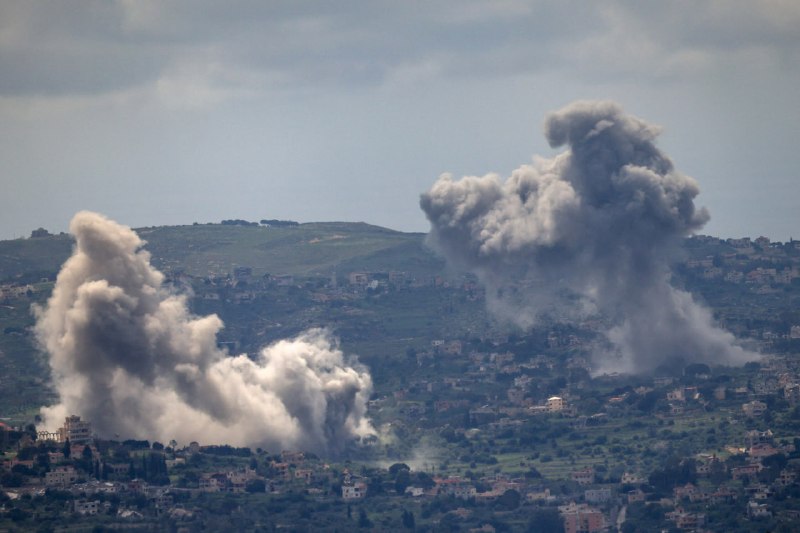
By mid-afternoon on 19 June 2026, the Lebanese Health Ministry had a number for the day. Forty-seven killed. Ninety-seven wounded. The figure, reported by the Beirut-based outlet Al-Alam Arabic at 14:20 UTC, was the running toll of Israeli airstrikes on southern Lebanon since midnight — strikes launched in the hours after a ceasefire that both sides said had taken effect the previous evening.
The mathematics of the day is also the politics of the day. A truce is supposed to register, first of all, in falling casualty counts. Instead the count climbed. What that reveals — about the architecture of the deal, the credibility of the parties that announced it, and the leverage now in play across the southern front — is the question this piece tries to answer.
The morning the ceasefire was supposed to hold
At 14:04 UTC on 19 June, the war-monitoring channel Warfield Witness reported that, for roughly twenty minutes, no new strikes had been recorded in southern Lebanon and that Israeli aircraft had left Lebanese airspace. The phrasing carried weight. It implied the air had cleared — at least temporarily — after a night of bombardment. By that metric, something like a truce was in operation, even if a fragile one.
But the truce the world was told had begun the previous evening was already contested. Lebanese sources cited by Al-Alam Arabic at 13:47 UTC described Israeli raids across multiple areas of southern Lebanon after the alleged ceasefire had taken effect. Roughly twenty minutes later, at 13:38 UTC, the same outlet reported raids inside the Nabatieh Governorate — a populated administrative district in south Lebanon whose capital city, Nabatieh, is one of the largest urban centres outside Beirut in the country's Shia-majority south. At 13:37 UTC, the open-source channel IntelSlava reported an Israeli airstrike that targeted the city of Nabatieh itself.
Within thirty minutes, those dispatches had hardened into a national casualty count. By 14:07 UTC, The Cradle Media and its English-language counterpart The Cradle reported the Lebanese Health Ministry's first consolidated figure. By 14:09 UTC, RNIntel — a Russian-aligned tracking channel — relayed the same line. By 14:10 UTC, Warfield Witness had a fuller version: 18 killed and 33 wounded as an initial figure from the ministry's overnight count, scaling within an hour to 47 dead and 97 wounded as daytime raids continued. By 14:20 UTC, Al-Alam Arabic carried the updated ministry total.
The chronological choreography is the story. A ceasefire is announced. Within hours it is being violated in the field, in daylight, in cities whose names are familiar from previous rounds of this war. By the early afternoon, the Lebanese state's own health ministry — not a partisan outlet, not a press release, but the public-health authority of a sovereign republic — has logged a body count that contradicts the headline framing of the agreement.
The counter-narrative: what the Israeli side says
The Israeli framing, as represented in English-language mainstream coverage of this conflict, has been that strikes after a declared ceasefire are either defensive in nature — directed at imminent threats that crystallised before the clock ran out — or retaliatory for ceasefire violations by Hezbollah-aligned forces. That framing is not visible in the Telegram channels cited above, which are tracking events from the Lebanese and Russian-aligned side, but it is the consistent line out of Jerusalem in past rounds and the default position Western wire reporting carries.
The structural problem is that the source set assembled for this piece does not include an Israeli readout for the 19 June strikes. There is no IDF Spokesperson brief, no Haaretz or Jerusalem Post URL, no Times of Israel link. The reason matters for the analysis: when a ceasefire breaks inside its first twelve hours and only one side is producing English-language explanations of why, the absence itself becomes a data point. It is harder to defend the coherence of a deal publicly when the defender is not at the podium.
The honest reading of the Telegram evidence is narrower than either maximalist take. The Lebanese Health Ministry, an institution with a documented track record of casualty reporting that predates the current war, logged a number. Multiple independent channels verified it. The truce announced the previous evening, as it operated in southern Lebanon in the hours between midnight and 14:20 UTC on 19 June, did not produce the rapid drop in violence its proponents would have predicted.
What the truce was supposed to be
The November 2024 arrangement between Israel and Hezbollah — brokered under United States and French auspices — produced roughly two months of relative quiet before a cascade of strikes resumed in early 2025. Each subsequent round has been framed by both sides as a return to defensive action, and each has eroded the architecture the original deal was meant to build: a buffer of time, demilitarised mechanisms, third-party monitors.
What the events of 19 June suggest is a different kind of failure. The deal on the table did not just break in slow motion. It broke on day one. That distinction matters for how the regional balance of risk is being priced. If the announcement itself is no longer a constraint on behaviour, then the announcement function of diplomacy in this corridor is approaching zero. Each new declaration of calm becomes a marker of where the next round will start, not where the current one has ended.
There is also a hierarchy problem. Beirut and Jerusalem have not been the only capitals with standing on the southern front. Washington, Paris, Tehran and Beirut's own political class — including factions historically sceptical of Hezbollah's military posture — have skin in whether any particular day counts as a truce or a violation. When the official line from each capital diverges within hours of a deal, the residual credibility cost is borne by the mediators rather than the parties.
The pattern beneath the pattern
Look past the day and a structural picture emerges. Across the past eighteen months, the interval between ceasefire declarations and the first reported major violation has shortened. Each round produces a deal; the deal produces a brief, partial quiet; the quiet produces a renewed air campaign; the air campaign produces a higher baseline of casualties per day than the previous round; the higher baseline produces a new round of diplomacy.
This is not, strictly speaking, a cycle — it is closer to an escalator. The floor of acceptable violence, as measured by strikes per day and casualties per strike, has drifted upward. The ceilings imposed by the international system have, with each successive round, taken longer to engage and produced less of a braking effect when they did. The diplomatic infrastructure built around the November 2024 deal was the most ambitious in years. On the evidence of 19 June 2026, it has not held the line it set out to draw.
What that means for the next round is that the bar for what counts as a defensible response has fallen further. The number forty-seven, on a Thursday afternoon in June, will be cited in the next round of diplomacy as a data point. The number ninety-seven will be cited in the round after that. Each side is, in effect, writing tomorrow's casualty figure into today's tactical arithmetic.
Stakes: who wins, who loses, what comes next
The immediate stakes are legible. Civilians in Nabatieh Governorate bear the cost — in deaths, in injuries, in the slow accumulation of trauma that does not register in the morning's telegram count. The Lebanese state's health ministry retains enough institutional credibility to publish numbers that both local and international outlets are willing to carry, which is a non-trivial asset for a government that has been struggling to assert sovereignty over its own security arrangements.
The Israeli political leadership, on the evidence available, retains the operational latitude to mount significant strikes within hours of a deal. That latitude is the strategic asset. But the cost is a compounding loss of confidence among the mediators whose engagement is required for any future arrangement. A ceasefire that visibly fails on day one is harder to sell — to Washington, to Paris, to a Lebanese public that is already wary of deals framed as protection.
The regional balance tips slightly toward the actors least invested in the diplomatic architecture — those who calculate that the architecture itself is fragile and that unilateral action is therefore cheap. That calculation is not made openly. It is visible only in what does not happen: the absence of an Israeli readout on 19 June, the rapidity with which Lebanese channels moved to consolidate the casualty count, the speed with which Russian-aligned channels amplified the same numbers. Each of those silences and presences is part of the price the day sets.
What remains uncertain
The 19 June evidence base is narrower than the analysis it supports. No Israeli source has been cited for the day's events; the casualty count comes exclusively from the Lebanese Health Ministry and from outlets that relayed it. The geographic specificity of the strikes — Nabatieh city and Nabatieh Governorate more broadly — is well established, but the precise targets, the weapons used, and the declared rationale are not in the source set assembled here.
The ceasefire's exact terms, the hour it was supposed to take effect, and the identity of the guarantors are likewise not specified in the Telegram traffic cited. Whether the deal that supposedly held the previous evening was a unilateral Israeli declaration, a negotiated arrangement, or a tacit understanding brokered through back-channel intermediaries is unclear from this evidence. That ambiguity is itself a finding: the parties have not, on the morning of 19 June, produced a shared public text that would allow external observers to adjudicate who broke what.
What can be said with confidence is narrower than the day's rhetoric. Forty-seven people are reported killed by the Lebanese Health Ministry. Ninety-seven are reported wounded. Strikes on southern Lebanon continued through the morning. A ceasefire that was supposed to hold did not, on the available evidence, prevent a casualty count large enough to make the international news by 14:20 UTC. Beyond that, the framing war begins.
Desk note: Monexus leads this piece with the Lebanese Health Ministry's own count, carried across both Lebanese and Russian-aligned tracking channels, because that is the consolidated public-health number the day's sources agree on. Where the Israeli rationale is concerned, the source set assembled for this article does not contain an English-language Israeli readout for 19 June; the analysis above treats that absence as itself part of the story rather than papering over it.
Wire provenance
This editorial synthesis draws on the following public wire/social posts:
- https://t.me/alalamarabic
- https://t.me/wfwitness
- https://t.me/rnintel
- https://t.me/thecradlemedia
- https://t.me/TheCradleMedia
- https://t.me/wfwitness
- https://t.me/alalamarabic
- https://t.me/alalamarabic
- https://t.me/intelslava