The Nabatieh Tilt: A Single Lebanese Hill Tests a Fragile Ceasefire
Heavy artillery, roadside IEDs and rocket exchanges around a single height southeast of Nabatieh expose how thin the post-war calm in southern Lebanon has become.
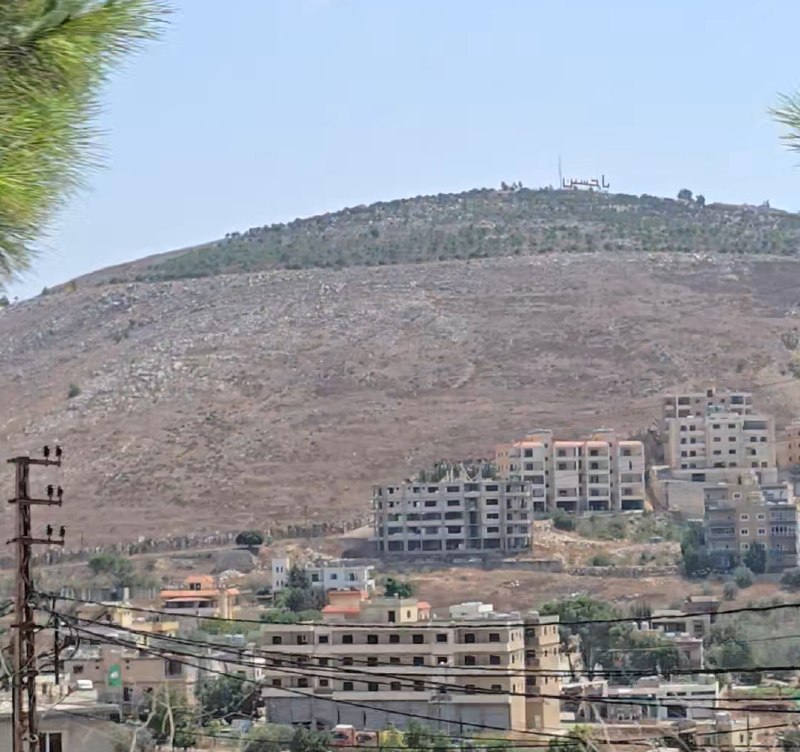
At 19:37 UTC on 19 June 2026, observers in southern Lebanon reported that Israeli troops had begun a renewed attempt to seize the Ali al-Taher hill, a piece of high ground that overlooks the city of Nabatieh and the surrounding ridgeline. By 20:34 UTC, Hezbollah fighters had detonated an improvised explosive device against an Israeli force pushing up the slope. By 20:47 UTC, the Israeli military was firing phosphorus illumination rounds into the same heights and trading rocket and artillery fire with Lebanese positions. The exchanges continued for more than an hour. None of the wire services, as of publication, had confirmed a casualty toll from the night's fighting; the picture that emerges is built almost entirely from frontline channels — witnesses, mappers and partisan Telegram feeds — none of which can be cross-checked in real time.
What the day's chatter amounts to is a stress test. The November 2024 understanding that paused the open war between Israel and Hezbollah was supposed to end unilateral ground operations inside Lebanese territory. Two and a half years later, the same hill that the agreement was meant to render quiet is, again, an artillery target. The episode is small in geographic terms — a single ridge — but it is the kind of smallness that, in this part of the world, tends to define the next phase. A ceasefire is not a line on a map; it is a sequence of decisions about what counts as routine and what counts as a violation. For the second day in a row, the parties are picking different answers.
The night of 19 June, hour by hour
The first public signal came at 19:37 UTC from the mapping channel AMK Mapping, which reported that the IDF had "begun a new attempt at capturing the strategic Ali al-Taher Hill overlooking the city of Nabatieh" and framed the operation as "a violation of the new ceasefire agreement" (AMK Mapping, Telegram, 19 June 2026, 19:37 UTC). Twenty minutes later, the witness channel wfwitness posted that Hezbollah had detonated an IED on an Israeli force advancing on the area, and that Israeli forces were attempting to launch an offensive on the Ali al-Taher – Kfar Tebnit axis for the second consecutive day, with the stated aim of capturing the hill (wfwitness, Telegram, 19 June 2026, 20:08–20:19 UTC). By 20:28 UTC, AMK Mapping was broadcasting footage of heavy Israeli artillery on the hill, noting with a degree of editorialisation that "the sun will rise in around 6 hours" and that the operation was likely to be wound down if the assault failed to make progress before dawn (AMK Mapping, Telegram, 19 June 2026, 20:28 UTC). At 20:34 UTC, the field channel rnintel described IDF ground forces "again attempting to advance towards Ali al-Taher" and reported a second IED detonation against Israeli troops (rnintel, Telegram, 19 June 2026, 20:34 UTC). At 20:39 UTC, Hezbollah was said to be firing rockets at the Israeli advance; six minutes later, the IDF was reported to be firing multiple phosphorus illumination rounds into the heights southeast of Nabatieh (rnintel, Telegram, 19 June 2026, 20:39–20:47 UTC).
The picture that emerges from those eight updates is unusually granular for this kind of contact. The geometry is consistent: a single hill, a single axis, and an attempt to take it that began, failed, and resumed within twenty-four hours. The sequence — IED, rocket, illumination, artillery, more rockets — is the same sequence that defined the war in 2024, repeated at one-tenth the scale.
What the dominant framing gets right, and what it leaves out
The most common read in Western wire and Israeli establishment coverage over the past two years has been that Hezbollah is the principal violator of the ceasefire — the actor that has refused to disarm, that has re-inserted itself into the border zone, and that draws Israeli incursions in response. The 19 June episode cuts against that read only in detail, not in substance. Hezbollah detonated IEDs; Hezbollah fired rockets; the Israeli force on the hill was attempting to retrieve casualties from the first detonation when the second IED went off (AMK Mapping, Telegram, 19 June 2026, 20:19 UTC). Those are Hezbollah-initiated actions under any reading of the November 2024 understanding.
The framing that gets less column-inches is the one several Lebanese and regional outlets have been pressing since the spring: that the agreement, as it has been implemented, gives Israel wide latitude to conduct "limited" ground operations that the Lebanese state cannot meaningfully oppose, and that the line between a defensive clearing patrol and an offensive seizure of high ground is, in practice, drawn by the IDF's own operational plan. The 19 June reporting — "attempting to capture the Ali al-Taher Hill for the second consecutive day" (wfwitness, Telegram, 19 June 2026, 20:19 UTC); "a new attempt at capturing the strategic Ali al-Taher Hill" (AMK Mapping, Telegram, 19 June 2026, 19:37 UTC) — describes an objective that is hard to square with a defensive intent. Both reads have evidentiary support. The dominant framing is correct that Hezbollah is choosing to fight. The subordinate framing is correct that the IDF is choosing the ground on which the fight happens.
A pattern disguised as an incident
Ali al-Taher is not a unique piece of terrain. It is one of a string of heights — Douaibe, Khiam, the Maroun al-Ras ridge, the Odaisseh salient — that the IDF has probed, occupied briefly, or fought for since the 2024 pause. The common feature is elevation that overlooks Lebanese towns and Israeli border communities simultaneously. Whoever holds them can see further and shoot further. In an environment where the ceasefire mechanism relies on UNIFIL observers, the Lebanese Armed Forces as a notional guarantor, and a US-French-brokered monitoring committee, possession of the high ground is a quiet form of leverage: it determines which side gets to characterise the next exchange as defensive or offensive.
That is the structural frame worth holding onto. The November 2024 deal did not disarm Hezbollah in the south; it imposed a process by which disarmament was meant to happen. Where that process has stalled, the terrain has reverted to a familiar logic: positions, observation, and the gradual redrawing of facts on the ground. The 19 June episode is not a single ceasefire violation; it is the visible surface of a slow contest over who is allowed to be in the hills when the diplomats next meet.
What the sources do — and do not — tell us
The reporting in this article is sourced almost entirely from four Telegram channels: rnintel, AMK Mapping, wfwitness, and (by reference) the broader network of frontline mappers and witnesses who feed them. None of these is a wire service; none has a verifiable editorial chain; none has been on the ground with the IDF or with Hezbollah in a way that would allow independent confirmation of the claims being made. The mapping channels carry a recognisable house style — present-tense, time-stamped, often with embedded video — and they are useful as a real-time index of what is being reported from the area, but they are not, on their own, sufficient for a reader to know what actually happened on the hill between 19:00 and 21:00 UTC on 19 June 2026.
The wire services, as of publication, had not put a dateline on this fight. Reuters, AFP and the Associated Press have, in the past, sometimes carried Israeli-Lebanese frontier exchanges within hours; their silence here is itself a signal that the available information has not yet met their verification bar. The Israeli military's English-language spokesperson channel had not, at the time of writing, posted a confirmation of the Ali al-Taher operation; the Lebanese Army had not, in the form accessible to this publication, issued a statement on the night's exchanges. Hezbollah's media arm, Al-Manar, was not in the set of sources reviewed for this article.
In practical terms, the claim this article is willing to stand behind is narrower than its prose suggests. There was, on the evening of 19 June 2026, a contested ground operation in the Ali al-Taher – Kfar Tebnit sector, southeast of Nabatieh, involving Israeli and Hezbollah forces, with reported use of IEDs, rockets, artillery and phosphorus illumination rounds. The claim this article is not willing to stand behind is any specific attribution of motive — Israeli expansion, Hezbollah rearmament, US-Israeli coordination, Iranian direction — because no source item in the available record supports any of those readings with the kind of evidence that would be required to put them on the page.
What the next seventy-two hours will show
A single night of fighting in southern Lebanon can mean three different things, and the next three days will narrow it down. If the IDF's overnight operation made progress and holds the hill, the read is that the post-war status quo is being incrementally rewritten in Israel's favour, and the diplomatic architecture of the November 2024 understanding is being hollowed out by the same forces it was meant to constrain. If the assault was abandoned before dawn — as the AMK Mapping editor speculated it might be (AMK Mapping, Telegram, 19 June 2026, 20:28 UTC) — the read is that the operation was a probe rather than a campaign, and the hill will revert to the same contested twilight in which it sat a week ago. If the operation broadens to other heights on the Nabatieh–Bint Jbeil line, the read is that the 2024 deal is no longer operative in any meaningful sense, and the regional conversation will move, very quickly, from ceasefire management to escalation management.
None of those outcomes is determined by a single IED or a single artillery salvo. They are determined by the decisions that follow — by whether the Israeli cabinet authorises a wider operation, by whether the Lebanese government makes a public complaint to the monitoring committee, by whether Washington and Paris choose to keep the existing frame or to build a new one around it. What the 19 June episode does establish is that the participants in the south Lebanon file are no longer treating the existing frame as binding on their day-to-day choices. That is a fact about the political weather, not about the weather itself. It is worth reporting as such.
This article leans on frontline Telegram channels rather than wire confirmations because the wires had not, at the time of writing, put a dateline on the 19 June exchanges. The desk's standard practice is to lead with the wire; in their absence, the desk has surfaced the field reporting with explicit caveats on what can and cannot be verified from the source set.
Wire provenance
This editorial synthesis draws on the following public wire/social posts:
- https://t.me/s/AMK_Mapping/
- https://t.me/s/wfwitness/
- https://t.me/s/wfwitness/
- https://t.me/s/AMK_Mapping/
- https://t.me/s/AMK_Mapping/
- https://t.me/s/rnintel/
- https://t.me/s/rnintel/
- https://t.me/s/rnintel/