Heavy overnight bombardment of southern Lebanon pushes Nabatieh to a breaking point
Eighteen killed and dozens wounded in Israeli raids on southern Lebanon since midnight, with the health ministry reporting evacuation routes blocked by the intensity of the bombardment.
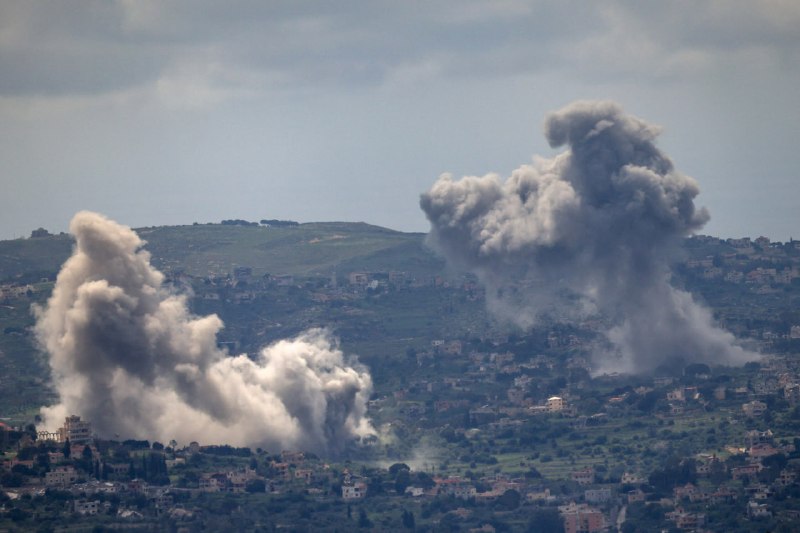
Israeli warplanes hit the southern Lebanese city of Nabatieh in a concentrated overnight barrage beginning in the early hours of 19 June 2026, killing at least 18 people and wounding 33 others according to the Lebanese Ministry of Health. The Cradle, citing its own correspondents, reported the strikes on Nabatieh at 07:11 UTC. By 07:27 UTC, Al-Alam Arabic had tallied four distinct raids on the Nabatieh district. The health ministry said the intensity of the strikes was preventing the evacuation of the dead and wounded.
The raid pattern — heavy, repeated, geographically concentrated — fits a familiar template in this corridor: a single southern town absorbs a full night of airpower while medical teams are blocked from reaching the wounded. It also fits an escalation logic that has been visible for months, in which the volume of strikes on Lebanese territory rises faster than the volume of political attention paid to it.
What the Lebanese side is reporting
The casualty figures moved quickly through the morning. The Lebanese Ministry of Health put the toll at 18 killed and 33 wounded by 06:25 UTC, citing strikes on southern Lebanon "since midnight," and updated the situation by 06:28 UTC to warn that ongoing raids were preventing evacuation of the dead and injured from the strike sites. Within roughly 40 minutes, the Abu Ali Express channel, sourcing local reporters on the ground, was reporting 23 dead since midnight, with the air force still striking "powerfully and extensively" across a wide front of the south.
Both accounts converge on the same basic facts: this was a large, multi-target air operation against southern Lebanese population centres, concentrated in and around Nabatieh, and not a single pinpoint strike against a specific military site. The health ministry's choice of language — that the raids were preventing the evacuation of the martyrs and wounded — is a tell. Ambulances in southern Lebanon have been hit repeatedly in previous rounds of escalation, and ministry communiqués have begun to flag this risk in nearly every major incident since late 2025.
Nabatieh itself is not a frontier village. It is the principal city of the Nabatieh Governorate, a regional capital with a hospital, university and a population that swells with displaced families from surrounding villages in wartime. Striking it has both a tactical and a signalling function — it stretches the air force's footprint away from the immediate border edge and it warns the civilian population further inland that no southern town is outside the operational envelope.
What this looks like from the Israeli side
The Israeli framing of raids into southern Lebanon has, since the resumption of major exchanges in 2023, rested on three claims: that Hezbollah or Hezbollah-aligned units have rebuilt infrastructure near the border; that precision strikes are aimed at those targets rather than at civilian areas; and that any reporting of civilian casualties is, at least initially, presumed to reflect co-location of those capabilities with non-combatants.
None of those claims can be evaluated from the materials available in this reporting window — the IDF spokesperson's unit has not, in the items reviewed here, issued a strike-by-strike read-out of the overnight Nabatieh raid, and the Western wires have not yet published their own tally. That silence is itself part of the story. A 4 a.m. raid on a regional capital in southern Lebanon, producing 18 to 23 dead within hours, is the kind of event that usually produces an Israeli military statement within 90 minutes. The absence of a clean public ledger at the time of writing leaves a vacuum that both Israeli and Lebanese narratives are already filling in their own registers.
What the structural picture looks like
Strip the rhetoric away and what remains is a pattern. Southern Lebanon, and Nabatieh in particular, has become the pressure-release valve for the unresolved war between Israel and Hezbollah's parent architecture. The mechanism is straightforward: when diplomacy between Israel and the Lebanese state stalls, or when the political cost of a wider campaign on the Israeli side is judged too high, the air force increases the tempo on southern Lebanese towns. When the political cost of that tempo rises — usually because of high-profile civilian casualties — the tempo eases, sometimes briefly, sometimes for months.
What is unusual about the present round is the speed. Eighteen to 23 dead in roughly six hours, in a single district, with evacuation routes blocked by the intensity of the bombardment, is a casualty rate that the Lebanese state has been able to absorb politically only because its southern districts are accustomed to it. That normalisation is itself the structural change. Each round of escalation sets a new ceiling for what is reported as routine.
A second structural feature is the information asymmetry. Telegram channels sympathetic to the resistance axis — Al-Alam Arabic, The Cradle, Abu Ali Express — publish strike-by-strike accounts within minutes. Israeli sources tend to release aggregated, post-operational summaries. International wire coverage, when it arrives, often arrives after the operative Israeli narrative has already taken root in Western audiences. The result is a reporting environment in which the first frame belongs to one side and the corrections, if they come, are footnotes.
What is uncertain, and what is contested
Three things remain genuinely contested at the moment of writing.
First, the casualty count. The Lebanese Ministry of Health's figure of 18 dead and 33 wounded is the authoritative preliminary. The Abu Ali Express figure of 23 dead is higher and is sourced to ground reporters rather than the ministry's central tally. The gap is most likely explained by reporting lag — the ministry counts confirmed dead from hospitals; field reporters are counting bodies still on site. In previous rounds of escalation in this corridor, the ministry's final count has typically converged upward toward the field count within 24 hours.
Second, the target set. The Israeli military has not, in the items reviewed, identified which specific sites were struck in Nabatieh district. Without that identification, it is impossible to verify the Israeli framing that the operation was aimed at military infrastructure, or the Lebanese framing that it was aimed at civilian areas.
Third, the strategic intent. A raid of this size on a regional capital could be read as a one-off pressure operation, as the opening move of a larger ground-air campaign, or as a retaliatory strike for a specific earlier incident that has not yet been publicly named. The Israeli political and military leadership has not yet clarified which of these readings is correct.
Stakes
For southern Lebanon, the immediate stake is medical. The health ministry's warning that evacuation routes are blocked is, in plain terms, an announcement that the wounded are dying because they cannot be reached. The next 12 to 24 hours will determine whether the air tempo eases enough to allow ambulances to operate, or whether the count rises sharply.
For Lebanon's central government, the stake is sovereignty. Each round of large-scale strikes on a regional capital produces a renewed debate in Beirut about whether the Lebanese army, the UNIFIL deployment, and the diplomatic track can produce anything more than a public-relations response. The Lebanese state has consistently framed these strikes as violations of its sovereignty; the consistent absence of an effective counter-mechanism is the structural fact that frame is reaching for.
For Israel, the stake is escalation management. A 4 a.m. raid on Nabatieh producing 18 to 23 dead is not, by historical standards in this corridor, an unusual operation. It is unusual in its concentration, in its target, and in the speed at which it was launched. Each such operation narrows the menu of options available the next time a southern Lebanese front opens. The politics of the next 72 hours — Lebanese diplomatic mobilisation, UNIFIL positioning, Hezbollah's response — will indicate whether this is a discrete pressure move or the prelude to something larger.
This publication framed the overnight Nabatieh operation around the figures released by the Lebanese Ministry of Health and the on-the-ground reporting from regional outlets, because those are the only sourced numbers available in the immediate window. The Israeli military's strike-by-strike read-out, when it arrives, will be assessed on its own claims against the visible damage pattern; Western wire tallies, when they converge, will be incorporated in subsequent reporting.
Wire provenance
This editorial synthesis draws on the following public wire/social posts:
- https://t.me/wfwitness
- https://t.me/alalamarabic
- https://t.me/thecradlemedia
- https://t.me/TheCradleMedia
- https://t.me/alalamarabic
- https://t.me/abualiexpress
- https://t.me/alalamarabic
- https://en.wikipedia.org/wiki/Nabatieh