The Swoosh and the Trefoil: Inside Nike and Adidas's $400m World Cup Sponsorship War
As the 2026 World Cup kicks off across the United States, Canada and Mexico, Nike and Adidas have turned a tournament into a sponsorship arms race — and the maths behind it is reshaping how global sport gets paid for.
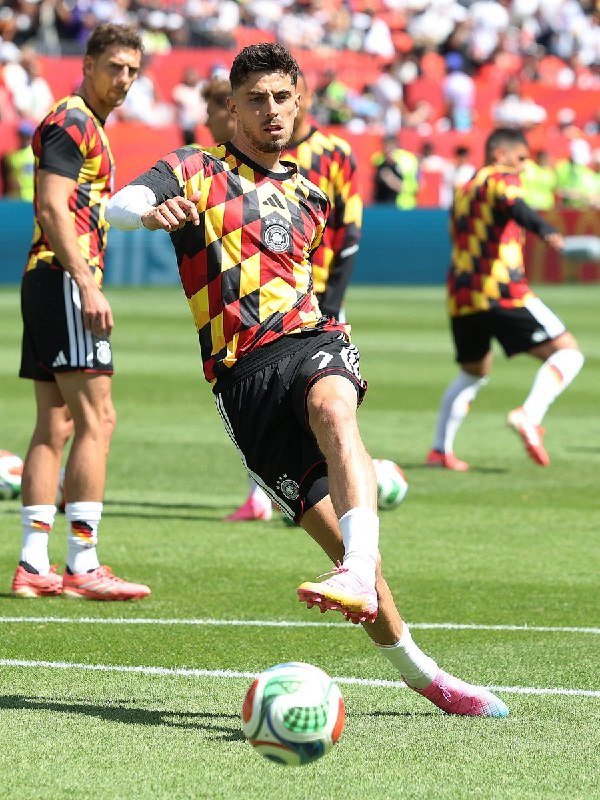
The contest for the most valuable television real estate in world sport no longer plays out on the pitch. By 19 June 2026, with the 2026 World Cup underway across venues in the United States, Canada and Mexico, the defining battle of the tournament is a commercial one — and it is being fought, dollar for dollar, between Nike and Adidas.
A sponsorship arms race, dressed up as a brand showcase, is the throughline of this World Cup. Both companies have stretched their marketing budgets to levels that would have looked reckless a decade ago. The headline figure attached to Nike's spend — north of $400m, according to BBC Sport reporting from 19 June 2026 — lands in a year when Adidas is doing what Adidas does at a World Cup: kitting the defending champions, and trying to remind the world that the Trefoil still belongs at the centre of the game.
The pattern is familiar. Sponsorship spending on World Cup-tier events has inflated for three tournament cycles running. What is new is the absolute scale, the cross-platform integration, and the willingness of both brands to treat the tournament less as an advertising opportunity and more as a season-long content business.
What the kits actually cost
The numbers being deployed are not normal marketing budgets. BBC Sport reported on 19 June 2026 that Nike has earmarked in excess of $400m for its World Cup activation, an outlay that covers broadcast spots, athlete deals, bespoke boot launches, and the kind of digitally produced behind-the-scenes content designed to perform across TikTok, YouTube and Instagram Reels simultaneously. Adidas's spend is smaller in headline terms but tightly concentrated on the Germany squad, a handful of marquee signings, and the architecture of the federation supply deals that have long given the brand a foothold in dressing rooms the world over.
The structural shift underneath the figures is that sponsorship is no longer a logo-on-shirt transaction. It is a vertically integrated content operation: kit, boot, social channel, in-stadium signage, and a documentary-style content roll-out that monetises the brand across the full calendar. The cost-per-impression calculus has changed because the surfaces have changed. A team's shirt is now a thumbnail, a backdrop, a meme template and a billboard in the same minute of broadcast.
Why both brands are gambling bigger
The commercial logic is straightforward, even if the price looks inflated. A men's World Cup reaches an audience that no other single sporting property can match. For Nike, it is a chance to deepen its grip on a generation of African and South American talent whose marketability inside and outside the tournament window far outstrips their domestic league profile. For Adidas, the German home market and a federation-deal network stretching from Argentina to Japan make the tournament less a marketing event than a renewal cycle.
The counter-narrative — that the brands are overpaying and will be unable to demonstrate a return on the outlay — is the framing that dominated sports-business coverage in 2022. It is also the framing both companies have spent four years dismantling. The 2023 women's World Cup, the 2024 Olympics in Paris and a packed club-season calendar gave the brands a content pipeline dense enough to amortise the World Cup spend across twelve months rather than six weeks. Underwriting the tournament is, increasingly, a way to underwrite the whole year.
The structural read
What is actually being built here is not a sponsorship. It is a streaming-era distribution channel that happens to wear a football shirt. The kit sponsor gets a guaranteed presence in the most-watched television event on earth, a halo of content rights that can be cut into short-form video at marginal cost, and an athlete roster whose value compounds across the next commercial cycle. The brand with the deeper bench of marketable players, in this reading, extracts more value from the same broadcast inventory. Nike's investment in Mohamed Salah, Vinícius Júnior, Kylian Mbappé and a long tail of emerging African and South American players is, in this light, not a marketing line item but an option on the next decade of football attention.
A second structural factor is geographic. With matches split across the United States, Canada and Mexico — the first tri-nation World Cup in the competition's history — North American broadcast rights holders and the North American consumer are the single most valuable audience the brands can buy in 2026. That tilts the entire media plan.
The stakes
The downside for the brands is reputational as much as financial. A World Cup cycle that ends with a player scandal, a boot malfunction broadcast in super-slow-motion, or a kit launch that fails to land online can convert hundreds of millions of marketing dollars into a quarter of bad press. The upside, for whichever company reads the room more accurately between now and the final, is the kind of market-share consolidation that compounds for years.
The longer view is that the 2026 tournament is the moment sponsorship spending on football ceases to be a defensive line item and becomes the principal commercial instrument of the global sports business. The brands that misjudge the cycle will spend four years trying to recover the ground they lost in six weeks this summer. The brands that read it correctly will be underwriting football's attention economy for the rest of the decade.
The Polymarket prediction market for the tournament winner, tracked through 18 June 2026, reflects the same audience attention that the brands are paying for in cash. Where betting flows move, broadcast audiences tend to follow. Both Nike and Adidas are betting, with very different portfolios, that they have read those flows correctly.
Desk note: Monexus framed this piece around the commercial mechanics of sponsorship inflation rather than the on-pitch story, on the view that the 2026 World Cup's most consequential decisions are being made in boardrooms, not dressing rooms. The wire coverage to date has emphasised star-player narrative; the structural read here is the one most outlets have left on the cutting-room floor.
Wire provenance
This editorial synthesis draws on the following public wire/social posts:
- https://x.com/polymarket/status/2065147761553489922