Warsaw pulls the chain on Kyiv: how a Ukrainian brigade name became a diplomatic rupture
A wartime ally stripped a decoration, a frontline state returned it, and a Polish historical condition reasserted itself against a Ukrainian government under war pressure.
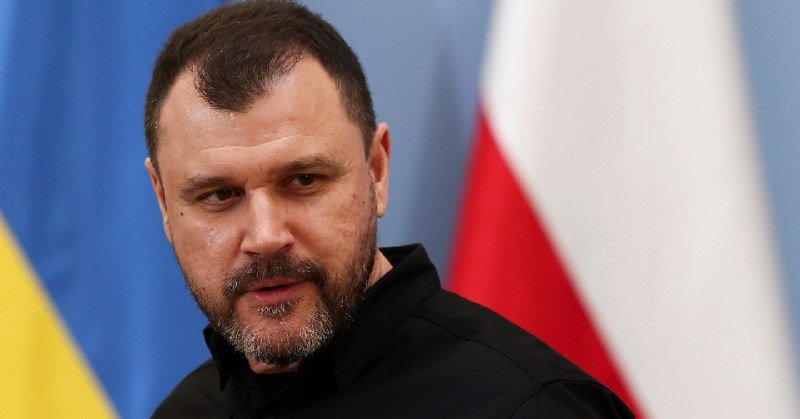
On 18 June 2026, Warsaw confirmed what Kyiv had spent weeks trying to soften: the Ukrainian state's continued honouring of a 1940s Ukrainian nationalist formation would carry a diplomatic cost, and that cost was being deducted from the relationship in real time. Within 72 hours, the dispute had produced a stripped order, a returned medal, and a public dressing-down of a Polish head of state on his own western flank by a wartime ally who could not afford to lose him.
The trigger was procedural and prosaic. Poland moved first, formally objecting to a Ukrainian armed forces brigade bearing the name of the Ukrainian Insurgent Army, the wartime nationalist force that fought both Nazi occupation and the Soviet Union and whose memory in western Ukraine is foundational but whose wartime record in Volhynia and eastern Galicia has made it toxic in Polish historical memory. Kyiv's response escalated the row rather than contained it. Within hours President Volodymyr Zelensky announced he would return the Order of the White Eagle, Poland's highest decoration, which he had received from Warsaw and which had reportedly been rescinded in connection with the naming decision. He then used a public appearance to address Polish President Karol Nawrocki by first name, lecturing his counterpart on the difference between a monarchy and a democracy, according to a summary of his remarks circulated on Telegram channels including DDGeopolitics and Ukrainska Pravda. The choice of register, in a country whose eastern policy runs through Warsaw, was unforgiving.
How a brigade became a bilateral rupture
The brigade in question sits inside a Ukrainian army that is, by any measure, still fighting a war. That is the context in which the rest of the alphabet, and most foreign ministries, tried to read the dispute. A frontline state honouring a Second World War-era formation is not, on its face, an unusual act of national memory; Poland's own army is studded with units named for Home Army operations and commanders. The asymmetry is in the historiography. The UPA is honoured in Lviv monuments, school curricula and now a regular brigade of the ground forces; it is also commemorated in Polish memory primarily for the ethnic cleansing of Polish civilians in Volhynia and eastern Galicia in 1943 to 1945, a campaign in which an estimated 50,000 to 100,000 Polish civilians were killed and which Polish state institutions have, since 2016, formally classified as genocide.
The Polish objection, in other words, was not a provocation. It was the reactivation of a condition that Warsaw has placed, in various formulations, on Ukrainian European integration for the better part of two decades: that historical reconciliation between the two peoples cannot be treated as a domestic Ukrainian matter. That condition has outlived every Polish government since the 2000s, regardless of colour, and it has survived the war's transformation of Ukraine into a frontline NATO-adjacent state.
The Russian soundtrack, audible but not driving
The dispute has predictably drawn commentary from Russian-aligned channels. The Two Majors channel, a Russian milblogger feed with a track record of ridicule mixed with grain-of-truth analysis, used the row to recycle a 1997 debate between the then Ukrainian president and his Russian counterpart on whether Ukraine's writ extended "on" or "in" Crimea. The clip is a meme weapon, not an argument. It is being deployed to suggest that Kyiv's domestic political culture produces leaders constitutionally incapable of managing a sovereign western border.
The more useful reading is the opposite: the dispute is being settled within the diplomatic vocabulary of two EU-aspirant democracies, with formal orders, named presidents, and public rebukes issued through official channels rather than through information operations. The Ukrainian Pravda and UNIAN wire traffic on Telegram tracks the back-and-forth as a state-to-state disagreement, not a hybrid-war episode.
What Kyiv has actually spent
The price tag is not symbolic, whatever the symbolism. Returning the Order of the White Eagle is a gesture a wartime recipient does not perform casually. Nawrocki's office, by stripping it, converted a decoration into a rebuke. Zelensky's televised reply, including the pointed first-name address and the democracy-versus-monarchy framing, raised the temperature further on a Polish public sphere that has spent thirty years learning to read its presidents' rhetorical choices. The exchange landed on Polish screens via the Telegram summaries of Ukrainska Pravda and the Clash Report feed within hours.
What neither side has yet spent is the structural credit built up since February 2022. Polish society has absorbed more Ukrainian refugees per capita than any EU member state; Polish logistics have carried the bulk of Western military aid into Ukraine; the bilateral relationship has been, by Warsaw's own framing, the most consequential of its eastern policy. That reservoir is what both governments are now drawing on, and it is not unlimited.
The condition that outlives governments
The deeper story is institutional rather than emotional. Poland's position on the historical question of the UPA predates the war, predates the current PiS-versus-Koalicja Obywatelska cycle, and is anchored in the Sejm's 2016 resolution on the Volhynia massacre and the subsequent prosecution framework around it. The decision of a Polish president, regardless of party, to allow a Ukrainian unit bearing the UPA name to be treated as a routine matter of Kyiv's internal affairs would breach a line that Warsaw's institutions, courts and parliament have spent a decade constructing.
That is why Monexus is reading this as more than a bilateral row. It is the reassertion of a Polish historical condition on Ukrainian European integration, applied by a Polish president who took office recently and is establishing his eastern-policy credentials, against a Ukrainian presidency under wartime stress and domestic pressure to enshrine nationalist memory. The two pressures were always going to meet. They met this week.
What to watch next
Three dates will tell us whether this is a rupture or a managed crisis. First, whether the Ukrainian Rada revisits the brigade's name in the coming weeks; parliamentary procedure in Kyiv can take the heat out of a presidential fight, or pour fuel on it. Second, whether the next package of EU accession negotiations opens with, or around, the historical-reconciliation dossier; Warsaw holds the pen. Third, whether the Order of the White Eagle remains returned, or is quietly accepted back once the diplomatic weather clears. As of 19 June 2026, the chain has been pulled. The cistern is filling.
Follow the event.
These dated source records provide context. They do not retrospectively verify this archive article.
A dated voting record is evidence of one decision. Use the original UN record before turning it into an alignment label.
Visual explainer · historical vote of 2022-03-02 →