Simmons, Titans lock in a $105.8m bet on a defensive pillar as the NFL's interior market resets
Tennessee extended Jeffery Simmons two years before it had to, at a number that will define the interior defensive line market for the rest of the league year. The wire called it continuity. The cap math calls it something sharper.
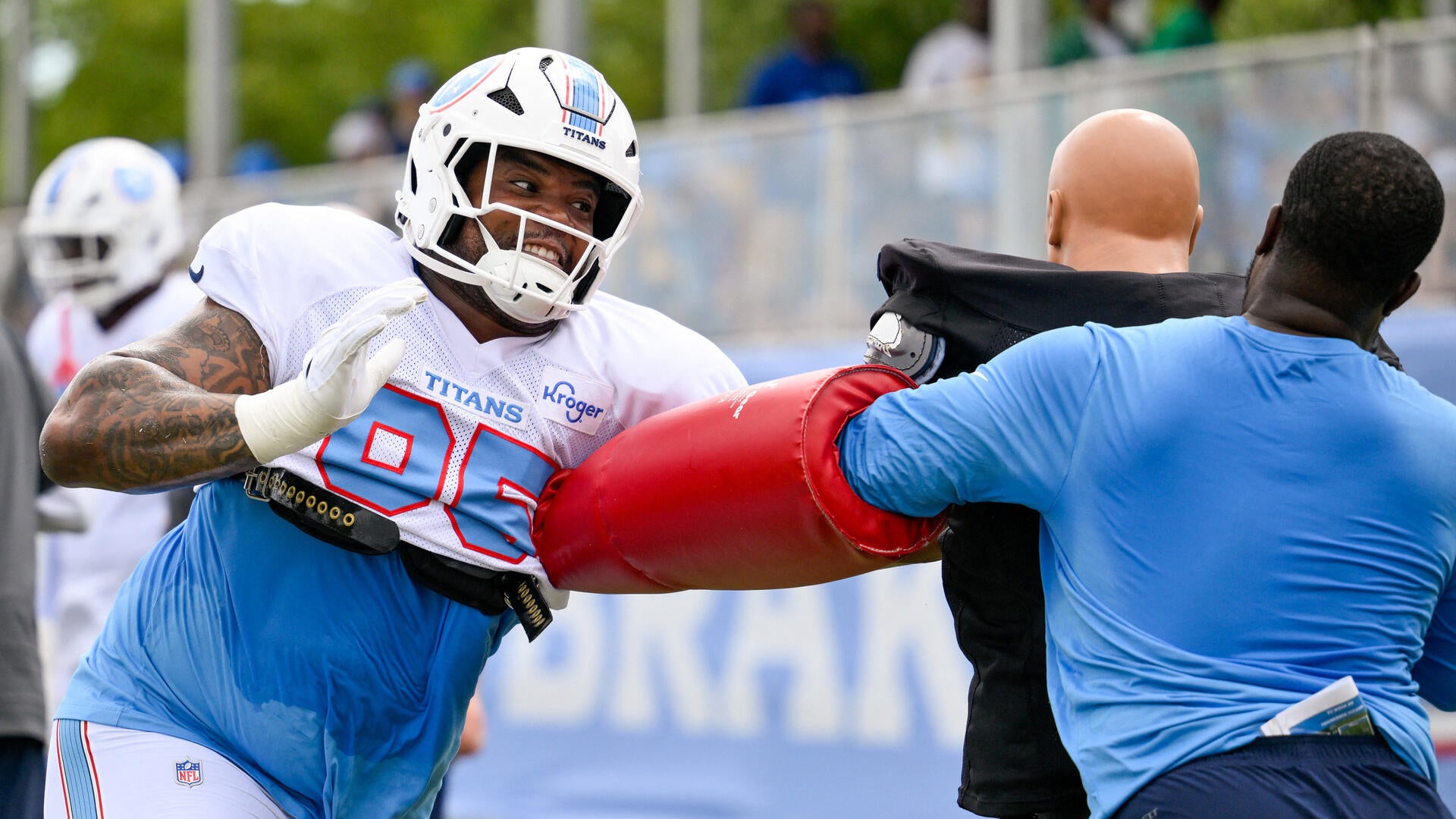
When the Tennessee Titans walked to the podium on June 19, 2026 and put a $105.8 million extension in front of defensive tackle Jeffery Simmons, they weren't simply rewarding a franchise pillar. They were drawing a line in the interior defensive line market, two years ahead of the curve, in a league where the going rate at the position had already cleared nine figures. Simmons, the third overall pick of the 2019 draft out of Mississippi State, had two seasons left on the deal he signed in 2024. The Titans could have waited. They didn't.
The contract lands at a moment when the league's defensive tackle market has visibly reset, and when a new head coach, Robert Saleh, is installing a defensive identity in Nashville that begins, as all good defenses do, with the trenches. The wire read this as a feel-good retention story, a continuity move, a vote of confidence in a player who had earned it. The more revealing read is what the number actually says about cap math, roster construction, and the Titans' belief that the window around Mike Vrabel's successor era opens now, not later.
The cap, accelerated
Two years. That is how far out Tennessee chose to extend a 28-year-old defensive tackle whose previous extension was already the cornerstone of the defensive line room. Doing the deal early, before the open market could fully reset, is the kind of cap management that lets a roster build around a player rather than chase him in free agency. The alternative is ugly: a 2027 season in which Simmons plays out the final year of his current deal with a full head of steam, and a 2028 free agent market where every team in the league is writing checks that make this one look restrained.
Interior defensive line salaries have already moved past the $33 million per year mark at the top of the position, per industry reporting tracked across the 2025 and 2026 off-seasons. Paying Simmons now buys certainty at a price that will look modest in retrospect if the market keeps climbing. Paying him after the 2027 season, when quarterbacks and edge rushers continue to inflate across the league, would have meant competing against a different baseline entirely.
What Saleh is actually installing
Saleh arrived in Nashville as one of the league's more recognizable defensive minds, a former head coach in the NFL whose reputation was built, above all else, on pressure up front. The new Titans operation under Saleh will live and die at the line of scrimmage. Simmons, a 6'4", 305-pound interior force with the rare combination of run-stopping mass and pass-rush juice, is the obvious cornerstone to build a Saleh-style defense around.
The wire coverage that accompanied Saleh's introduction leaned into the personal story of a coach living his father's dream of leading an NFL franchise. That framing is fair. The football story, however, is structural: a defensive head coach extends his best defensive player two years before he has to. That is how you telegraph scheme.
The market read
There is an honest disagreement about whether Simmons, productive as he has been, is a top-three interior defensive lineman in football on a per-snap basis. The Titans' answer in this contract is that the question doesn't matter. What matters is supply. There are perhaps a half-dozen players in the league who combine Simmons's run-defense weight with his ability to collapse pockets, and most of them are signed through at least 2027.
Paying the seventh-best interior lineman in football like a top-three player is the cost of certainty in a market where draft-and-develop rarely produces anything close to Simmons's level on the open market. The alternative is to draft a rookie, develop him for three years, and then pay him anyway, two years later, at a higher number.
Stakes and forward view
The extension positions the Titans in a specific way as the 2026 league year begins. It locks the most expensive piece of their defensive identity in place, hands the new head coach his anchor, and signals to the rest of the roster that this front office will pay for proven players on the defensive line, where replacement cost is highest. It also creates a downstream question the Titans will have to answer: who plays across from Simmons in 2027 and beyond, and on what number.
June 19 is exactly the kind of date that looks quiet on the NFL calendar but sets the table for the rest of the off-season. Watch the next wave of interior defensive line extensions across the league. If other teams follow Tennessee's lead and pay early rather than late, this contract will be remembered as a market-setter rather than an outlier. If teams wait and the market explodes in 2027 and 2028, the Titans will look like they stole two years of cap certainty for the price of impatience.
Either way, the bet is the bet. Simmons is the pillar. The Titans have decided what they are building around, and they have put the money where the mouth is.
Sources
- Wikipedia, Jeffery Simmons profile, https://en.wikipedia.org/wiki/Jeffery_Simmons
- ESPN, "Oilers re-sign Dickinson to 5-year, $20M contract" (2026-06-21), https://www.espn.com/nhl/story/_/id/oilers-dickinson-extension
- ESPN, "'Look at my son': How Titans' Robert Saleh is living his father's dream as an NFL head coach" (2026-06-21), https://www.espn.com/nfl/story/_/id/titans-robert-saleah-interview
Desk note: Where the wire framed the extension as a continuity play, Monexus read it as a cap-and-scheme statement, and as an early bet on where the interior defensive line market is heading.