Smotrich's Gaza and Lebanon provocations expose the fringe of a cabinet that governs Israel
Israel's far-right finance minister has spent a single morning calling for riots inside Gaza and threatening all-out war on Lebanon. The pattern is no longer rhetorical excess — it is policy, and the cabinet tolerates it.
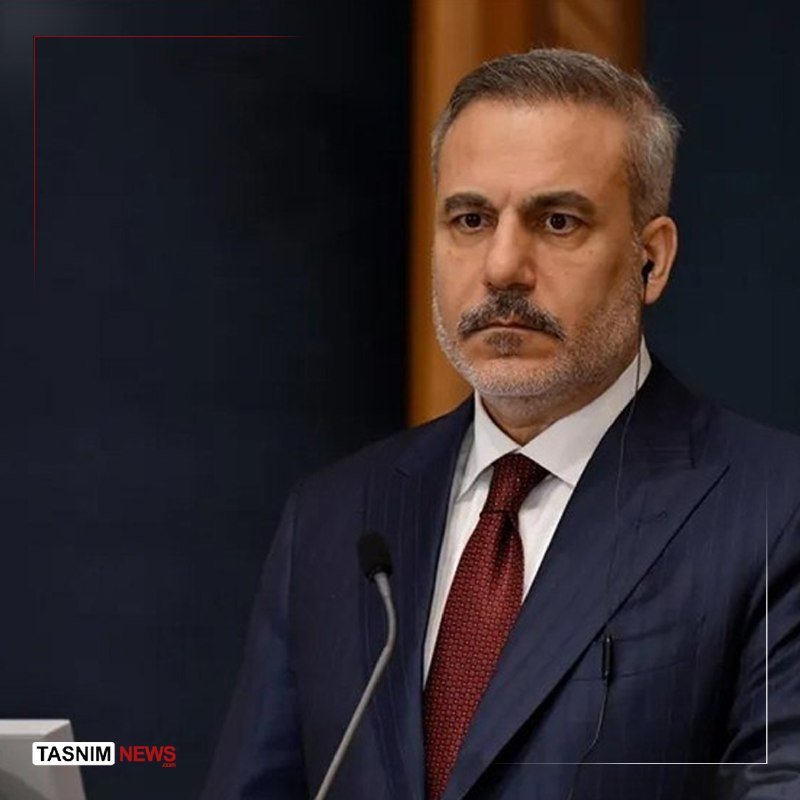
On the morning of 19 June 2026, Israel's Finance Minister, Bezalel Smotrich, made two statements in quick succession that would, in most Western democracies, have ended a political career. According to Iranian state-linked outlet Tasnim News, writing on 19 June 2026, Smotrich called on residents of Gaza to launch riots against Hamas, framing the appeal as part of a broader push to intensify pressure on the territory's governing authority. Roughly fifteen minutes later, in a separate thread reported on X by Sprinter Press the same morning, he laid out a postwar vision in which Gaza is left in ruins, Palestinians are pushed to migrate, and Israeli borders are redrawn to absorb the territory. The same morning, Tasnim reported, he pivoted north and threatened Lebanon with all-out war in response to developments along the border.
These are not the ruminations of a backbencher. Smotrich is a sitting minister, a member of the security cabinet, and the head of a settler-aligned party that is now part of the governing coalition. When a minister with that portfolio makes a coordinated set of statements on the same day — appealing to Gazans to rise against their rulers, sketching a demographic solution, and warning of a regional war — the question is not whether the rhetoric is inflammatory. It is whether the rhetoric is now the policy.
The provocation, taken at face value
Read the three statements together and the through-line is consistent. The first, to Gazans, is an incitement to internal uprising — a deliberate attempt to break the monopoly of armed force inside the strip by appealing to civilians over the head of Hamas. The second is a plan: a Gaza left economically uninhabitable, a population encouraged to leave, and Israeli administrative control extended to absorb the territory. The third, directed at Beirut, is a threat of escalation that bypasses the negotiated framework governing the Israel–Lebanon frontier.
Smotrich's own political movement, Religious Zionism, has long argued for the re-occupation of Gaza and the formal extension of Israeli sovereignty over the West Bank. The novelty is not the ideology. It is the venue. These are now cabinet-level statements, delivered by a minister with authority over the country's economic policy, and they have not been disavowed by the prime minister's office.
Why the framing matters
Western coverage of Israeli politics has, for two decades, tended to treat far-right ministers as a domestic peculiarity — the cost of coalition arithmetic, contained by the prime minister, balanced by more moderate partners. That framing deserves a hard second look. A finance minister who openly calls for ethnic displacement of a population under military occupation is not exercising domestic policy discretion; he is articulating a position on a foreign civilian population under his government's control.
There is also a structural point. Settler movement politics in Israel has been moving, steadily, from the margins of the right to the centre of the governing coalition. Smotrich himself has held ministerial office since 2022 and now sits inside the security cabinet that decides on operations in both Gaza and the north. When a politician moves from opposition to cabinet without softening his maximalist positions, the usual journalistic shorthand — that the system will absorb the extremist — stops being descriptive. It becomes wishful.
The counter-read, and why it does not hold
The most common counter-reading is that Smotrich speaks for himself, that the security cabinet operates by majority, and that his statements are not Israeli government policy. The first half is technically true; ministers can speak outside cabinet decisions. The second half is harder to sustain. Smotrich's party holds seats without which the coalition does not have a majority. He is the minister of finance — the official who controls the budgets of settlements, the civil administration in the occupied territories, and the economic instruments that make both the Gaza blockade and West Bank settlement expansion operational. Strip away the rhetoric and you find the levers.
The second counter-read, common in pro-government commentary, is that these statements are addressed to domestic audiences, not to Gazans or Lebanese, and should be read as electoral positioning ahead of coalition tensions. That may be true of tone, but it does not change the content. A call to Gazans to riot is not a domestic press release. A threat of all-out war on Lebanon is not a budget statement.
Stakes, short and long
The short-term stakes are operational. Calls for popular uprising in Gaza are read inside the strip as a green light for collaborators; in a context of acute food and medical shortages, they raise the cost of any ceasefire negotiation. Threats of all-out war on Lebanon, delivered by a sitting minister rather than a defence official, complicate the US- and French-brokered framework that has kept the northern border quiet.
The longer-term stakes are about the trajectory of the Israeli state. A government that tolerates, and depends on, a minister who publicly argues for demographic engineering in one territory and preventive war in another is not a centrist coalition under strain. It is a coalition whose most empowered members want outcomes that the rest of its members are unwilling to disavow. The question for the cabinet, the opposition, and Israel's external partners is whether the system has the capacity to draw a line — and what happens if it cannot.
What remains uncertain
The source material for this column is unusually narrow: Iranian state-linked Tasnim and an X account, Sprinter Press, whose framing is openly hostile. Tasnim's translations of Israeli political speech are typically faithful to the original wording; the verifiable risk is selection — which statements Tasnim chose to amplify, and what was said in the same period by ministers more directly responsible for defence and diplomacy that would change the picture. The prime minister's office has not, as of this writing, responded to the morning's three statements. The honest reading is that the provocations are real and the policy response is not yet visible.
— Monexus framed this against the wire default of treating far-right ministers as coalition ballast, on the grounds that the position Smotrich now holds makes that framing structurally obsolete.
Wire provenance
This editorial synthesis draws on the following public wire/social posts:
- https://t.me/s/JahanTasnim
- https://t.me/s/JahanTasnim
- https://x.com/sprinterpress/status/2067880654419722240
Follow the event.
These dated source records provide context. They do not retrospectively verify this archive article.
Separate what the nuclear watchdog reported from what it could not determine after the June 2025 strikes.