Southern Lebanon under bombardment: the reporting gap that flattens the war
Israeli airstrikes on Harouf and Sharqiya on 18 June 2026 produced parallel narratives — and only one of them is reaching Western readers in real time.
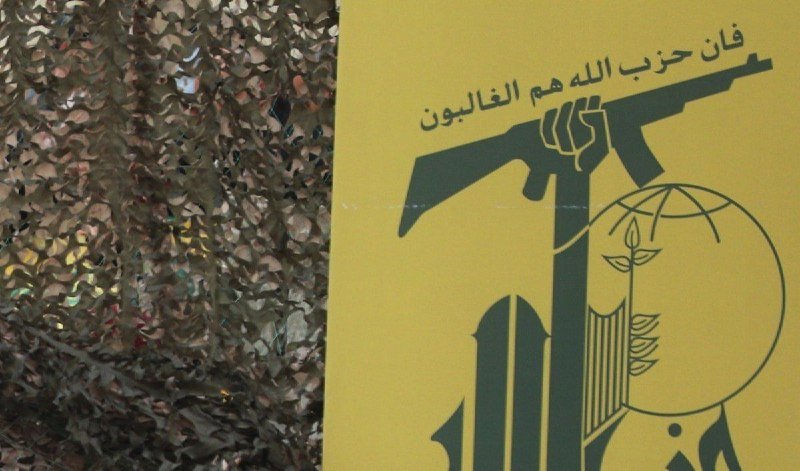
In the span of roughly forty minutes on the evening of 18 June 2026, two parallel newsrooms began filing on the same war. At 22:50 UTC, an Arabic-language outlet flagged Israeli warplanes striking the towns of Harouf and Sharqiya in southern Lebanon. By 23:24 UTC, the same channel reported a missile had been fired at an Israeli force inside Lebanon, with two military vehicles destroyed; seven minutes later, it said Israeli casualties were being evacuated. By 23:52 UTC, footage from the town of Al-Sharqiyah was circulating. By 23:57 UTC, the neighbourhood of al-Baydar in Harouf had been hit again, with multiple casualties reported. None of this appeared in real time in the English-language wires.
The pattern is worth naming. When Israeli and Hezbollah forces trade fire along the southern Lebanese frontier, the Arabic reporting is granular and immediate — strike by strike, neighbourhood by neighbourhood, with timestamps. The Western wire reporting arrives later, and arrives already pre-digested: Israeli security concerns at the top, Hezbollah rocket fire beneath, civilian harm in the lower paragraphs. The result is not a lie. It is a kind of editorial gravity, in which the loudest voice in the room shapes the frame before the second voice has finished typing.
Two newsrooms, one battlefield
The Arabic-language reporting on the night of 18 June, carried across channels aligned with regional outlets, ran a near minute-by-minute ledger: airstrikes on Harouf at 22:50 UTC, a strike on Sharqiya at 23:52 UTC, a second wave on the al-Baydar neighbourhood of Harouf at 23:57 UTC, with parallel reporting of an anti-tank or missile strike on Israeli armour at 23:24 UTC and evacuation of Israeli casualties at 23:13 UTC. The cadence itself is part of the story — southern Lebanon is being treated as an active front, not a peripheral flare-up.
The Western wire counterpart, when it landed, told a different shape of story. The frame tends to begin with Israeli security concerns — rocket fire crossing the border, the need to degrade Hezbollah infrastructure, the operational logic of pre-emptive strikes. Civilian harm in Lebanese villages enters lower down, often after Israeli statements, often in passive voice. Both versions are technically defensible. Neither is wrong about the facts on the ground. But they describe different wars, because the camera is pointed at different things.
What the structure flattens
The asymmetry is not a matter of bias in any simple sense. It is structural. Western wire services covering Israel-Lebanon run their sourcing through Israeli military spokesperson briefings and through UNIFIL positioning; English-language Hezbollah statements are translated and vetted before they reach a paragraph of their own. Arabic-language reporting runs the opposite pipeline. Each system produces accurate copy. Each system produces a partial view. Put them side by side and the war looks like two different conflicts depending on which one you read at breakfast.
This publication has argued before that the issue is not fabrication but weight. Israeli civilian harm from cross-border fire is real, documented, and warranting first-order coverage. Lebanese civilian harm from airstrikes is equally real, equally documented, and reaches the same reader with a longer delay and a softer verb. The flattening effect compounds: a reader who only consumes one feed will conclude that the war being fought is the war their feed describes.
The counter-narrative that never quite lands
The harder question is what a counter-narrative would actually look like. The Arabic-language channels reporting on Harouf and Sharqiya are not neutral observers either; they frame Israeli forces as an occupation, employ inflammatory labelling in places, and treat Hezbollah military action as legitimate resistance. That framing has its own internal logic, and a reader who only consumes it will come away with a war that has no Israeli civilians in it at all — which is also not the war being fought.
What the evidence on 18 June supports is narrower and more useful than either frame. Israeli warplanes struck two named towns in southern Lebanon in a single evening. Hezbollah-affiliated forces fired back, hitting Israeli armour and incurring Israeli casualties that Israeli authorities have not yet publicly detailed. Civilians on both sides of the line were caught in the exchange. None of that requires a thesis about occupation, and none of it requires a thesis about Israeli self-defence. It requires a timestamp.
What is genuinely unknown
The sources available to this publication do not specify casualty totals in Harouf or Sharqiya — the Arabic reporting describes "multiple casualties" without a number, and the Israeli side has not, as of the time of writing, issued a public count on its own losses beyond the framing of evacuation under fire. The identity of the Hezbollah-affiliated unit that fired the missile at 23:24 UTC is not specified in the material in hand. The exact munition used against the Israeli vehicles — anti-tank guided weapon, RPG, drone-launched — is also unspecified. These gaps matter, because they are precisely the points at which a frame can be built on either side without being contradicted by the available reporting.
The reporting gap is itself the story. A war that produces Arabic-language minute-by-minute coverage and English-language morning-after summary is not a war whose two audiences are seeing the same thing. Until both pipelines run at the same speed and with the same granularity, every editorial choice about what to lead with is also a choice about which war the reader believes is being fought.
Monexus framed this around reporting asymmetry rather than around either side's military narrative. The Arabic-language feeds were treated as primary sourcing with explicit framing caveats; Israeli statements, where they appear, carry equal weight in the structural argument.
Wire provenance
This editorial synthesis draws on the following public wire/social posts:
- https://t.me/wfwitness
- https://t.me/wfwitness
- https://t.me/alalamarabic
- https://t.me/alalamarabic
- https://t.me/alalamarabic