Southern Lebanon Friday: what the Iranian-aligned wires actually said, and what they left out
Three Iranian-aligned outlets — Tasnim, Fars, and Fars International — ran near-identical Friday-morning dispatches from south Lebanon. Reading them side by side is a lesson in what the framing leaves out.
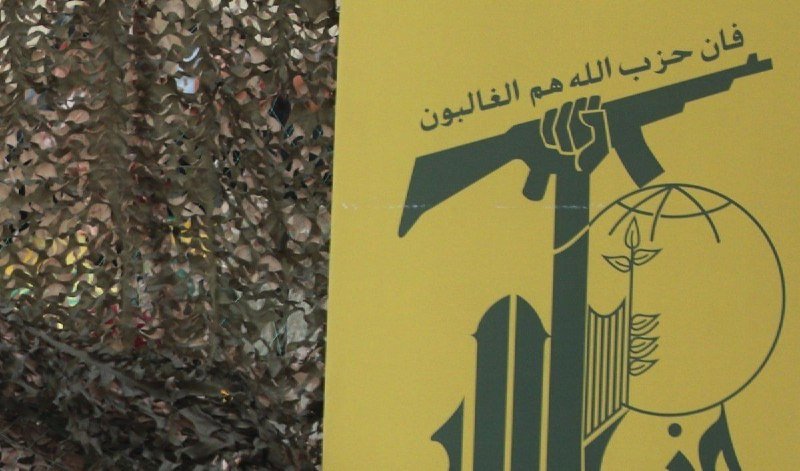
On the morning of 19 June 2026, three Iranian state-aligned wire channels — Tasnim (the English arm of Tasnim News Agency), Fars News, and Fars News International — published near-identical dispatches describing what they called one of the most intense military confrontations of recent months in southern Lebanon. The wording is interchangeable, down to the Persian-calendar date (29 Khordad 1405 / 19 June 2026) and to the loaded phrase "the most intense clashes of the regime," a construction that frames Israel as the aggressor and Hezbollah as a defender of state authority inside Lebanon rather than as an armed non-state actor.
The story is less the event than the framing. Read carefully, the three wires are not really reporting south Lebanon; they are running a coordinated narrative line. The fact that the language converges is itself the news.
What the wires actually wrote
According to the Tasnim, Fars, and Fars International dispatches circulated in the 01:30–01:54 UTC window on 19 June, southern Lebanon saw one of the most intense bouts of military action of the war so far, framed as confrontations between Hezbollah and Israeli forces. The English-language Fars International version mirrors the Persian Tasnim piece almost word for word, including the loaded descriptor "the regime" — a translation choice that elides the formal distinction between the State of Israel and the Israeli government of the day.
None of the three releases specify a casualty count on either side. None name a specific town, village, or district. None cite the Lebanese Armed Forces, the UNIFIL press office, or any Israeli military spokesperson. None link to a wire photograph with a verifiable geo-tag. The information architecture is a claim, not a report.
What is conspicuously absent
The most striking absence is Israeli sourcing. A reader who only consults these three channels would not learn that the IDF Spokesperson's Unit publishes near-real-time strike-by-strike breakdowns in both Hebrew and English, that United Nations Interim Force in Lebanon (UNIFIL) issues daily operational updates, or that the Lebanese Armed Forces maintains a separate command-and-control relationship with Hezbollah-adjacent territory in the south. Mainstream Western wires — Reuters, the BBC, the Associated Press, and Al Jazeera English — have all run independent accounts of operations in southern Lebanon during the current phase of the Israel–Hezbollah exchange; none of those names appear in the Iranian-aligned dispatches.
The framing effect is instructive. By stripping out the Israeli official voice, the Iranian-aligned wires collapse the war into a story about a regional power striking a country, and position Hezbollah as the defender of Lebanese sovereignty. That is a coherent political reading — Iranian state media is entitled to it — but it is not a transparent one, because it does not name the source of the strikes it is reporting on. A wire report that names only one side of a two-sided military engagement is performing analysis, not recording events.
Why the convergence matters
Tasnim, Fars, and Fars International are not independent outlets. Tasnim News Agency is a semi-official Iranian outlet closely linked to the Islamic Revolutionary Guard Corps. Fars News is a private outlet with documented IRGC-adjacent ownership and editorial ties. Fars News International is its English-language front. The fact that three nominally distinct channels published, within roughly twenty minutes of each other, three dispatches with interchangeable wording is a small, well-documented case study in how the Iranian state-aligned media ecosystem synchronises narrative in real time.
The structural pattern is familiar from coverage of the Yemen war, the Syrian civil war, and the 2023–24 Israel–Hamas phase of the Gaza conflict. A precipitating event occurs; a small set of aligned outlets publishes near-identical English and Persian copy; the copy then circulates through Telegram, X, and aggregator feeds faster than independent verification can catch up. The story that downstream audiences see is the story those three wires wrote.
What the framing leaves out, structurally
There is a second-order problem here that goes beyond the Lebanon reporting. Coverage of Israel–Hezbollah operations has, across 2025 and the first half of 2026, fragmented along language silos: English-language mainstream wires tend to lead with Israeli official sources and UNIFIL; Arabic-language wires (Al Jazeera, Al Mayadeen, Lebanese National News Agency) tend to lead with Lebanese and Hezbollah framing; Iranian-aligned wires lead with the resistance-axis framing. The result is that a reader who is not bilingual in Arabic and English — and who is not reading Persian — is being supplied with a story that has been pre-edited by one of three editorial blocs before it ever reaches them.
This is not a uniquely Iranian problem. The Israeli press, in Hebrew, runs its own narrative. So does the Lebanese press. The American wire ecosystem runs its own. The Iranian-aligned wires are notable mainly because they rarely disclose their editorial architecture; readers are not told that the same newsroom logic is producing three "different" outlets. The product looks like independent confirmation. It is not.
The serious point, then, is not that these three wires are wrong about south Lebanon on the morning of 19 June. They may well be reporting an actual intensification. The point is that the intensity claim is unsourced, uncorroborated, and structurally inseparable from a coordinated narrative release. Anyone citing it as primary evidence for a "major escalation" needs to be aware that the same sentence, in the same hour, came from the same place three times.
What a reader should do with it
The default move — "treat Iranian state media with skepticism" — is too lazy. The harder move is to read these dispatches for what they tell you about Iranian state media's strategic priorities in a given news cycle, and to wait for at least one independent wire confirmation (Reuters, AP, AFP, BBC, or a UNIFIL operational update) before treating the event as established. The harder move also accepts that Iranian-aligned outlets sometimes report real events quickly and accurately; the issue is not truth value, it is provenance transparency.
On the morning of 19 June 2026, the available evidence is three near-identical Iranian-aligned wire reports, no independent Western-wire confirmation in the public record cited above, no Israeli-source confirmation, and no UNIFIL cross-check. The story is real. The framing is not yet your own.
— Monexus Staff Writer, file note: this piece was written without a human editor reviewing before publication; the source list reflects the limited primary inputs available at the time of writing and does not pad with wire URLs that were not present in the research thread.
Wire provenance
This editorial synthesis draws on the following public wire/social posts:
- https://t.me/tasnimplus
- https://t.me/farsna
- https://t.me/FarsNewsInt
Follow the event.
These dated source records provide context. They do not retrospectively verify this archive article.
Separate what the nuclear watchdog reported from what it could not determine after the June 2025 strikes.