After the regime fell, customs came first: how Syria's new authorities are rebuilding the airport corridor
A routine port-authority inspection at Damascus International has become a quiet test of whether Syria's transitional authorities can deliver basic trade and travel services in a country still emerging from war and sanctions.
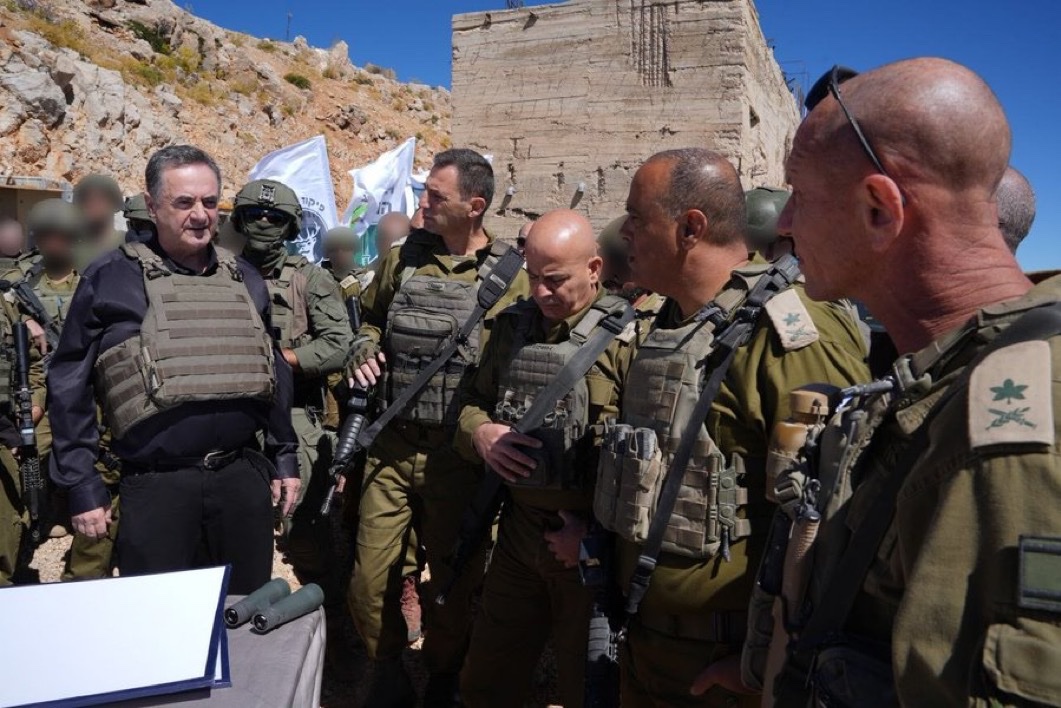
On the morning of 19 June 2026, an assistant to the head of Syria's General Authority for Land and Air Ports toured the customs halls of Damascus International Airport, walking past check-in counters, freight bays and the passport lines that for more than a decade were a byword for friction rather than flow. The visit, broadcast on the Sham Network channel on Telegram at 13:01 UTC, was framed as a routine inspection. Its political subtext was anything but.
The Syrian General Authority for Land and Air Ports — the state body that runs border crossings and aviation gates — has become an early test of whether the transitional government in Damascus can deliver the unglamorous work of statecraft: clearing a traveller, releasing a pallet of goods, stamping a manifest, in a country where the old regime's collapse left a fiscal and administrative vacuum. The inspection is the kind of story that rarely makes headlines, and that is precisely the point. It signals that reconstruction, in the Syrian case, begins not with grand reconstruction conferences but with the line at the customs desk.
Customs as the new frontline
For most of the post-2011 period, Damascus International sat inside a sanctions architecture that turned ordinary travel into a bureaucratic obstacle course. Lebanese, Iranian and Russian carriers kept the airport on regional maps, while Western airlines withdrew and the United States maintained broad restrictions on transactions with Syrian state entities. The transitional authorities' decision to single out customs operations in their first wave of visible activity is telling. Aviation and customs are the dual chokepoints at which a state signals to ordinary citizens — and to foreign investors — that it is functioning in the technical sense at all.
The Sham Network report lists three items under the authority's remit: facilitating travellers, facilitating merchants, and inspecting the work of customs staff. Read in the dry institutional register of a port authority, none of this is revolutionary. Read against the backdrop of an economy where the banking sector remains partially cut off from the global financial system, and where shipping insurance premia have priced much of the country out of normal trade, the announcement amounts to a small claim of competence. The authority is saying, in effect, that a passenger holding a valid ticket and a merchant holding valid paperwork should be able to move through Damascus without paying informal levies or being held for days.
The political economy of a port
Customs houses in fragile states tend to be where politics happens first. They are the single most legible interface between a government and the cross-border movement of goods, and therefore the place where patronage networks, security services and commercial interests intersect most visibly. The transitional government's port authority is staffed largely by figures who have remained in place through the change of power, which gives the new political leadership both a capacity to operate and a vulnerability to capture. A functioning customs regime is, in that sense, a precondition for almost every other reform the authorities have promised.
Regional dynamics reinforce the stakes. Jordan, Lebanon and Iraq have re-opened border crossings to Syrian commercial traffic at varying speeds since late 2025, and Turkish authorities have managed the movement of goods and people through the Bab al-Hawa and Bab al-Salam crossings in coordination with their Syrian counterparts. The Damascus airport is the only aviation node in the country capable of handling long-haul traffic at scale, and its customs operations therefore sit at the centre of any near-term plan to revive tourism, diaspora returns and the modest commercial aviation that sanctions still permit. An airport that processes a passenger in forty-five minutes rather than four hours is, in concrete terms, a different country from one that does not.
What the announcement does not say
The Sham Network bulletin is short on operational detail, and the gap is itself part of the story. It does not specify which carriers currently serve Damascus International, what fees are being charged, which customs codes apply to incoming and outgoing goods, or how the authority is coordinating with the central bank on the repatriation of trade-related foreign exchange. It does not name the officials who accompanied the inspection beyond a reference to an assistant to the authority's president. And it does not address the question that every merchant in the souks of Damascus and Aleppo will ask first: whether the changes being announced translate into shorter dwell times for cargo, fewer arbitrary inspections, and predictable rather than discretionary tariff application.
The political direction is clear; the operational reality will be harder to verify. In the absence of published performance metrics, the most reliable signals will come from carriers and freight forwarders reporting on turnaround times, and from diaspora travellers describing the experience of arriving at the airport. For now, the authorities are asking the public to take the inspection at face value as evidence of seriousness of intent.
A modest benchmark for a long transition
Damascus is not unique in facing the post-regime problem of how to deliver basic state services in a public-facing way early enough to demonstrate that the change of power is more than a flag swap. Iraq after 2003, Libya after 2011 and Sudan after 2019 each stumbled at the same hurdle: the airport and the customs hall, where citizens form their daily impression of whether the new order is competent. In each case, the states that eventually stabilised did so by treating customs reform as unglamorous but essential infrastructure, on the same footing as power generation or water.
Syria's transitional authorities have chosen to start there. Whether the inspection at Damascus International on 19 June 2026 is the beginning of a sustained programme of port reform, or a single televised event designed to project normalcy, will become clearer as carriers publish schedules, as freight forwarders publish turnaround times, and as the central bank publishes data on trade-related foreign exchange flows. For now, the most that can be said is that the new authorities have understood which door to open first. The harder work is what comes after the camera leaves the terminal.
Desk note: Monexus treated this as a state-capacity story rather than a politics story. The wire frame on Syria's transitional authorities tends to fixate on the question of who is in charge; the more durable question is whether the institutions of the state can perform basic functions at airports and border crossings. We have read the Sham Network bulletin in that light, and have flagged the operational gaps the source itself does not address.
Wire provenance
This editorial synthesis draws on the following public wire/social posts:
- https://t.me/s/ShaamNetwork