The $80 Billion Question: Washington's Iran War Ledger Is Now Coming Due
The same hour Vance met Iranian officials in Switzerland, Trump threatened to restart the war and seize Hormuz. The $80 billion ledger is now the argument, and the Israeli public has already rendered its verdict.
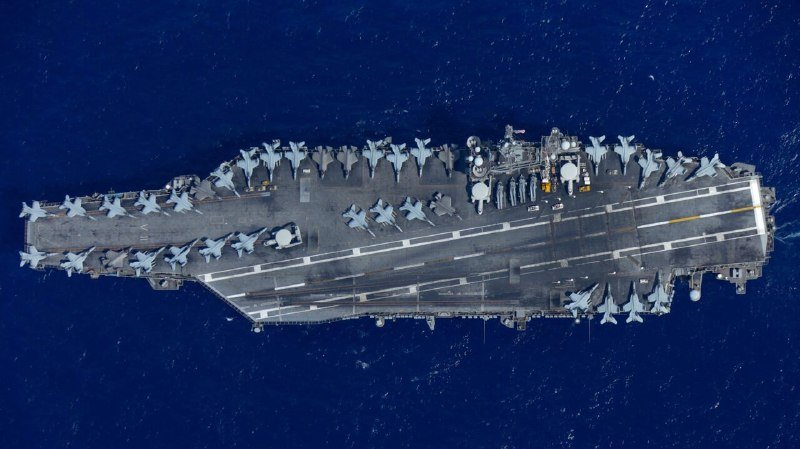
On June 21, 2026, the same afternoon US Vice President JD Vance sat across a table in Switzerland from senior Iranian officials for the first talks under an interim peace deal, President Donald Trump posted on TruthSocial that he was prepared to restart the war and, if necessary, take the Strait of Hormuz by force. Reuters reported the contradiction within the hour. The diplomatic choreography and the war footing were happening in the same room, in the same hour, by the same administration.
That is the picture. The $80 billion question is whether Washington can keep both versions alive once the bill comes due.
The headline Iran won't cash
Trump's TruthSocial post, captured by OSINTdefender on June 21, accused The New York Times of running "FAKE & MADE UP 'FACTS'" about a "very battered and beat up Iran" and called the coverage "TREASONOUS." He announced he would expand his multibillion-dollar lawsuit against the paper to include its Iran reporting. The provocation was triggered, the wire noted, by a New York Times article that "questioned the actual point of the recent Iran War." Senator Lindsey Graham (R-SC) amplified the line within minutes: "To say nothing has changed after Operations Midnight Hammer and Epic Fury is an insult to our men and women in uniform."
The press release is the operation now. Whatever the on-the-ground military balance looks like, the political balance inside Washington requires the war to have been decisive. That requirement, more than any single weapons system, is what the next budget cycle will measure.
What the Israeli public already concluded
A survey conducted by the Hebrew University of Jerusalem, reported by Middle East Eye on June 21, found that 92 percent of Israelis believe Iran has won the war, with 86 percent feeling negatively about the outcome. That is not an opposition talking point; it is a Hebrew University reading of a population that watched the strikes, read the aftermath, and rendered a verdict. Senator Graham's claim that "nothing has changed" will land, in Israel, as denial.
The Israeli number matters because Israel is the constituency the war was nominally fought to reassure. If 92 percent of that constituency believes the reassurance failed, the strategic premise of the campaign is a domestic political problem in Tel Aviv and a foreign-policy problem in Washington at the same moment.
The Swiss room and the Hormuz threat
The Vance meeting in Switzerland, also on June 21, was the diplomatic mirror of the TruthSocial post. Iranian state media framed the encounter sharply: the Iranian Embassy in Hyderabad wrote, via Tasnim, that the Iranian delegation "did not come all this way to take pictures with American war criminals." President Masoud Pezeshkian, quoted by IRNA, said Tehran has "no fear of defending its legitimate rights" in the talks. Within minutes of the hugs, Trump was threatening to hit Iran "only harder" and seize the Strait of Hormuz. Tehran, per Reuters, announced it had again closed the Strait as the meeting was still ongoing.
The Strait is the number. Roughly a fifth of the world's oil moves through it. A closure is not a press conference; it is a price print, an insurance reassessment, and a logistics shock that travels through every container rate on the planet. Threatening it is a negotiating posture. Closing it is a balance-sheet event.
The ledger nobody wants to read aloud
The $80 billion is the line item that turns a foreign-policy debate into a domestic one, which is when the politics actually start. That figure, the cost envelope around the campaign and its follow-on stabilization, is what Congress will eventually be asked to appropriate, audit, or refuse. Wars that can be declared by executive social-media post are unwound the same way; the receipts arrive by mail.
The wire is reporting this as a request, a condition, and a claim. The request is for more money. The condition is Israeli and Gulf acquiescence to whatever the next phase is. The claim is that nothing has changed, that Iran is "battered and beat up," and that any honest accounting is treason. The balance sheet does not accept the claim. The Strait is either open or it is not. The Israeli public has already answered for itself. The Swiss room produced a handshake and a threat in the same hour. The bill arrives next.
Follow the event.
These dated source records provide context. They do not retrospectively verify this archive article.
Separate what the nuclear watchdog reported from what it could not determine after the June 2025 strikes.